

How Long Does Tadalafil Last Compared to Other ED Medications?

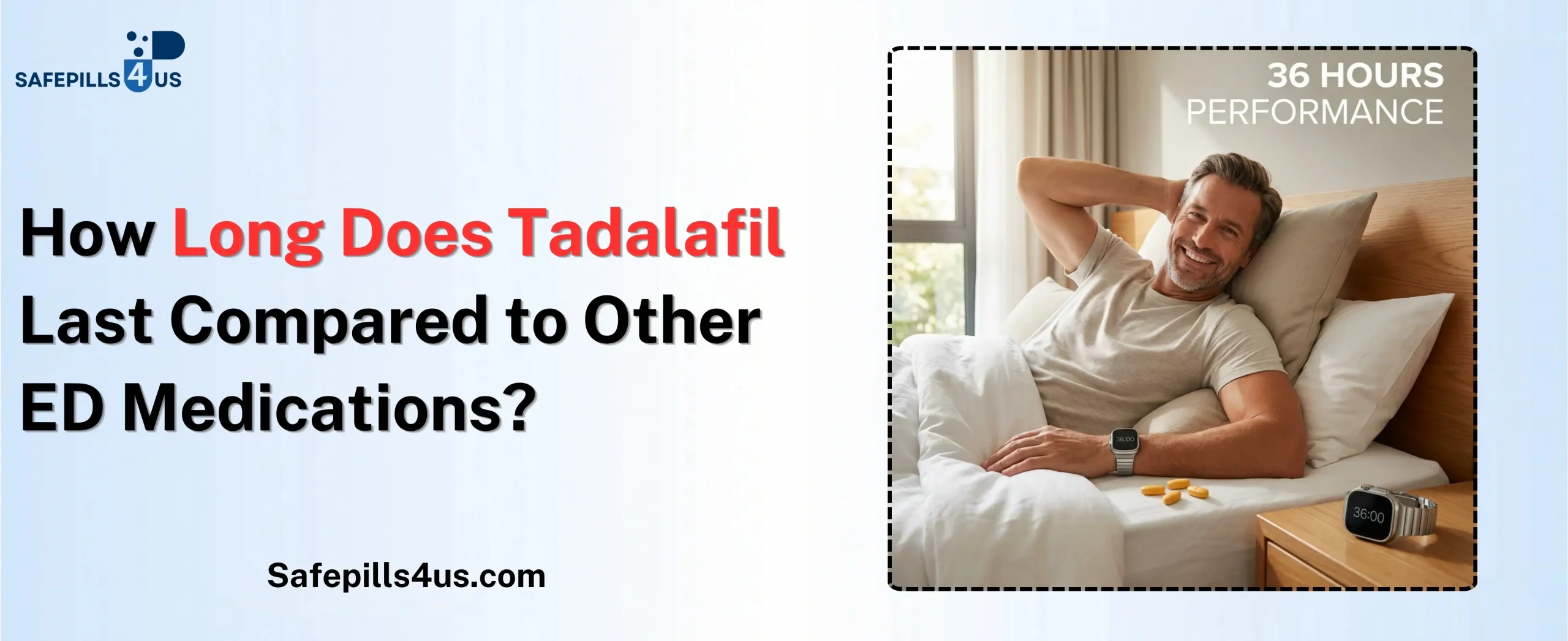
If you’re planning sex, timing your medication matters. That’s why the question how long does tadalafil last? comes up so often. Tadalafil (brand name Cialis) is famous for a longer window of readiness than most erectile dysfunction treatment options.
Understanding tadalafil duration versus other pills helps you pick the right med for your schedule, your body, and your goals.
What is Tadalafil and How it Works
Tadalafil is a PDE5 inhibitor used for erectile dysfunction treatment (and also for benign prostatic hyperplasia at lower daily doses). Here’s the simple version:
- Sexual arousal releases nitric oxide, which relaxes blood vessels in the penis.
- PDE5 breaks down cGMP, a messenger that keeps those vessels relaxed.
- Tadalafil temporarily blocks PDE5, so more blood flows to the penis when you’re aroused.
Important: it won’t cause an erection on its own. Sexual stimulation is still required.
How Long Does Tadalafil Last in the Body?
Tadalafil stands out for staying active longer than other ED pills.
The details are as follows:
- Onset: typically 30–60 minutes (some feel effects as early as 15–30 minutes)
- Peak: about 2 hours after taking it
- Half-life: around 17.5 hours
- Cialis duration (the “window”): up to 36 hours of improved erectile response
What that means in real life: You will not have a 36‑hour erection. Instead, you have a 24–36‑hour period where arousal is more likely to lead to a firm erection.
Tadalafil duration and Cialis duration at a glance
Onset: typically 30–60 minutes (some feel effects as early as 15–30 minutes)
Peak: about 2 hours after taking it
Half-life: around 17.5 hours
Cialis duration (the “window”): up to 36 hours of improved erectile response
- As-needed dosing: 10 mg is common to start (range 5–20 mg)
- Daily dosing: 2.5–5 mg once daily for steady readiness
- Food does not meaningfully change its effect
- Alcohol can increase dizziness or blood pressure drops if you overdo it
Factors that Affect Tadalafil Duration (How Long Does Tadalafil Last for You?)
Everyone metabolizes medications a bit differently. These can shift how long tadalafil lasts:
Dose and Schedule
- Higher as-needed doses (20 mg) can feel stronger and last closer to the 36‑hour mark.
- Daily 2.5–5 mg keeps a continuous low level in your system, so timing sex is less critical.
Food and Alcohol
- Meals don’t significantly delay tadalafil.
- Heavy drinking (roughly 3–4 drinks or more) may cause dizziness, flushing, or a drop in blood pressure and can make erections harder to achieve.
Age, Liver/Kidney Function, and Other Medications
- Older adults may clear tadalafil more slowly, sometimes extending duration.
- Liver or kidney issues can increase drug levels your clinician may adjust your dose.
- Strong CYP3A4 inhibitors can raise tadalafil levels (ketoconazole, itraconazole, clarithromycin, ritonavir); inducers can reduce effectiveness (rifampin, carbamazepine, phenytoin).
- Grapefruit can boost levels in some people.
Sexual Stimulation, Stress, and Health Conditions
- Anxiety, stress, depression, low testosterone, or relationship strain can blunt results.
- Health conditions like diabetes, cardiovascular disease, and neuropathy can also impact how well it works, regardless of duration.
ED Medications Comparison: Tadalafil vs Sildenafil, Vardenafil, and Avanafil
Tadalafil (Cialis)
- Onset: 30–60 minutes (sometimes ~30 minutes or less)
- Duration: up to 36 hours
- Food effect: minimal
- Best for: flexibility and spontaneity (weekend pill)
Sildenafil (Viagra)
- Onset: 30–60 minutes
- Duration: about 4–6 hours
- Food effect: heavy/high‑fat meals delay absorption
- Best for: planned encounters within a same‑evening window
Vardenafil (Levitra, Staxyn)
- Onset: ~30–60 minutes
- Duration: about 4–6 hours
- Food effect: meals especially fatty ones can slow it
- Best for: similar use-cases as sildenafil, with some people finding it a bit more consistent
Avanafil (Stendra)
- Onset: as fast as 15–30 minutes
- Duration: up to about 6 hours
- Food effect: less than sildenafil/vardenafil, but very heavy meals still may slow onset
- Best for: very fast onset when timing is tight
Which lasts the longest?
- Tadalafil lasts the longest by far (up to 36 hours).
- Sildenafil, vardenafil, and avanafil typically provide a 4–6 hour window.
Tadalafil vs sildenafil: the quick take
- Tadalafil = longer window, more spontaneity, less affected by food.
- Sildenafil = shorter window, may be delayed by heavy meals, widely used and effective for many.
Benefits of Longer-Lasting ED Medications
Why the extra hours matter:
- Less clock‑watching: If dinner runs late or plans change, tadalafil still has you covered.
- Reduced performance pressure: Knowing the window is open can ease anxiety, which itself improves performance.
- More natural intimacy: You can respond to arousal when the moment is right, not just when the timer says so.
Dosage and Timing Tips for Best Results
- Choose your strategy:
- Occasional sex: As‑needed tadalafil 10 mg (range 5–20 mg) 30–60 minutes before sex.
- Frequent sex or BPH symptoms too: Daily tadalafil 2.5–5 mg at the same time each day.
- One dose per day only: Don’t “stack” doses.
- Light on alcohol: Limit to 1–2 drinks to avoid dizziness or weaker erections.
- Mind the meal: Tadalafil isn’t sensitive to food; if you switch to sildenafil or vardenafil, plan around heavy/fatty meals.
- Allow enough time: If you don’t feel much at 30 minutes, give it up to 2 hours before judging the response.
- Set expectations: You still need sexual stimulation; use touch, flirting, or whatever helps you feel turned on.
- If it’s not working: Talk to a clinician about dose changes, daily dosing, switching meds, or addressing factors like stress, sleep, alcohol, or low testosterone.
Safety Considerations and Side Effects
Common side effects:
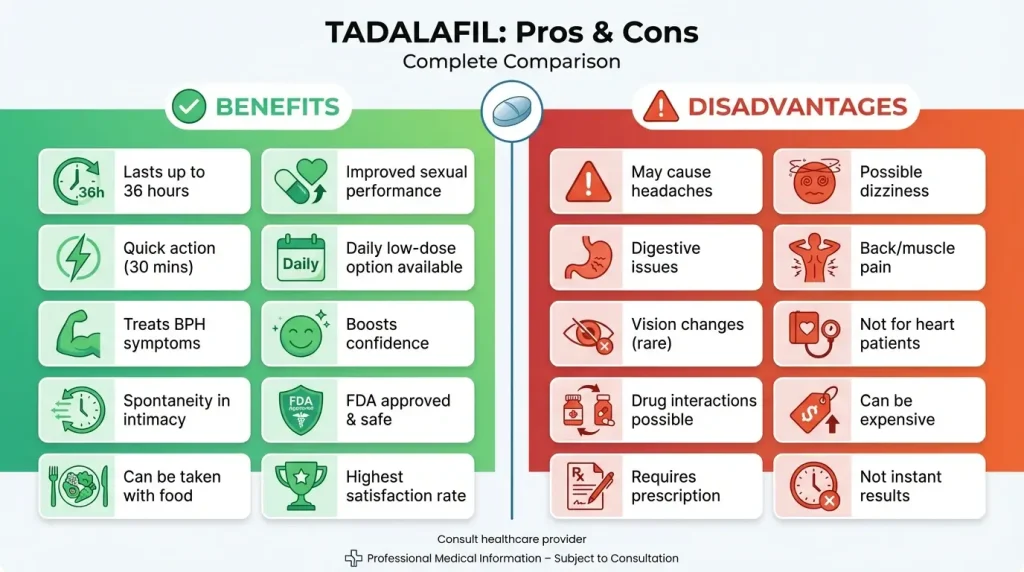
- Headache, flushing, nasal congestion
- Indigestion/heartburn
- Back pain or muscle aches (more common with tadalafil)
- Dizziness or lightheadedness
Serious but rare seek urgent care if:
- Erection lasting more than 4 hours (priapism)
- Sudden vision or hearing loss
- Chest pain, fainting, or severe dizziness
Do not use tadalafil (or any PDE5 inhibitor) with:
- Nitrates (nitroglycerin, isosorbide) for chest pain—dangerous blood pressure drops
- Riociguat (for pulmonary hypertension)
Use with caution and medical guidance if:
- You take alpha‑blockers (tamsulosin) for prostate/urinary symptoms—start low and separate dosing times to reduce dizziness
- You have significant heart disease, recent stroke/heart attack, uncontrolled blood pressure, severe liver/kidney disease, or retinitis pigmentosa
Medication interactions to mention to your clinician:
- Strong CYP3A4 inhibitors/inducers
- Other blood pressure meds
- Recreational drugs that can affect blood pressure
FAQ: How Long Does Tadalafil Last
Tadalafil usually lasts up to 36 hours in many men. This allows a wider window for intimacy, but it does not cause a constant erection. Sexual stimulation is still required for it to work.
After taking a dose, tadalafil may stay effective for up to 36 hours depending on your dose, age, metabolism, and overall health. Results can vary from person to person.
Tadalafil often lasts much longer than sildenafil. Tadalafil may work for up to 36 hours, while sildenafil usually lasts around 4 to 6 hours in many users.
Lower daily-dose tadalafil provides continuous support by keeping a steady level in the body. This can allow more spontaneity without timing each dose around intimacy.
Tadalafil duration is usually unchanged by food, but heavy alcohol use may reduce effectiveness and increase side effects such as dizziness or low blood pressure.


