

Kidney Pain vs Back Pain: Key Differences You Should Know

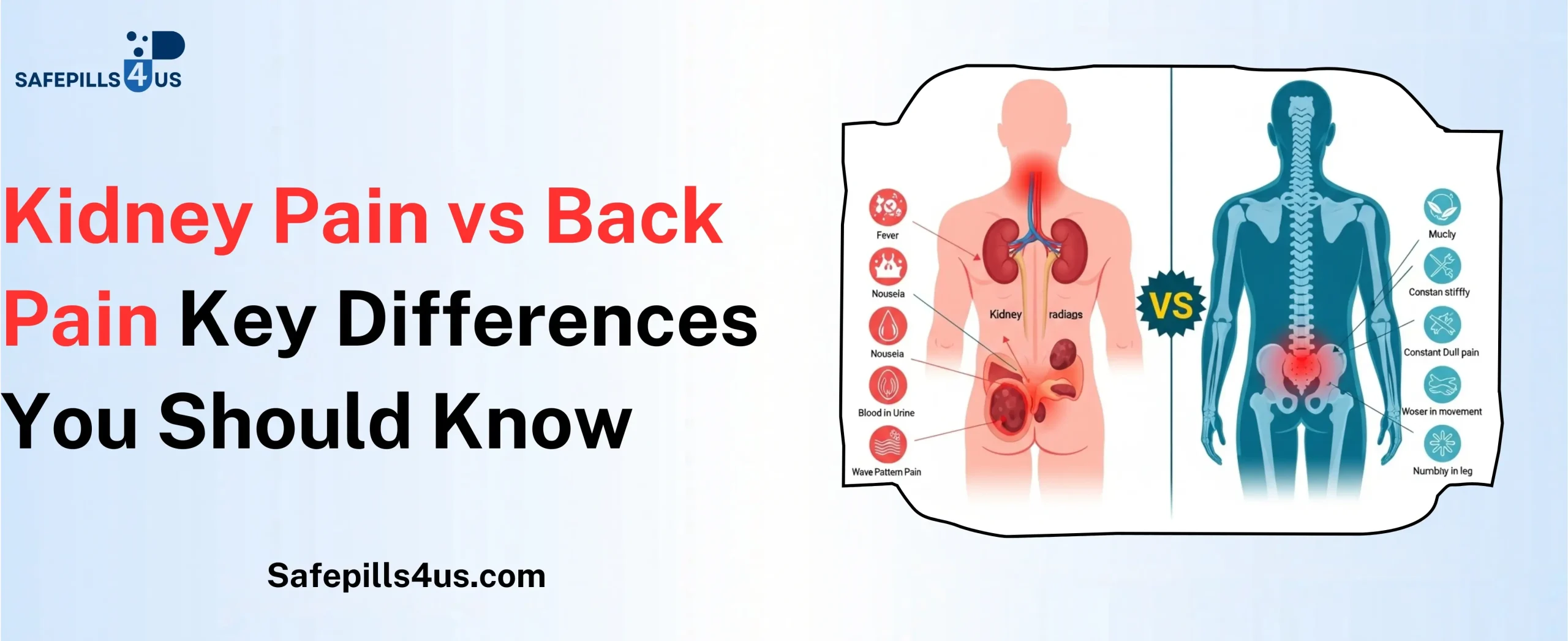
Why Distinguishing Kidney Pain vs Back Pain Matters
You wake up with a deep, persistent ache below your ribs on one side. Is it a pulled muscle? A slipped disc? Or something more serious like a kidney infection or kidney stone? The answer matters enormously. Kidney conditions, if left untreated, can lead to permanent kidney damage or dangerous infections spreading into the bloodstream. Meanwhile, chronic back pain has its own serious consequences if mismanaged.
Understanding the differences between kidney pain and back pain empowers you to act quickly and appropriately whether that means rest, physical therapy, or an urgent trip to the emergency room.
What Is Kidney Pain vs Back Pain? Definitions
Kidney Pain
- Pain originating from the kidneys
- Located in the flank or costovertebral angle
- Usually caused by infection, stones, or disease
- Often involves systemic symptoms
- Can radiate to the groin or abdomen
Back Pain
- Pain from muscles, nerves, or spinal structures
- Spans the entire back region
- Often due to mechanical or structural causes
- Usually worsened by movement
- May radiate down the legs (sciatica)
The kidneys are bean-shaped organs located just below the ribcage on either side of the spine, tucked toward the back of the abdominal cavity. This anatomical position is exactly why kidney pain is so easily mistaken for back pain — both can produce discomfort in the same general region of the body.
Back pain, on the other hand, involves the musculoskeletal system: muscles, tendons, ligaments, vertebrae, intervertebral discs, and nerves. It is one of the leading causes of disability worldwide and affects nearly 80% of adults at some point in their lives.
Kidney Pain vs Back Pain Location: Where Does It Hurt?
Location is the single most important initial clue in distinguishing these two conditions. Knowing where each type of pain presents can save you time, money, and unnecessary suffering.
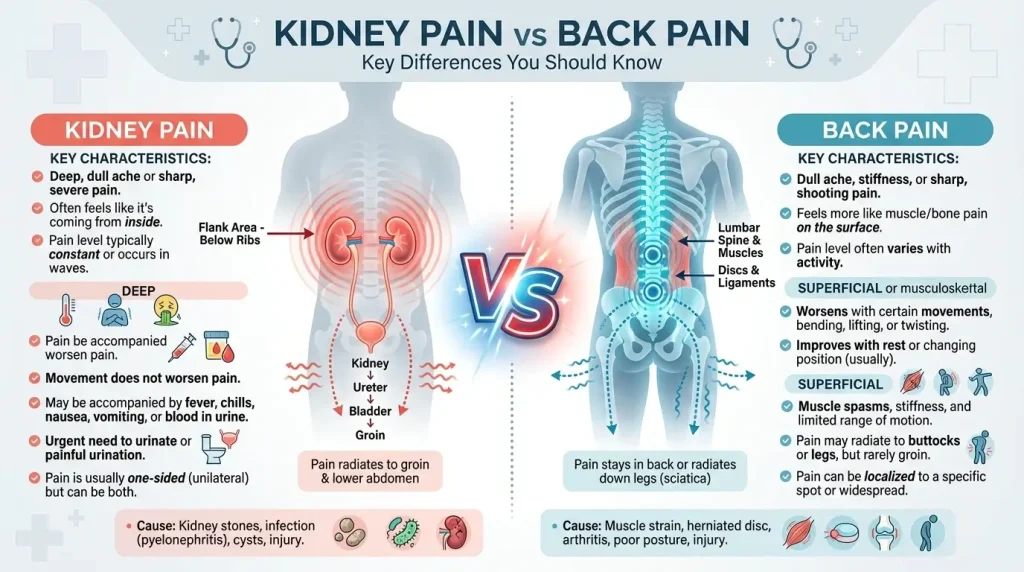
Kidney pain vs back pain diagram — where the pain appears on the body
Kidney zone(flank/costovertebral)Back pain zone(lumbar/thoracic)
Kidney pain zone
Located in the costovertebral angle (CVA) — the area where the lower ribs meet the spine — and in the flanks (sides of the torso, below the ribcage). Kidney pain is typically one-sided and does not move when you shift position.
Back pain zone
Encompasses the lumbar (lower) back, thoracic (mid) back, or cervical (neck) region. Lower back pain is the most common type and can span the full width of the back, unlike kidney pain which is more localized to one side.
Radiation patterns
Kidney pain can radiate forward to the abdomen or groin (especially with kidney stones). Back pain may radiate down the leg (sciatica) or cause numbness/tingling in the foot.
Symptoms of Kidney Pain vs Back Pain
Kidney Pain Symptoms
Kidney-related pain rarely travels alone. Because the kidneys are involved in filtering blood and producing urine, conditions affecting them tend to produce systemic symptoms alongside the pain. Watch for:
- Dull, constant aching or severe cramping in the flank (side) or lower back
- Pain that may radiate to the abdomen, groin, or inner thigh
- Fever and chills (strongly suggestive of kidney infection)
- Nausea and vomiting
- Frequent, urgent, or painful urination
- Blood in the urine (pink, red, or cola-colored urine)
- Cloudy or foul-smelling urine
- Pain that does not change with movement or body position
- Swelling in the hands, feet, or ankles (in chronic kidney disease)
Back Pain Symptoms
Back pain is primarily a musculoskeletal problem and tends to behave differently. Key symptoms include:
- Aching, stiffness, or soreness across the lower, mid, or upper back
- Pain that is worse with movement, bending, or lifting
- Pain that improves with rest or changes in position
- Muscle spasms or tightness
- Pain that radiates down the buttock or leg (sciatica)
- Numbness, tingling, or weakness in the legs or feet
- Morning stiffness that improves as the day progresses
- No fever, urinary changes, or nausea (absent of systemic symptoms)
Key Differences Between Kidney Pain and Back Pain
The following comparison table summarizes the most important distinctions between kidney pain vs back pain across location, pain type, symptoms, and causes.
| Feature | Kidney Pain | Back Pain |
|---|---|---|
| Location | Flank/costovertebral angle, typically one-sided | Broad lower, mid, or upper back; can be bilateral |
| Type of pain | Dull ache or severe cramping; waves of intensity (stones) | Aching, stabbing, burning, or stiffness; varies with position |
| Movement effect | Pain does NOT change with movement or body position | Pain typically worsens with movement, bending, lifting |
| Associated symptoms | Fever, chills, nausea, urinary changes, blood in urine | Muscle stiffness, sciatica, numbness in legs; no systemic signs |
| Radiation pattern | Toward abdomen, groin, or inner thigh | Down the buttock and leg (sciatica); rarely to groin |
| Onset | Can be sudden and severe (stones) or gradual (infection) | Often after physical activity, injury, or poor posture |
| Tenderness | CVA tenderness (flank tap test is positive) | Tender over muscles, vertebrae, or sacroiliac joint |
| Common causes | Kidney stones, UTI, pyelonephritis, PKD | Muscle strain, herniated disc, arthritis, sciatica |
| Urinary symptoms | Frequent, painful urination; blood in urine | Rarely (only if spinal cord compression is severe) |
Causes of Kidney Pain and Back Pain
Common Causes of Kidney Pain
Kidney causes
- Kidney stones (nephrolithiasis)
- Urinary tract infections (UTI)
- Pyelonephritis (kidney infection)
- Polycystic kidney disease (PKD)
- Kidney cysts or tumors
- Hydronephrosis (swelling from blockage)
- Renal infarction (blood clot in kidney)
- Glomerulonephritis
Back causes
- Muscle or ligament strain
- Herniated or bulging discs
- Osteoarthritis / degenerative disc disease
- Sciatica (nerve compression)
- Spinal stenosis
- Scoliosis or kyphosis
- Vertebral fractures (especially in older adults)
- Fibromyalgia
Kidney stones deserve special mention because their pain pattern is distinctive: the pain comes in waves of excruciating intensity (renal colic) as the stone moves through the urinary tract. This is different from the constant, positional ache of most back pain. The pain can be so severe that it sends people to the emergency room and many describe it as among the worst pain of their lives.
How to Tell the Difference at Home: Kidney Pain vs Back Pain
While a proper diagnosis always requires medical evaluation, here are practical ways to assess your pain at home before your appointment:
- Check for urinary changes. Blood in the urine, painful urination, or unusually frequent urges strongly suggest kidney involvement.
- Check your temperature. A fever above 38°C (100.4°F) alongside back/flank pain is a red flag for kidney infection — not a muscle problem.
- Try the CVA tap test. Gently tap (or have someone tap) the area where your lowest rib meets your spine. Significant pain here points toward kidney disease.
- Move around deliberately. Stretch, bend, or walk. If your pain meaningfully improves or worsens with specific positions, it is more likely musculoskeletal. Kidney pain stays consistent regardless of position.
- Notice where the pain goes. Pain radiating to your groin or inner thigh suggests kidney stones. Pain shooting down your leg suggests nerve-related back pain (sciatica).
- Assess for nausea and vomiting. These systemic symptoms are common with kidney conditions but rare with uncomplicated back pain.
When to See a Doctor: Kidney Pain vs Back Pain Red Flags
Some symptoms demand urgent medical attention. Do not wait for an appointment — go to the emergency department or call emergency services if you experience:
- Blood in your urine (hematuria) — even if painless
- High fever (above 39°C / 102°F) with flank or back pain
- Severe, sudden pain that is incapacitating
- Inability to urinate or very little urine output
- Pain accompanied by vomiting and you cannot keep fluids down
- Sudden loss of bladder or bowel control (may indicate cauda equina syndrome — a spinal emergency)
- Back pain after a fall, accident, or trauma
- Unexplained weight loss combined with persistent back or flank pain (may suggest malignancy)
- Swelling in both legs alongside flank pain (possible kidney failure)
Diagnosis and Treatment Options
Diagnosing Kidney Pain
Doctors use several tests to confirm a kidney problem. A urinalysis can detect blood, bacteria, and protein in the urine. A urine culture identifies the specific bacteria causing an infection. Blood tests check kidney function (creatinine, BUN levels). Imaging studies — ultrasound, CT scan, or MRI — can reveal kidney stones, cysts, tumors, or hydronephrosis.
Diagnosing Back Pain
Back pain diagnosis begins with a physical exam assessing range of motion, reflexes, and areas of tenderness. For most cases, imaging is not needed initially. When red flags are present, X-rays, MRI, or CT scans can identify herniated discs, fractures, nerve compression, or spinal abnormalities.
Treatment Approaches
Kidney pain treatments
- Antibiotics (for infections)
- Pain relief (NSAIDs, opioids for stones)
- Hydration and dietary changes
- Lithotripsy (shock wave stone treatment)
- Ureteroscopy for stone removal
- Surgery for cysts or tumors
- Dialysis or transplant (for kidney failure)
Back pain treatments
- Rest (short-term) and activity modification
- NSAIDs and muscle relaxants
- Physical therapy and stretching
- Hot/cold therapy
- Epidural steroid injections
- Chiropractic care
- Surgery (for herniated discs, spinal stenosis)
Frequently Asked Questions
Kidney pain is usually felt higher in the back (under the ribs) and may come with fever, nausea, or urinary issues. Back pain is often lower and linked to movement or posture.
It is typically felt on one or both sides of the upper back, just below the ribcage.
Back pain is commonly felt in the lower back and may spread to the hips or legs.
Fever, chills, nausea, burning urination, or blood in urine may indicate kidney-related pain.
Seek medical help if pain is severe, persistent, or accompanied by fever, vomiting, or urinary problems.
Conclusion: Know Your Pain, Protect Your Health
Understanding the differences in kidney pain vs back pain is not just a matter of academic curiosity — it is a genuinely life-improving skill. The key takeaways are clear: kidney pain tends to be one-sided, located in the flank, unaffected by movement, and accompanied by urinary or systemic symptoms. Back pain is typically broader, worsened by activity, and confined to the musculoskeletal system.
Use the location, the nature of the pain, and the presence of accompanying symptoms to form your initial assessment — but always consult a healthcare professional for an accurate diagnosis. If you experience blood in your urine, a fever alongside flank pain, or sudden severe pain that is incapacitating, treat it as a medical emergency and seek care immediately.