
How to Stop Breastfeeding: A Complete Guide for Mothers

You have nurtured your baby at your breast for weeks, months, maybe even years. Now something inside is telling you it is time. But the moment you think about it, the questions hit hard. The guilt creeps in. The confusion takes over.
How to stop breastfeeding without pain? Without tears? Without feeling like a terrible mother?
Take a deep breath. You are not abandoning your baby. You are growing as a mother. This guide walks you through every single step of the weaning process. We cover the physical side, the emotional side, and the practical side. No judgment here. Just honest, real support from someone who gets it.
What Does "How to Stop Breastfeeding" Really Mean?
When mothers search how to stop breastfeeding, they usually mean one of two things.
Gradual weaning means slowly cutting feeds over weeks or months. Your body adjusts naturally. Your baby adjusts without major drama. Milk supply reduction happens on its own timeline.
Sudden weaning means stopping everything at once. This usually happens because of medications, medical issues, or personal circumstances. It is harder on your body and your baby but sometimes life gives you no choice.
Phasing out is almost always the better path. It causes less pain, fewer hormonal crashes, and gives everyone time to adjust.
Pro Tip: Unless your doctor specifically tells you otherwise, always lean toward gradual weaning. Your body responds much better when given time to slow down naturally.
Signs Your Baby Is Ready to Wean
Wondering how do I stop breastfeeding or is my baby even ready for this? Look for these real signs.
- Shows genuine excitement about solid foods
- Gets distracted easily and pulls away during nursing
- Nursing sessions are getting shorter on their own
- Drinks comfortably from a cup or bottle
- Sleeps longer stretches at night without waking to feed
Real Mom Story: My daughter started pushing me away around 11 months. I honestly felt rejected. It stung. But she was simply telling me she was ready to move on. Once I stopped fighting it and followed her lead, the whole weaning process felt natural and calm. - Sarah, mom of two
How to Stop Breastfeeding Step by Step Using the No Stress Method
This is the part you came here for. Here is exactly how to stop breastfeeding without making it painful for you or your baby.
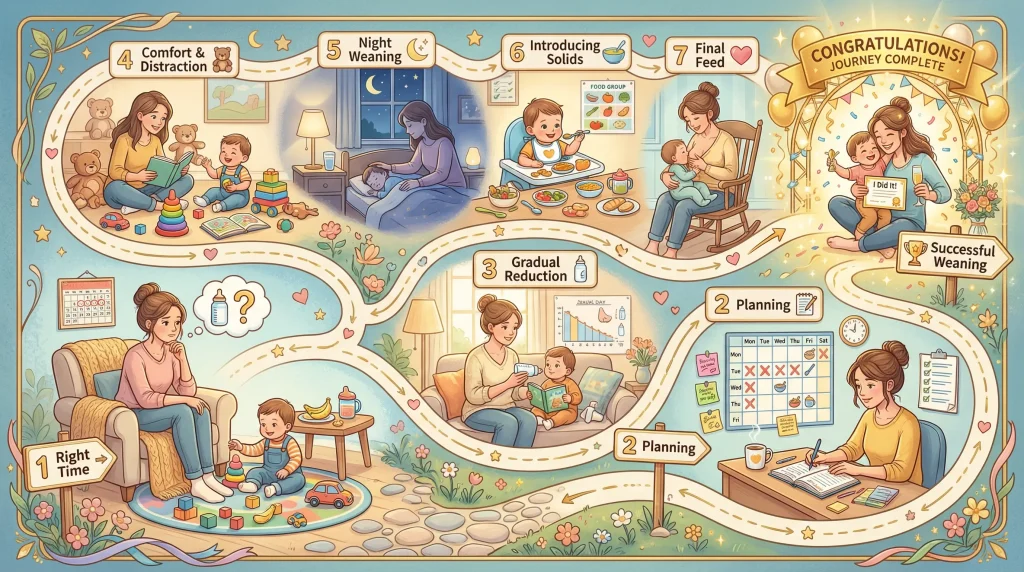
Step 1 Drop One Feed at a Time
Pick the feed your baby seems least attached to. For most babies this is a random afternoon feed. Just skip it. Offer a snack or a cup instead. Wait three to five days before you even think about dropping another one.
Step 2 Shorten Each Session
If your baby usually nurses for 15 minutes, gently end the session at 10 minutes. Then bring it down to 7. Then 5. Your body picks up on the signal and starts producing less milk gradually.
Step 3 Replace Nursing With Comfort
This matters more than people realize. The weaning process is not just about food. It is about closeness and security. During the times you would normally nurse, hold your baby close. Read a book together. Rock them gently. Give them extra cuddles and physical warmth.
Step 4 Change Your Routine
If you always nurse in the same chair at 3 PM, do not sit in that chair at 3 PM. Go for a walk. Visit a friend. Play outside. Breaking the pattern quietly helps your baby forget the old habit without any fuss.
Avoid This Mistake: Never drop multiple feeds in a single day. It sounds efficient but it leads to painful engorgement, confused babies, and a miserable experience for everyone. Slow and steady is the only way.
How to Stop Breast Milk Production Safely
When learning how to stop breastfeeding, remember your body does not have an off switch. It has been making milk on autopilot and needs time to adjust, so gradual weaning and patience are key.
Here is what happens inside your body during weaning.
- Prolactin levels slowly drop as demand decreases
- Your breasts may feel uncomfortably full for several days after dropping a feed
- Milk supply reduction typically takes 7 to 14 days per dropped feed
Natural methods that genuinely help the process along.
- Sage tea is known to naturally reduce milk production
- Cold cabbage leaves placed inside your bra work surprisingly well
- A firm supportive bra that holds everything in place without squeezing
- Avoiding nipple stimulation as much as possible
How to Dry Up Breast Milk Quickly and Comfortably
Most mothers searching how to dry up breast milk are already in discomfort. So let us get straight to what actually works.
What helps right away.
- Cold compresses for 20 minutes on and 20 minutes off throughout the day
- Ibuprofen to reduce swelling and ease pain
- Peppermint tea which naturally slows down milk production
- Cold cabbage leaves replaced every time they wilt
- A well-fitted supportive bra worn day and night
Mistakes that make things worse.
- Binding your chest tightly with wraps or bandages which can cause blocked ducts
- Stopping cold turkey without any preparation or gradual reduction
- Ignoring lumps, redness, or hot spots on your breast which could be signs of mastitis
If something feels wrong, do not push through it. Call your doctor. Engorgement relief should come within a few days if you are doing things gradually.
The Emotional Side of Weaning and Why It Hits So Hard
Nobody warns you about this part. Understanding how to stop breastfeeding is not just a physical process. It is deeply emotional and that emotional side blindsides almost every mother.
Why you might feel sad, anxious, or overwhelmed.
Prolactin and oxytocin drop when you stop nursing. These are the hormones that kept you feeling calm, bonded, and emotionally steady during feeds. When they fall quickly, some mothers experience mood swings, unexpected sadness, or something that feels like postpartum depression returning. This is not weakness. It is basic biology.
Then there is the guilt. Your mother-in-law makes a comment. Someone online shares a post about nursing until age four. Suddenly you feel like you are doing something wrong.
You are not doing anything wrong.
What actually helps during this emotional transition.
- Talk to someone you trust. A partner, a friend, a counselor. Anyone who will not judge
- Write your feelings down even if they are messy and raw
- Remind yourself that your mental health directly affects your baby
- Celebrate this milestone instead of treating it like a failure
Tips to Maintain Your Bond With Your Baby After Weaning
This is the fear that keeps so many mothers nursing longer than they want to. The fear that closeness will disappear. But your breastfeeding journey ending does not end your connection. Not even a little bit.
- Hold your baby skin to skin during bottle feeds
- Create a new bedtime ritual with books, songs, and forehead kisses
- Try gentle baby massage before sleep
- Spend more time in face to face play during the day
- Wear your baby in a carrier to keep that physical closeness alive
Your bond was built on love and presence. It was never built on milk alone.
Common Problems and Simple Solutions
Engorgement. Use cold compresses and express small amounts of milk only for engorgement relief. Never fully pump.
Baby crying at feeding times. Offer distractions like toys or snacks. Have your partner step in during these moments. A change of scenery works wonders.
Sleep disruption. Build a new bedtime routine that does not involve nursing. Books, rocking, soft music, and cuddles fill the gap.
Emotional breakdown. Give yourself permission to grieve. Seek support from people who understand. Talk to a professional if it lasts more than two weeks.
Milk leaking throughout the day. Wear nursing pads inside your bra. Cold cabbage leaves help slow things down. This phase is temporary.
Real Life Weaning Timeline Example
Here is a realistic week by week plan showing how to wean breastfeeding at a pace that works.
Week 1. Drop the afternoon feed. Replace it with a solid food snack and a cup of milk or water.
Week 2. Drop the mid-morning feed. Offer a bottle or sippy cup instead and keep your baby busy with play.
Week 3. Drop the bedtime feed. This one is emotional so introduce a new sleep routine with books, songs, and cuddles. Let your partner take over bedtime if possible.
Week 4. Drop the morning feed. This is usually the last one to go and the hardest to release. Be gentle with yourself.
Pro Tip: This timeline is flexible. Some babies need six to eight weeks and that is perfectly fine. Follow your child's pace. There is no award for finishing faster.
When to Seek Professional Help
Sometimes learning how to quit breastfeeding on your own is not enough. And that is completely okay.
See your doctor if you develop fever, hard lumps, or red streaks on your breast. These could be signs of mastitis and they need medical attention quickly.
Talk to a lactation consultant if how to wean off breastfeeding feels impossible because your baby refuses every alternative and starts losing weight.
Reach out to a therapist if persistent sadness or anxiety stays with you for more than two weeks after stopping. Hormonal changes can be intense and professional support makes a real difference.
Asking for help is not failure. It is one of the smartest things a mother can do.
Breast Care Products During Breastfeeding (Quick Guide)
During pregnancy and breastfeeding, proper breast care is important. However, not all breast care products are suitable for use while nursing.
For example, products like Breastriim Oil and Brexelant Breast Cream 60
While these products may help with external care, they are not specifically made for breastfeeding use. Nursing mothers should avoid applying such products near the nipple area to prevent any risk to the baby.
Conclusion
Learning how to stop breastfeeding is one of motherhood's most bittersweet chapters. It is okay to feel relieved. It is okay to feel sad. It is okay to feel both of those things at exactly the same time.
You gave your baby an incredible gift. You sustained a human life with your body. And now you are giving both of you a new kind of freedom.
Trust your instincts. Go slowly. Ask for help when you need it. And remember this above everything else. how to stop breastfeeding does not make you less of a mother. It makes you a mother who listens to her baby and to herself.
Frequently Asked Questions
When learning how to stop breastfeeding, remember your body does not have an off switch. It has been making milk on autopilot and it needs time to wind down. Most mothers complete the process in two to eight weeks depending on how gradually they reduce feeds and how their baby responds.
During how to stop breastfeeding, keep in mind your body does not have an off switch and patience is everything. Babies usually adapt well, especially when you replace nursing with extra love, cuddles, and physical closeness.
A key part of how to stop breastfeeding safely is understanding your body does not have an off switch. Wean gradually, express only small amounts for pressure relief, and use cold compresses while watching for warning signs like redness or fever.
While focusing on how to stop breastfeeding, remember your body does not have an off switch and may still respond to stimulation. In some cases, relactation is possible with dedication and guidance from a professional.
If you're working on how to stop breastfeeding a toddler, keep patience in mind—your body does not have an off switch and needs time to adjust. Use distraction, offer alternatives, and gradually shorten feeding sessions.