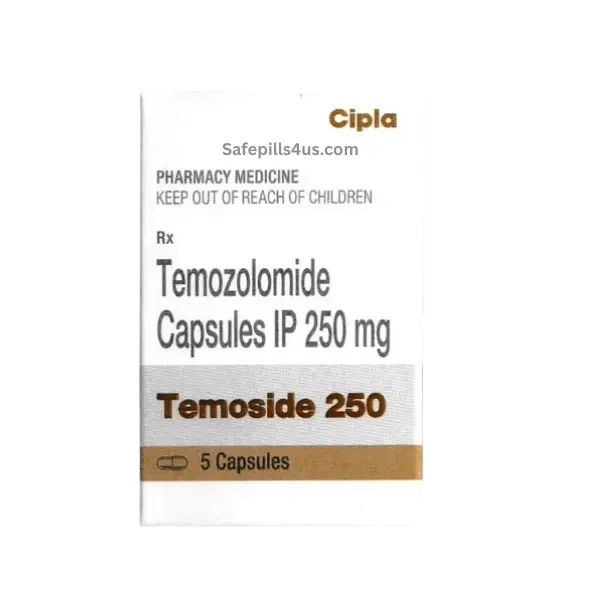
What Is Temoside 250 mg?
Temoside 250 mg is a prescription anticancer medicine that contains temozolomide. Doctors use it mainly for specific brain cancers. In plain words, it’s a chemo pill that goes after fast-dividing cancer cells in the brain. It’s strong, carefully dosed, and monitored closely—so yeah, this is strictly under specialist supervision.
Who Is It For?
- Adults and sometimes older children, if a cancer specialist decides it’s appropriate
- Not for self-use or casual dosing—your schedule, dose, and duration are tailored to your case
What Is It Used For?
- Newly diagnosed GBM (glioblastoma multiforme): Often given with radiotherapy first, then continued as maintenance
- Recurrent or progressive malignant gliomas, including anaplastic astrocytoma
- Off-label, specialist-directed scenarios: Only when your oncology team believes it fits your plan
How Temoside Works (Simple Version)
Temozolomide slips into cells and
adds damage to their DNA. Cancer cells rely on clean DNA to copy themselves fast. When their DNA is messed up,
they struggle to divide, and tumor growth can slow down or shrink. It’s like removing the “copy” button from their printer—fewer copies, less spread.
Composition & Pack Info
- Strength: 250 mg temozolomide per hard capsule
- Excipients: Inactive ingredients to form the capsule (may vary by manufacturer)
- Color/shape: Standard hard capsule; don’t open or crush
Key Benefits (What Patients Often Value)
- Oral dosing at home (no IV chair days for this med)
- Part of standard care for GBM in many treatment pathways
- Can be combined with radiotherapy first, then used on its own after—based on your doctor’s plan
How to Take Temoside 250 mg
- Follow your oncologist’s exact directions dose and cycle plan are personalized
- Timing: Often taken on an empty stomach (for example, 1 hour before food) to reduce nausea
- Bedtime dosing can help if you’re prone to queasiness
- Swallow capsules whole with water; don’t crush, chew, or open
- If you vomit after a dose: Don’t repeat unless your doctor tells you to
- Missed dose? Call your care team for guidance—don’t double up
- Caregiver handling: Use disposable gloves and wash hands afterward
What to Expect During Treatment
- Regular blood tests: Your team checks white cells (infection risk), red cells (fatigue), and platelets (bruising/bleeding)
- Anti-nausea plan: You’ll likely get a premedication schedule; stick to it even on good days
- Infection protection: During chemo + radiation, doctors may add preventive antibiotics to lower the risk of PJP pneumonia
- Dose adjustments happen: If counts dip or side effects ramp up, your team may pause or reduce the dose—it’s normal and part of safe care
Side Effects
Not everyone gets side effects, and if you do, they’re not identical to someone else’s. Tell your team about anything that feels off.
Common Side Effects
- Nausea, vomiting, or upset stomach
- Loss of appetite or constipation
- Fatigue, weakness, low energy days
- Headache
- Hair thinning or hair loss
- Mild skin rash or itching
- Liver enzyme changes on blood tests (your team monitors this)
Serious Side Effects (Get Help Fast)
- Fever, chills, sore throat, or a cough that won’t go away (possible infection)
- Unusual bleeding or bruising (nosebleeds, gum bleeding, tiny skin spots)
- Severe or ongoing vomiting, dehydration, dizziness
- Shortness of breath, chest pain, or extreme weakness
- Allergic reaction: swelling of face/lips, breathing trouble, severe rash
- Very low blood counts (your oncologist watches and guides this)
- Yellowing of skin/eyes, dark urine, or stomach pain (possible liver issues)
Warnings & Precautions
- Allergy alert: Avoid if allergic to temozolomide or dacarbazine
- Bone marrow suppression: Expect frequent blood count checks
- Infection risk: Wash hands often, avoid close contact with sick people, and report fever quickly
- Vaccines: Avoid live vaccines during treatment; ask about safe alternatives and timing
- Pregnancy: Do not use—can harm an unborn baby
- Women: Use effective contraception during treatment and for at least 6 months after the last dose
- Men: Use effective contraception during treatment and for at least 3 months after the last dose; don’t donate sperm
- Breastfeeding: Don’t breastfeed during treatment and for a period after (your doctor will advise timing)
- Fertility: May impact fertility, especially in men—ask about sperm banking or fertility options before starting
- Liver/kidney issues: Tell your doctor; you may need dose tweaks and extra monitoring
- Driving or machinery: If you feel dizzy or unusually tired, skip driving until you feel okay
- Handling: Caregivers should wear gloves, avoid contact with capsule powder, and wash hands
Drug Interactions
Always share your full medication list: prescription drugs, OTC painkillers, vitamins, and herbs.
- Other myelosuppressive drugs can increase low blood count risks
- Some anti-seizure medicines (like valproic acid) may affect temozolomide levels or side effects
- Blood thinners and certain antibiotics/antivirals might require closer monitoring
- Alcohol: Not a hard “no,” but keep it minimal—your liver’s busy; ask your doctor what’s okay for you
Storage & Safe Disposal
- Store at room temperature, away from heat, light, and moisture
- Keep in the original, tightly closed container, away from kids and pets
- Don’t use if the capsule is damaged or expired
- Don’t flush or toss in household trash—ask your pharmacy or clinic about take‑back options
Why Patients and Doctors Choose Temoside 250 mg
- Well-established option in brain tumor care pathways
- Oral convenience with specialist oversight
- Fits combined therapy plans (with radiotherapy first, then continued), depending on response and tolerability
- Personalized cycles so your team can balance effectiveness with side-effect management
Practical Tips (Day to Day)
- Set alarms or reminders so you take doses on time during each cycle
- Light snacks and hydration can help ease nausea (plain crackers, toast, ginger tea—simple but effective)
- Follow your anti-nausea plan exactly as prescribed
- Keep a quick symptom log: jot down nausea, headaches, fatigue, or anything odd; this helps your team fine-tune care
- Check before adding anything new even natural supplements can interact with chemo
Who Should Not Use Temoside?
- People with known allergy to temozolomide or dacarbazine
- Pregnant or breastfeeding individuals (unless your doctor has a very specific plan—generally it’s a no)
- Anyone without proper monitoring this medicine requires specialist oversight and lab checks
Frequently Asked Questions
What is Temoside 250 mg used for?
Temoside 250 mg is used to treat certain brain cancers, mainly
glioblastoma multiforme (GBM) and
anaplastic astrocytoma. Your oncologist decides if it’s right for your tumor type and stage.
How does temozolomide fight cancer?
It
damages DNA inside cancer cells, making it harder for them to divide and spread. Over time, this can slow or shrink tumors.
How long will I be on it?
Treatment runs in
cycles. The number of cycles depends on your response, blood counts, and overall plan. Your doctor will map it out and adjust if needed.
Can I take it with food?
Often, it’s taken
on an empty stomach to reduce nausea. Some patients take it
at bedtime. Follow your exact label instructions.
What if I forget a dose?
Don’t double up.
Call your oncology team for what to do next based on your schedule and timing.
I threw up after a dose should I retake it?
Usually,
no. Don’t repeat a dose unless your doctor says so. Let your team know so they can adjust your anti-nausea meds.
Will I lose my hair?
Some people have
hair thinning or hair loss, but not everyone. If it happens, it’s often
temporary.
Is it safe during pregnancy or breastfeeding?
No. It can
harm an unborn baby and may pass into breast milk. Use
effective contraception and follow your doctor’s advice on timing for pregnancy or breastfeeding.
Do I need blood tests?
Yes. Expect
regular blood work to monitor white and red blood cells, platelets, and sometimes liver values.
Can I drink alcohol?
Keep it
minimal. Alcohol can worsen fatigue or nausea and puts extra pressure on your liver. Ask your doctor what’s okay for you.
I’m on anti-seizure meds any issues?
Some
seizure medicines interact with temozolomide. Share your full medication list so your team can manage doses safely.
How should caregivers handle the capsules?
With care:
wear gloves, don’t open or crush capsules, and
wash hands after handling. If a capsule breaks, avoid contact with powder and follow your clinic’s disposal advice.
Can I get vaccines while on treatment?
Avoid
live vaccines. Inactivated ones may be okay, but timing matters your oncologist will guide you.
Will this cure my cancer?
Temozolomide is a
key part of treatment for many patients, but every case is unique. Your team will track progress and discuss next steps openly.
Are there foods or supplements to avoid?
Anything new
check first. Some herbs and supplements can interact with chemo or affect blood counts.
Related Products






Reviews
There are no reviews yet.