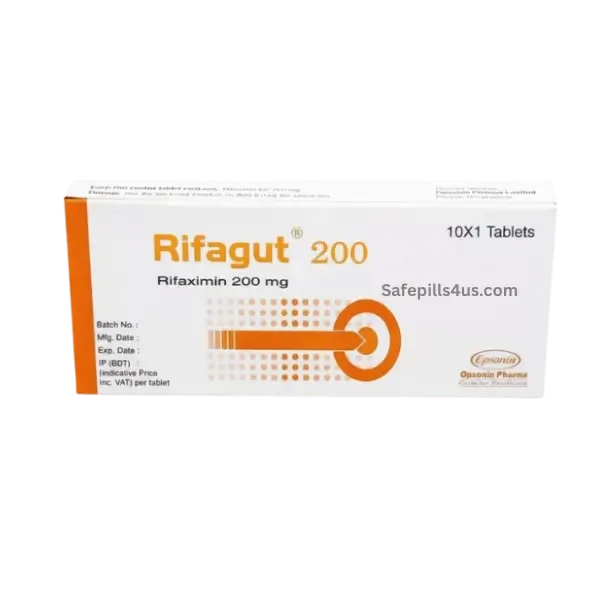
What Is Rifagut 200 mg?
Rifagut 200 mg contains rifaximin, a smart, gut‑focused antibiotic. In plain words, it targets bacteria inside your intestines and barely enters your bloodstream. That’s why it’s a go‑to for certain bowel problems where bacteria are the troublemakers. The 200 mg strength is commonly chosen for traveler’s diarrhea caused by non‑invasive E. coli. Doctors may also use it, under specific plans, for IBS‑D and SIBO. Your dose and duration are personalized don’t self‑treat or guess.
Why Patients Consider Rifagut 200 mg
- Local action, fewer whole‑body effects: It works inside the gut with minimal absorption.
- Focused on symptom drivers: Helps reduce bacteria that trigger diarrhea, gas, and bloating.
- Well‑tolerated by many: Side effects are often mild to moderate.
- Flexible in clinic use: Standard for traveler’s diarrhea; doctor‑directed for IBS‑D and SIBO.
How Rifaximin Works (Simple Version)
Rifaximin
binds bacterial RNA polymerase and basically turns off the bug’s copy machine. When bacteria can’t make proteins, they
stop multiplying. Because rifaximin
stays mostly in your gut, it
targets intestinal bacteria directly.
- Traveler’s diarrhea: Cuts down non‑invasive E. coli → fewer loose stools.
- IBS‑D/SIBO: Lowers gas‑producing or misplaced bacteria → less bloating and urgency.
Indications: What Rifagut 200 mg Is Used For
- Traveler’s diarrhea (TD): Due to non‑invasive E. coli. No high fever, no blood in stools. This is the core, label‑supported use for the 200 mg tablet.
- IBS‑D (Irritable Bowel Syndrome with Diarrhea): Sometimes included in doctor‑directed regimens. Many guidelines prefer higher strengths (like 550 mg), but plans vary by country and patient needs.
- SIBO (Small Intestinal Bacterial Overgrowth): Off‑label and specialist‑led. Dosing can differ and may be combined with diet or other meds.
Important: If you have
fever, bloody stools, or severe abdominal pain, this product is usually not the right choice. You need a prompt medical review.
Composition & Pack Info
- Each tablet contains: Rifaximin 200 mg
- Dosage form: Film‑coated tablet
- Administration: Oral (swallow whole with water)
Dosage & How to Take Rifagut 200 mg
Always follow your prescriber’s exact instructions. Here’s the general picture:
Traveler’s Diarrhea (non‑invasive E. coli)
- Typical regimen: 200 mg three times daily for 3 days (total 9 tablets).
- If symptoms worsen, persist >48 hours, or you develop fever/blood in stool, contact your doctor.
IBS‑D (doctor‑directed)
- Many regions favor higher strengths (e.g., 550 mg) for IBS‑D. Where 200 mg is used, your doctor will specify how many tablets per dose and for how long. Do not self‑adjust.
SIBO (doctor‑directed, off‑label)
- Regimens vary. A clinician may tailor dose, frequency, and duration based on breath tests, symptoms, and prior response. Sometimes combined with dietary changes.
General Directions
- With or without food: Either is fine be consistent if you can.
- Swallow tablets whole with water. Don’t crush unless your pharmacist says it’s okay.
- Missed dose: Take it when you remember unless it’s close to the next one. Don’t double dose.
- Don’t extend or repeat a course on your own. Overusing antibiotics can backfire.
Who Should Not Use Rifagut 200 mg?
- Allergy to rifaximin or other rifamycins (e.g., rifampin)
- Diarrhea with fever or blood in stools (this suggests an invasive pathogen — needs different treatment)
- Severe liver impairment unless your specialist specifically approves and monitors you
- Children/pregnancy/breastfeeding: Use only if a clinician advises — data can be limited for certain groups
If you’re pregnant, trying to conceive, or breastfeeding, talk to your
doctor so you can weigh benefits vs risks together.
Side Effects
Most people do well, but some can experience side effects. Tell your doctor if anything feels off.
Common
- Nausea or stomach pain
- Bloating, gas, or constipation
- Loose stools
- Headache
- Mild fatigue
- Cold‑like symptoms (stuffiness, mild sore throat)
Less Common but Important
- Severe or persistent diarrhea, especially with cramps/fever (possible C. difficile — needs urgent care)
- Rash, hives, swelling, breathing trouble (allergy — stop and seek help)
- Blood in stools, high fever, or worsening abdominal pain
- New/worsening swelling of legs/feet (report promptly, especially if you have liver issues)
Warnings & Precautions
- Not for invasive diarrhea: If you have fever or blood in stools, don’t use this — get medical care.
- Antibiotic resistance is real: Take exactly as prescribed and complete the course.
- C. difficile risk: Rare but possible with any antibiotic. If new or severe diarrhea appears during or after therapy, seek help quickly.
- Liver disease: Often used in liver patients for other indications at different strengths; for 200 mg, your specialist will decide if and how to use it.
- Repeat courses: Can be appropriate for IBS‑D/SIBO, but spacing and total number should be set by your clinician.
- Diet matters: For IBS‑D/SIBO, a low‑FODMAP or targeted diet can boost results — follow your care team’s advice.
Drug Interactions
Rifaximin has
low systemic absorption, so interactions are fewer than many antibiotics, but not zero.
- Strong P‑gp inhibitors (for example, cyclosporine) can raise rifaximin levels — your doctor may monitor you more closely.
- Warfarin and other anticoagulants: Antibiotics can nudge INR. If you’re on warfarin, follow your clinician’s monitoring plan.
- Other antibiotics or gut‑active meds: Always share your full med list, including OTCs and supplements.
- Hormonal contraceptives: Typically not an issue with rifaximin, but if you’re worried, ask about backup contraception.
How to Get the Best Results
- Take every dose on time. Set reminders; consistency helps a lot.
- Hydrate well. Small sips often if your stomach is touchy.
- Keep meals simple during treatment (bland, lower‑FODMAP if recommended).
- Avoid starting new probiotics/supplements mid‑course unless your clinician says it’s okay — timing matters.
- Track symptoms (stool frequency, urgency, pain, gas). A quick note helps your doctor fine‑tune care.
When to Seek Medical Help Quickly
- Fever, blood in stools, or severe abdominal pain
- Watery diarrhea that worsens or doesn’t improve within expected time
- Allergy signs: facial/lip swelling, wheeze, widespread rash
- New confusion or drowsiness if you have liver disease
- No improvement in traveler’s diarrhea after 48 hours
Storage & Safe Handling
- Store at room temperature, away from heat and moisture.
- Keep in the original pack, tightly closed.
- Keep out of reach of children and pets.
- Do not use if tablets are damaged or expired.
Rifagut 200 mg vs Other Strengths (Quick Context)
- 200 mg: Often used for traveler’s diarrhea (standard 3‑day course).
- 400 mg: Sometimes used in doctor‑directed regimens for IBS‑D/SIBO.
- 550 mg: Common for IBS‑D (short courses) and hepatic encephalopathy prevention (long‑term).
Your doctor will choose the
strength and schedule that fit your condition and local guidelines.
Frequently Asked Questions (FAQ)
What is Rifagut 200 mg used for?
Rifagut 200 mg (rifaximin) is primarily used for
traveler’s diarrhea caused by non‑invasive E. coli. Doctors may also use it off‑label for
IBS‑D and
SIBO in specific, personalized plans.
How fast does rifaximin start working?
For traveler’s diarrhea, many people notice improvement in
1–2 days. For
IBS‑D/SIBO, changes may be clearer over
1–2 weeks, with some benefit continuing after you finish.
Can I take Rifagut 200 mg with food?
Yes,
with or without food. If your stomach is sensitive, a small meal can help.
Will rifaximin treat all kinds of diarrhea?
No. It’s mainly for
non‑invasive E. coli traveler’s diarrhea and certain gut‑related conditions.
Bloody stools or fever usually mean a different approach is needed.
Can I drink alcohol while taking it?
There’s no strong direct interaction, but alcohol can
irritate your gut and
worsen diarrhea. Best to
limit or avoid during treatment.
Does rifaximin affect birth control pills?
Typically
no, because rifaximin is
minimally absorbed. If you’re concerned, ask your clinician whether you should use a
backup method.
Is it okay to take probiotics with rifaximin?
Sometimes, but timing matters. Many clinicians prefer
adding probiotics after finishing the antibiotic. Ask your doctor for a plan.
What if I miss a dose?
Take it when you remember unless it’s close to the next one.
Don’t double up.
Can children use Rifagut 200 mg?
Pediatric use is
specialist‑guided. Dosing depends on age, weight, and indication.
Related Products
- Rifagut 400 mg (Rifaximin)
- Rifagut 550 mg (Rifaximin)
- Rifaximin 200 mg (Generic)
- Xifaxan 550 mg (Rifaximin)
- Normix 200 mg (Rifaximin)
- Lactulose solution (often paired in hepatic encephalopathy — doctor‑directed)



Reviews
There are no reviews yet.