Quick Overview
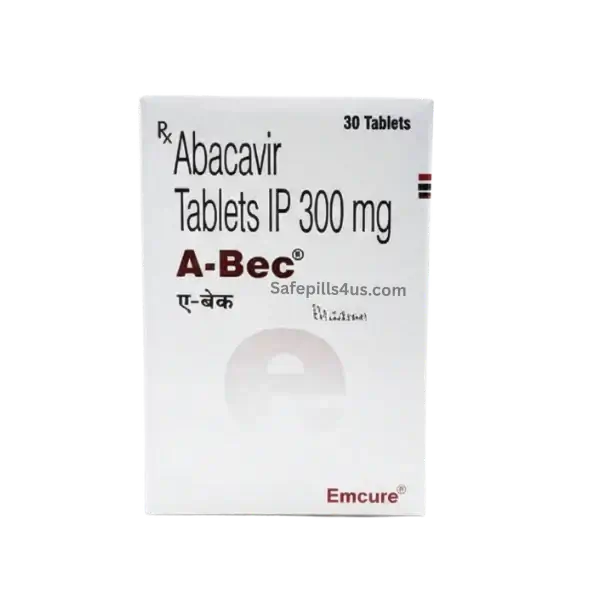
A Bec 300 mg (often written A‑Bec) contains abacavir sulfate, a nucleoside reverse transcriptase inhibitor (NRTI). It’s used for the treatment of HIV‑1 infection as part of a combination antiretroviral regimen. It helps lower viral load and raise CD4 counts when taken correctly with other HIV medicines. Not a cure for HIV. Prescription‑only.
Key highlights
- Active ingredient: Abacavir (as abacavir sulfate) 300 mg
- Class: NRTI (antiretroviral)
- Use: Treatment of HIV‑1 infection with other antiretrovirals
- Must‑know: HLA‑B*5701 screening is required before starting; serious hypersensitivity can occur
- Dosing: 300 mg twice daily OR 600 mg once daily (adult guidance; your clinician will set the plan)
- Food: With or without food
- Brand note: A Bec is a Cipla brand; availability may vary by region
What A Bec is (and who it’s for)
A Bec 300 mg is prescribed for adults and adolescents (age and weight as per local guidelines) with HIV‑1. It’s never used alone always combined with other antiretroviral drugs (for example, integrase inhibitors like dolutegravir, or other NRTIs like lamivudine). Your exact combo depends on your medical history, resistance profile, and lab results.
If you’re new to treatment or switching regimens, your HIV specialist will decide whether abacavir fits your plan. One big rule: you should be tested for HLA‑B*5701 before starting. If you test positive, abacavir must not be used.
How abacavir works (simple version)
HIV needs an enzyme called reverse transcriptase to copy its genetic material.
Abacavir blocks that enzyme, so the virus can’t make good copies of itself. Less copying means lower viral load so your immune system gets a chance to recover. But it only works properly when used with other HIV meds that hit the virus from different angles.
Dosage and how to take
- Typical adult dosing: 300 mg twice daily OR 600 mg once daily, as your prescriber advises.
- With or without food: both are fine. Pick a routine and stick with it.
- Swallow with water. Do not crush unless your pharmacist says it’s okay for your product.
- Missed dose: Take it as soon as you remember unless it’s close to your next dose. Don’t double up.
- Do not stop on your own. Stopping or skipping can cause viral rebound and resistance.
Pediatric dosing is weight‑based. Your clinician or pharmacist will calculate it.
The big safety point: hypersensitivity reaction
Abacavir can cause a serious, sometimes life‑threatening allergic reaction called abacavir hypersensitivity. It’s strongly linked to the HLA‑B*5701 gene variant.
- Before starting: You should be screened for HLA‑B*5701. If positive, do not use abacavir.
- When it happens: Usually within the first 6 weeks, but it can occur at any time.
- Common signs: Fever, rash, tummy issues (nausea, vomiting, diarrhea, stomach pain), feeling unwell/extremely tired, cough or shortness of breath, sore throat, aches.
- What to do: If you suspect a reaction, stop abacavir and contact your doctor urgently. Never restart abacavir after a suspected hypersensitivity reaction re‑exposure can be dangerous.
Many patients receive an alert card with abacavir keep it with you.
Other warnings and precautions
- Lactic acidosis and severe liver enlargement with fat (rare): Class effect of NRTIs. Seek help if you have deep, persistent nausea/vomiting, stomach pain, fast breathing, weakness.
- Liver disease: Tell your doctor if you have hepatitis B or C or any liver problems. Abacavir isn’t active against HBV. If your regimen includes HBV‑active drugs (like lamivudine), stopping them can trigger HBV flare—follow your specialist’s plan.
- Heart risk: Some studies suggest abacavir may be linked to a higher risk of heart attack, especially in people with existing cardiovascular risk. If you have heart disease, high cholesterol, high BP, or you smoke, discuss the pros and cons with your doctor.
- Alcohol: Alcohol can increase abacavir levels. Heavy drinking is a no‑go. If you drink, keep it modest and consistent—tell your clinician.
- Methadone: Abacavir can lower methadone levels; your methadone dose may need adjustment.
Side effects
Most are mild to moderate and improve as your body adjusts. Always report unusual symptoms.
Common
- Nausea, vomiting, diarrhea, stomach pain
- Headache, tiredness, fever
- Rash (report any rash promptly, especially with fever or malaise)
- Trouble sleeping
Less common
- Elevated liver enzymes, changes in lipids
- Loss of appetite, mouth ulcers
- Cough, shortness of breath (report if persistent)
Serious get medical help now
- Signs of hypersensitivity (fever, rash, GI symptoms, breathing issues, extreme fatigue)
- Severe abdominal pain with deep tiredness or rapid breathing (possible lactic acidosis)
- Yellowing of eyes/skin, dark urine (liver issues)
- Chest pain, sudden shortness of breath
Interactions
Share your full medication list (including herbs/supplements) with your doctor.
Known interactions
- Alcohol: Raises abacavir levels; keep intake low and consistent.
- Methadone: Abacavir may reduce methadone levels dose adjustments may be needed.
- Other antiretrovirals: Your regimen will be designed to avoid conflicts and resistance. Don’t mix or swap meds on your own.
- Hepatotoxic or nephrotoxic drugs: Use cautiously and under monitoring.
Good news: Abacavir isn’t a major CYP substrate, so classic CYP interactions are fewer than with some other drugs. Still, always check with your HIV team before starting anything new.
What to expect (realistic)
- Viral load should drop over weeks to months with full adherence to your combo regimen.
- CD4 counts usually rise gradually.
- You still need regular labs: viral load, CD4, liver function, kidney function, lipids.
- Keep taking every dose, on time. Adherence is everything for staying undetectable.
Who should not use ABEC
- HLA‑B*5701 positive or history of abacavir hypersensitivity
- Severe liver disease (unless a specialist advises and monitors)
- Allergy to abacavir or any tablet component
Tell your doctor if you have
- Heart disease or multiple heart risk factors
- Liver disease, hepatitis B or C
- Kidney issues
- History of alcohol misuse
Use in pregnancy and breastfeeding
- Pregnancy: Many modern HIV regimens are safe and effective in pregnancy. Your specialist will choose what’s best for you; abacavir‑based regimens may be used depending on guidelines and your history.
- Breastfeeding: Guidance differs by country. In many places, people with HIV are advised not to breastfeed to prevent transmission. Follow your local medical and public‑health advice.
Storage and handling
- Keep at room temperature, dry place, away from heat and sunlight
- Store in the original pack; keep out of reach of children
- Don’t use if the pack is damaged or past expiry
Practical tips
- Take your dose at the same time every day. Set reminders—whatever keeps you consistent.
- Keep an updated medication list and your abacavir alert card with you.
- If you feel feverish, develop a rash, or have gut problems plus feeling very unwell—don’t wait. Contact your clinic right away and do not restart abacavir unless your doctor clears it.
- Don’t run out. Refill early and keep a spare supply if possible.
- Stay on top of labs and checkups; they catch issues early.
Frequently asked questions (FAQ)
Q: What is A Bec 300 mg used for?
A: It’s abacavir 300 mg, an NRTI used with other HIV medicines to treat HIV‑1 infection.
Q: Can I take abacavir alone?
A: No. It must be part of a full combination regimen to work properly and prevent resistance.
Q: Do I really need HLA‑B*5701 testing?
A: Yes. It’s essential. If you’re positive, abacavir shouldn’t be used.
Q: What are the warning signs of abacavir hypersensitivity?
A: Fever, rash, stomach problems (nausea, vomiting, diarrhea, tummy pain), feeling very unwell or tired, cough or shortness of breath. If these show up—stop the medicine and call your doctor immediately.
Q: Once I stop abacavir for hypersensitivity, can I restart later?
A: No. Re‑exposure can be dangerous. Do not restart if a hypersensitivity reaction is suspected.
Q: Is once‑daily dosing okay?
A: Many adults take 600 mg once daily. Some prefer 300 mg twice daily. Your clinician will choose based on your regimen and tolerability.
Q: Does abacavir interact with alcohol?
A: Alcohol can raise abacavir levels. Keep alcohol intake low and consistent, or skip it. Let your doctor know your usual intake.
Q: I’m on methadone. Any issues?
A: Abacavir can lower methadone levels, which might trigger withdrawal symptoms. Your methadone dose may need adjustment.
Q: Is abacavir safe for my heart?
A: There’s mixed data. Some studies link abacavir with higher heart attack risk, especially if you already have heart risk factors. Your doctor will weigh the benefits and risks for you.






Reviews
There are no reviews yet.