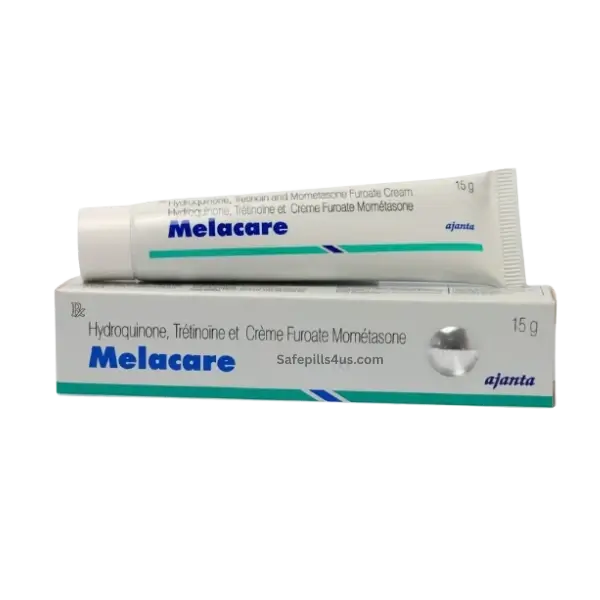
Melacare Cream 15 gm — Advanced cream for melasma & dark spots
Melacare Cream 15 gm is a prescription-strength topical product used to reduce stubborn brown patches, melasma, and other forms of
hyperpigmentation. It’s often prescribed by dermatologists when simpler creams haven’t helped enough. In plain words: this cream helps fade dark spots, evens out skin tone, and speeds up skin renewal but you should use it carefully and under medical guidance.
What is Melacare Cream 15 gm?
Melacare is a combination topical formulation aimed at treating pigment-related skin concerns. The tube usually contains a mix of a skin‑lightening agent, a retinoid, and a mild topical steroid. Together, these ingredients work to decrease pigment production, increase skin cell turnover, and control inflammation that can worsen discoloration. The pack size commonly seen is
15 gm, which is convenient for short-term, doctor-guided courses.
Active ingredients — in plain words
Note: exact composition can vary by manufacturer, so always check the pack or leaflet for the precise ingredients.
Hydroquinone (skin‑lightener)
Hydroquinone is the ingredient that directly blocks melanin (the pigment) production. So, if your skin is making too much pigment in certain spots, hydroquinone helps tone that down. It’s a commonly used depigmenting agent and often gives visible results when used correctly.
Tretinoin (retinoid)
Tretinoin speeds up skin cell turnover. In plain words: it helps your skin shed the pigmented cells faster and encourages new, clearer skin to come up. It also improves absorption of the other actives, so they work better. But tretinoin can make skin more sensitive to sunlight, so sunscreen is a must.
Topical corticosteroid (anti‑inflammatory)
A mild steroid is usually included to reduce irritation and inflammation that can happen when you use strong depigmenting and retinoid agents. That calms the skin while the other ingredients do their job. However, prolonged steroid use can cause side effects, so its use is typically limited and monitored by your doctor.
What Melacare is used for
- Melasma (patchy brown discoloration, often on the face)
- Post‑inflammatory hyperpigmentation (dark spots after acne, injury, or inflammation)
- Age spots and sun-induced spots
- Uneven skin tone where pigmentation is the main concern
How to use Melacare Cream 15 gm
- Use only as directed by your dermatologist. Don’t self-prescribe.
- Usually applied at night on clean, dry skin. A pea‑sized amount is enough for the face spread gently over the darker areas, not the whole face unless instructed.
- Start slowly: many doctors advise applying every other night for the first week to check tolerance, then move to nightly use if your skin handles it.
- Avoid contact with eyes, nostrils, mouth, and broken skin.
- Use a broad‑spectrum sunscreen during the day and limit sun exposure tretinoin and hydroquinone increase sun sensitivity.
- Typical courses last several weeks to a few months depending on response and side effects. Your doctor will set the duration. Don’t continue indefinitely.
Benefits — what people notice
- Noticeable reduction in brown patches and dark spots with consistent use.
- Smoother, more even skin tone as pigmented outer layers shed faster.
- Reduced inflammation and less risk of post‑treatment irritation thanks to the steroid component.
- Often faster results than single‑ingredient creams because of the combined action.
Possible side effects — what to expect
Most people get mild irritation at first. That’s normal. But watch for:
Common, usually mild
- Redness, dryness, flaking or peeling
- Stinging or burning when first applied
- Temporary increased sensitivity to sunlight
Less common, more serious
- Severe irritation or allergic reaction (stop and see your doctor)
- Steroid‑related problems if used too long: thinning of skin, visible blood vessels, acne‑like eruptions, or rebound pigmentation after stopping
- Uneven lightening if applied incorrectly (only to spots, not surrounding skin)
If you experience strong irritation, swelling, or signs of infection, stop use and get medical advice.
Precautions & interactions
- Pregnancy & breastfeeding: Avoid unless your doctor specifically approves. Some ingredients are not recommended during pregnancy.
- Children: Not usually recommended for kids unless a pediatric dermatologist prescribes it.
- Other topical/chemical treatments: Don’t combine with other strong peeling agents (like aggressive chemical peels, strong AHAs/BHAs, or prescription retinoids) unless your dermatologist tells you to it can increase irritation.
- Oral medications: Inform your doctor if you’re on oral retinoids (isotretinoin) or photosensitizing drugs.
- Patch test: Consider a small patch test on the inner forearm for 48 hours if you’re worried about sensitivity or allergy.
Storage & packaging
- Pack size: 15 gm tube small and handy for short treatment courses.
- Store in a cool, dry place away from direct sunlight.
- Keep out of reach of children.
- Check the expiry date before use.
Prescription & availability
Melacare is usually a
prescription‑only cream. That’s because it contains potent actives that need monitoring. You’ll typically get it from pharmacies with a doctor’s prescription. Always follow the dosing and duration your dermatologist recommends.
Frequently Asked Questions (FAQ)
Q: How long before I see results?
A: Many people notice initial lightening within 4–8 weeks, but full improvement can take 2–3 months or longer. Be patient — pigmentation often needs steady, continued treatment.
Q: Can I use it during the day?
A: It’s best used at night. The retinoid increases sun sensitivity, and hydroquinone can be less stable in sunlight. If you must be outside, use a broad‑spectrum SPF 30+ or higher and reapply often.
Q: Is it safe to use every night?
A: Your doctor will advise. Some people tolerate nightly use; others need alternate‑night application at first. If you get persistent redness or peeling, reduce frequency.
Q: Can pregnant or breastfeeding women use Melacare?
A: Generally, it’s avoided in pregnancy and breastfeeding unless a healthcare professional says it’s okay. Always check with your doctor.
Q: Will it remove my dark spots permanently?
|
A: It can significantly reduce or clear many spots, but recurrence is possible, especially if sun exposure continues. Ongoing sun protection helps maintain results.
Reviews
There are no reviews yet.