Ivercor 12 mg — Powerful, simple help for common parasitic infections
Looking for a straight-talking product page? Here you go. Ivercor 12 mg is a prescription antiparasitic tablet that’s typically supplied as ivermectin 12 mg. It’s used to treat certain parasitic infections of the skin and gut so things like scabies, strongyloidiasis, and river blindness (onchocerciasis). In plain words, it helps knock out the bugs that shouldn’t be living in or on you.
Please check your pack or pharmacy label to confirm the exact active ingredient where you live. If your label lists a different ingredient, follow that label.
Why people pick Ivercor 12 mg
- Fast-acting relief when parasites are the problem (not for viruses or bacteria)
- Weight-based dosing to keep it precise
- Usually taken as a one-time dose, with a repeat later (depends on the condition)
- Can be combined with topical treatments for scabies and lice if your doctor recommends it
- Widely used under medical supervision worldwide
Quick note before we dive in
Ivermectin is not recommended for treating COVID‑19 outside properly run clinical trials. If you’ve heard mixed things online, stick with your doctor’s advice that’s the safe path.
What is Ivercor 12 mg?
- Type: Antiparasitic medicine (endectocide)
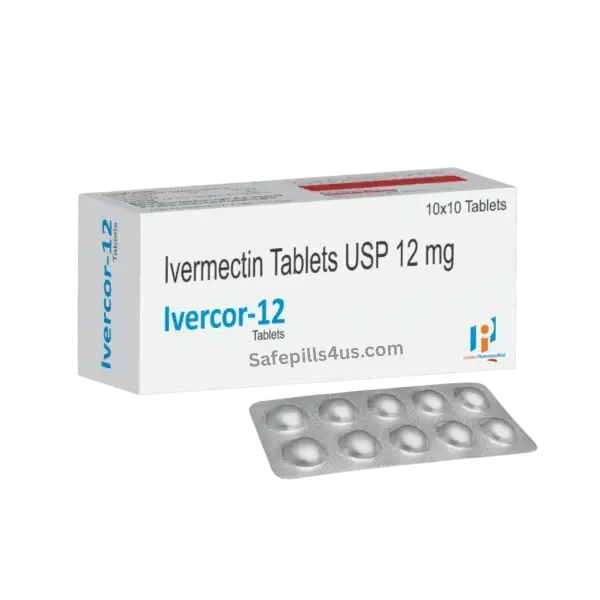
- Likely active ingredient: Ivermectin 12 mg (confirm on your package)
- Form: Oral tablet
- Use: Treats specific parasitic infections in the intestine and on the skin
What Ivercor 12 mg is commonly used for
- Strongyloidiasis (threadworm infection in the gut)
- Onchocerciasis (river blindness; reduces microfilariae)
- Scabies, including crusted scabies (often with topical permethrin)
- Head lice (sometimes used when topical treatments fail or aren’t tolerated; doctor-directed)
- Other helminth infections as guided by a specialist
How it works
Ivercor targets the parasite’s nerve and muscle cells. It opens special chloride channels, which paralyzes and kills the parasite. Think of it as switching off the parasite’s movement and feeding switch, so your body can clear them out. It doesn’t fix every stage of every parasite’s life cycle, but it does a solid job against the ones listed above.
How to take Ivercor 12 mg
The usual rules of the road
- Take it on an empty stomach with water (about 1 hour before food or 2 hours after), unless your doctor says otherwise.
- Dosing is weight-based your prescriber will calculate it. Most conditions use 200 micrograms per kilogram (0.2 mg/kg).
- Some infections need a repeat dose after 7–14 days; others are repeated every 6–12 months. Follow the exact plan on your script.
- Swallow whole. Don’t crush unless your pharmacist says it’s okay for your brand.
Typical doctor-directed regimens (easy overview)
- Strongyloidiasis: 200 mcg/kg as a single dose; sometimes repeated after 2 weeks if tests aren’t clear.
- Onchocerciasis: 150 mcg/kg once; repeated every 6–12 months to control microfilariae.
- Scabies (classic): 200 mcg/kg once; repeat in 7–14 days. Often paired with permethrin cream.
- Scabies (crusted): Multiple doses (e.g., days 1, 2, 8, 9, 15), plus topical therapy. This one needs close medical supervision.
- Head lice (off-label in some places): 200 mcg/kg; repeat in 7–10 days if your doctor advises.
Who can use it (and who shouldn’t)
Usually suitable for
- Adults and adolescents who weigh 15 kg or more
- Older adults (with a check on other meds and general health)
- Patients with diagnosed conditions listed above, as directed by a clinician
Use with caution or avoid if
- You’re allergic to ivermectin or any tablet ingredient
- You’re under 15 kg (children this small often need different strength or a different medicine)
- You’re pregnant or planning to be talk to your doctor first (benefit vs risk)
- You’re breastfeeding small amounts pass into milk; get personalized advice
- You have significant liver disease
- You have possible Loa loa infection (West/Central Africa); special testing may be needed to avoid rare serious reactions
Side effects — what to expect
Most people do fine. When side effects happen, they’re usually mild and short-lived.
Common, mild stuff:
- Nausea, stomach upset, or diarrhea
- Dizziness or sleepiness
- Itchy skin or rash (sometimes due to dying parasites rather than the medicine itself)
- Muscle aches, low-grade fever, or fatigue
Serious but uncommon seek help fast:
- Severe rash, hives, facial or throat swelling, trouble breathing
- Vision changes or severe eye irritation (especially in onchocerciasis due to parasite die-off)
- Confusion, severe dizziness, or coordination problems
- Yellowing skin/eyes, dark urine, unusual bleeding (rare liver/blood issues)
For river blindness treatment, you may hear Mazzotti reaction fever, intense itching, swollen lymph nodes, aches caused by microfilariae dying. It’s uncomfortable but expected; your clinician will guide you.
Interactions and things to avoid
Tell your doctor about all meds and supplements. Key points:
- Warfarin and other blood thinners: monitoring may be needed
- Strong CYP3A4 or P‑gp inhibitors (e.g., some antifungals like ketoconazole, macrolides like clarithromycin, HIV protease inhibitors) can increase ivermectin levels
- Enzyme inducers (e.g., rifampin, certain seizure meds) may reduce effectiveness
- Other drugs that affect the nervous system: use caution if you feel drowsy
- Alcohol: no direct major interaction, but avoid if you’re woozy or dehydrated
Two deep-dive tables
Table 1: Key product snapshot
| Item |
Details |
| Brand name |
Ivercor 12 mg |
| Likely active ingredient |
Ivermectin 12 mg (check your label) |
| Drug class |
Antiparasitic (endectocide) |
| What it treats |
Strongyloidiasis, onchocerciasis, scabies (incl. crusted), head lice (doctor-directed) |
| How it works |
Opens parasite chloride channels → paralysis → death |
| Standard dosing basis |
200 mcg/kg (0.2 mg/kg); onchocerciasis often 150 mcg/kg |
| Food instructions |
Empty stomach with water (1 hr before or 2 hrs after food) |
| Repeat dosing |
Depends on condition: 7–14 days (scabies/lice) or 6–12 months (onchocerciasis) |
| Age/weight use |
Typically for ≥15 kg; pediatric dosing must be supervised |
| Pregnancy/Breastfeeding |
Use only if prescriber decides benefits outweigh risks |
| Storage |
Below 25°C, dry, away from light and children |
| Rx status |
Prescription-only in many regions |
Table 2: Typical regimens by condition (informational; follow your prescription)
| Condition |
Usual dose |
Repeat schedule |
Extra notes |
| Strongyloidiasis |
200 mcg/kg single dose |
May repeat in ~2 weeks if needed |
Stool tests often guide repeat; good hygiene helps prevent re‑infection |
| Onchocerciasis |
150 mcg/kg single dose |
Repeat every 6–12 months |
Controls microfilariae; eye symptoms may flare transiently (Mazzotti reaction) |
| Scabies (classic) |
200 mcg/kg |
Repeat in 7–14 days |
Apply permethrin cream as advised; treat close contacts; wash linens hot |
| Scabies (crusted) |
200 mcg/kg on days 1, 2, 8, 9, 15 (may extend) |
As per specialist plan |
Must combine with intensive topical therapy and decontamination |
| Head lice (doctor-directed) |
200 mcg/kg |
Repeat in 7–10 days |
Comb hair, wash brushes/linens; topical agents may be preferred first-line |
Smart-use tips
- Take all doses exactly as prescribed timing matters for parasites
- Keep nails short; change clothes and bed sheets after dosing when treating scabies/lice
- Wash towels, bedding, and sleepwear on hot; vacuum carpets and upholstery
- Treat household or close contacts at the same time if your clinician suggests it
- If symptoms don’t ease in 48–72 hours, or worsen, check back promptly
Special guidance for travelers and high‑risk areas
- Lived in or traveled to Central/West Africa? Tell your doctor before starting. A test for Loa loa may be needed to avoid rare severe reactions.
- Immunocompromised or on steroids? You may need closer follow-up; strongyloides can be tricky in these cases.
- Eye involvement (onchocerciasis): You may see eye symptoms briefly worsen after treatment—contact your specialist if vision changes concern you.
Packaging and storage
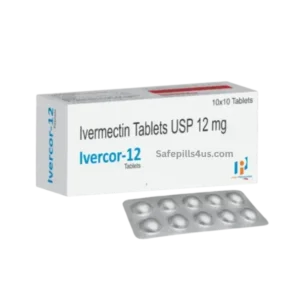
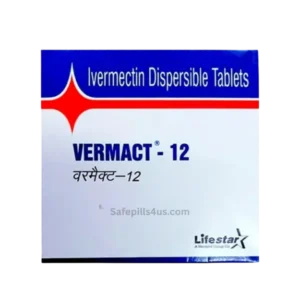
- Strength: 12 mg tablet
- Packs: Blister strips or bottles (varies by supplier)
- Look/shape: Depends on manufacturer always verify the name and strength on your pack
- Store below 25°C, in a dry spot, out of kids’ reach
- Do not use after the expiry date printed on the pack
Frequently asked questions
- Is Ivercor 12 mg the same as ivermectin?
In many markets, yes each Ivercor 12 mg tablet contains ivermectin 12 mg. Always double-check your pack or pharmacy label.
- How fast does it work?
Many people feel relief within 1–3 days as parasites die off and symptoms settle. Some itching may linger for a bit (especially with scabies) even after successful treatment.
- Can I take it with food?
Label guidance usually says empty stomach with water. If your doctor advises differently for your case, follow that.
- Can kids use Ivercor 12 mg?
Children who weigh at least 15 kg may be treated under a pediatrician’s direction. Very young children typically need different strengths for precise dosing.
- Do I need a second dose?
Often, yes. Scabies and lice usually need a repeat in 7–14 days. Strongyloides might need a second dose if tests aren’t clear. Onchocerciasis is repeated every 6–12 months. Your script will spell it out.
- Is it safe in pregnancy or while breastfeeding?
This needs a conversation with your clinician. It’s generally avoided in pregnancy unless the benefits clearly outweigh the risks. Small amounts enter breast milk; your doctor will guide you.
- What if I feel dizzy after taking it?
Dizziness can happen. Avoid driving or climbing ladders until you feel steady. If symptoms are severe or persistent, seek medical advice.
- Does it help with COVID‑19?
No. Ivermectin is not recommended for COVID‑19 outside clinical trials. Stick to treatments your healthcare provider endorses.
- Can I use it for tapeworms?
No—tapeworms need different medication. Get a diagnosis first, then the right treatment.
- What if my itching doesn’t stop after scabies treatment?
Post-scabies itch can last for weeks even after the mites are gone. Your doctor might suggest soothing creams or antihistamines. If new burrows or bumps appear, get rechecked.


Reviews
There are no reviews yet.