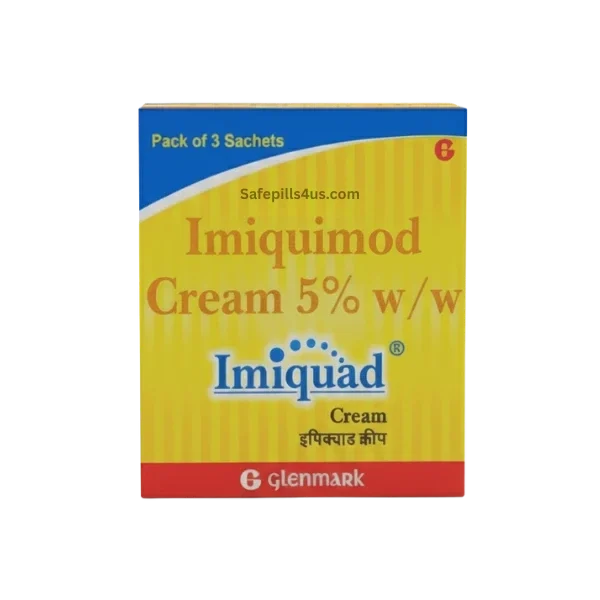
Imiquimod Cream 5% w/w a trusted, prescription-strength topical treatment used by healthcare providers for certain skin conditions caused by sun damage or viruses. If your doctor has suggested it, you’re likely dealing with one of these: actinic keratosis (rough, scaly sun spots), external genital/perianal warts, or superficial basal cell carcinoma. This cream doesn’t act like a bleach or peel. It works by nudging your own immune system to notice and clear the problem cells. In plain words: it helps your body clean up what shouldn’t be there.
Safe use of imiquimod starts with professional guidance, so always follow the plan your prescriber gives you. Below you’ll find a clear, human-friendly product overview to help you understand what it is, what it does, and what to expect while using it.
Key highlights
- Prescription-only topical treatment (5% w/w imiquimod)
- For actinic keratosis (AK), external genital/perianal warts, and superficial basal cell carcinoma (sBCC), as directed by your clinician
- Immune-response modifier: stimulates your body’s defenses instead of “burning” or “freezing”
- Thin-layer, skin-only application, usually at night, with wash-off after several hours
- Local skin reactions (redness, peeling, scabbing) are common and expected during treatment
- Not for eyes, mouth, inside the nose, rectum, vagina, or open wounds
What Imiquimod Cream 5% w/w is used for
Your doctor will prescribe imiquimod 5% for specific conditions. The most common are:
- Actinic keratosis (AK): These are rough, crusty patches from long-term sun exposure. They can be a warning sign of sun damage. Treating them helps reduce the risk they turn into something more serious.
- External genital and perianal warts (condyloma acuminata): Caused by certain HPV strains. The cream helps your immune system target the virus-infected skin cells so the warts shrink and clear.
- Superficial basal cell carcinoma (sBCC): A very early, top-layer type of skin cancer. When suitable, your doctor may choose this cream as a non-surgical option.
Important: use this medicine only for the condition your prescriber diagnosed. It’s not a “spot cream” for random bumps, moles, or rashes.
How it works (in simple terms)
Imiquimod is an immune-response modifier. It taps on a receptor in your skin (called TLR7) that basically tells your immune system, “Hey, come check this out.” Your body then releases natural signals (like interferon and other cytokines) to fight off virus-infected cells or abnormal cells. So, instead of directly killing anything, imiquimod helps your own defenses do the job. Because your immune system is involved, the treated area often gets red, irritated, crusty, and a bit angry-looking before it gets better. That’s normal for this kind of medicine.
Who can use it
- Adults: Commonly used for AK, external genital/perianal warts, and sBCC.
- Teens: In some regions, it may be used in those 12+ for external genital/perianal warts, but only under a clinician’s direction.
- Not for infants or young children unless your specialist clearly says so.
Skip imiquimod or talk to your prescriber first if:
- You’re allergic to imiquimod or any ingredient in the cream
- You have autoimmune conditions, are on immunosuppressive therapy, or have had an organ transplant
- You’re pregnant, planning to be, or breastfeeding (your clinician will weigh risks vs benefits)
- You have very inflamed, sunburned, or broken skin in the area you’d treat
What to expect during treatment
This is the part most people ask about. The area will likely get worse before it looks better. Here’s the usual flow:
- Early days: Mild tingling, burning, or redness can show up. Skin may start to feel dry.
- Middle weeks: Redness ramps up. Flaking, crusting, scabbing, even small open spots can appear. That’s the immune system working on the target.
- Later: The skin calms down as you approach the end of your prescribed course. It usually looks pink and new after healing.
The reaction can vary. Some people get only mild redness; others get a stronger response. Your prescriber aims for “enough” reaction to be effective, but not so much that you can’t function.
How to use (general guidance—always follow your prescriber)
Your exact schedule depends on your diagnosis and your doctor’s plan. Some conditions are treated a few nights a week; others more frequently. Your clinician will decide your total duration (often several weeks).
Basic steps:
- Wash and dry: Gently wash the area with a mild, fragrance-free cleanser. Pat dry. Wait a few minutes until the skin is completely dry.
- Apply a thin layer: Use just enough imiquimod 5% cream to cover the treatment area and a tiny margin if directed. Rub it in until it disappears. More cream doesn’t mean faster results, so keep it thin.
- Leave it on: Typically applied at bedtime and left on for several hours (often overnight) as directed by your clinician.
- Wash off: In the morning (or after the instructed time), wash the area with mild soap and water. Pat dry.
- Wash hands: Before and after application, wash your hands well.
- Protect the skin: Avoid heavy cosmetics, harsh exfoliants, acids, or alcohol-based products on the treated area unless your clinician says it’s fine.
- Sun care: The treated skin can be extra sensitive. Use broad-spectrum sunscreen and protective clothing. Avoid tanning beds, seriously.
Useful tips:
- For genital wart treatment: Do not have sexual contact while the cream is on your skin. It can weaken condoms and diaphragms and may irritate your partner’s skin.
- Single-use packets: If your product is in sachets, use the amount you need for one application and discard the rest—even if some is left.
- Tubes/pumps: Do not touch the tip to your skin. Recap tightly after use.
- Sensitive areas: Do not use in or around the eyes, inside the nose, mouth, rectum, or vagina. If it gets there, rinse with plenty of water and contact your clinician.
- If irritation gets intense: Your prescriber may advise taking short breaks (“treatment holidays”) or adjusting frequency. Don’t change the plan on your own check in first.
Side effects and safety notes
Common, usually mild-to-moderate:
- Redness, burning, itching
- Dryness, flaking, peeling
- Swelling, tenderness
- Crusting, scabbing, small open sores at the treatment site
- Headache or mild flu-like feelings, sometimes
Less common, talk to your clinician if you notice:
- Severe pain, significant swelling, pus, or oozing
- Fever or feeling very unwell
- Skin color changes (light or dark patches) that bother you
- Worsening rash beyond the treated area
Serious, get medical help promptly:
- Signs of an allergic reaction: hives, trouble breathing, swelling of face/lips/tongue
- Eye exposure with severe pain or vision changes
- Large areas of skin breakdown or uncontrolled bleeding
Interactions and cautions:
- Using other strong topicals (like retinoids, acids, or steroids) on the same area may increase irritation or affect results. Coordinate with your prescriber.
- If you’re on immunosuppressants or have conditions affecting your immune system, tell your doctor—imiquimod relies on your immune response to work.
- Avoid UV exposure and tanning beds during treatment.
Ingredients and pack info
- Active ingredient: Imiquimod 5% w/w
- Inactive ingredients: These vary by manufacturer. Formulas usually include emulsifiers and moisturizers to help the cream spread evenly and absorb well.
Packaging:
- Often supplied as single-use sachets or as a multi-use tube or pump. Pack size and exact format depend on the brand and your region. Check your pack’s label.
Storage and handling
- Store at room temperature, away from direct heat and light
- Keep tightly closed
- Keep out of reach of children and pets
- Do not use past the expiry date
- If using sachets, discard after one application (don’t save leftovers)
Results timeline
How fast you see changes depends on the condition, how your skin reacts, and the plan your doctor set. Many people notice visible changes within the first couple of weeks (redness and crusting), with clearing continuing over the treatment course and beyond as the skin heals. It’s normal for the site to look worse before it looks better—don’t panic. If you’re unsure whether your reaction is on track, snap a clear photo and ask your prescriber. That helps them guide you.
Why patients and clinicians choose imiquimod 5%
- Non-surgical option for select cases: Handy when a cut or freeze isn’t ideal
- At-home application: Convenient once you know the routine
- Targets the root cause: Activates your immune defenses against abnormal or virus-infected cells
- Minimal systemic absorption: It mostly stays where you put it
Who should not use Imiquimod Cream 5% w/w
- Anyone without a clear diagnosis and prescription
- People with known allergy to imiquimod
- On severely inflamed, open, or sunburned skin in the area you’d treat
- Inside body openings (eyes, mouth, nose, rectum, vagina) or on mucous membranes
If you’re pregnant, planning pregnancy, or breastfeeding, discuss it with your clinician before using. They’ll help you weigh options.
Helpful routine add-ons
- Gentle, fragrance-free cleanser: Keep things simple while your skin is reactive
- Plain, non-irritating moisturizer: Apply after washing off the cream if your clinician approves
- Broad-spectrum sunscreen SPF 50+: Daily. No exceptions while treating sun-damaged skin
Related products
- Fluorouracil 5% Cream (for actinic keratosis; clinician-directed)
- Sinecatechins 15% Ointment (for external genital warts, as directed)
- Podofilox 0.5% Solution or Gel (for external genital warts, clinician-guided use)
- Salicylic Acid Wart Remover (OTC, for common and plantar warts—not genital warts)
- Broad-Spectrum Sunscreen SPF 50+ (daily sun protection for photo-damaged skin)
- Gentle, Fragrance-Free Cleanser and Moisturizer (to support barrier while treating)
Frequently Asked Questions
Q: What exactly is Imiquimod Cream 5% w/w used for?
A: It’s a prescription topical used for actinic keratosis, external genital/perianal warts, and superficial basal cell carcinoma, as determined by your healthcare provider. It helps your immune system target abnormal or virus-infected skin cells.
Q: How do I apply it?
A: Usually at bedtime: thin layer to the clean, dry treatment area, rub in until it disappears, leave on for several hours, then wash off. Your prescriber will set the exact number of nights per week and how long to continue.
Q: How long before I see results?
A: It varies. Many people see a reaction within the first couple of weeks. Full results typically take several weeks, and healing continues after you finish the course. The area can look worse before it improves—this is expected.
Q: Can I use makeup or skincare on top?
A: Keep it minimal. Avoid harsh exfoliants, acids, scrubs, or alcohol-based toners on the treated skin. If you need a moisturizer or sunscreen, pick gentle, fragrance-free options and apply after you wash off the cream.
Q: Can I use it for warts on my hands or feet?
A: Imiquimod is commonly used for external genital and perianal warts. Hand/foot (common or plantar) warts are usually treated with other methods like salicylic acid, cryotherapy, or as your clinician advises.
Q: Is it safe during pregnancy or breastfeeding?
A: Talk with your clinician. They’ll review risks and benefits and suggest the safest path for you.
Q: Can I have sex while treating genital warts with imiquimod?
A: Avoid sexual contact while the cream is on your skin. It can irritate your partner’s skin and may weaken condoms or diaphragms. After washing off, follow your clinician’s advice about timing and protection. 



Reviews
There are no reviews yet.