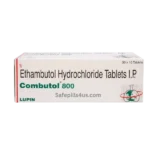
Combutol 800 mg (Ethambutol) – Product Description
Combutol 800 mg is an anti‑TB medicine that contains ethambutol. It’s used as part of a combination treatment plan to fight tuberculosis (TB) in the lungs and other parts of the body. In plain words, this tablet helps stop TB bacteria from growing so your body can clear the infection. It doesn’t work on its own, though your doctor will pair it with other TB medicines for the best results.
If you’ve been prescribed Combutol 800 mg, you’re likely on a structured TB regimen with strict timing and follow‑ups. Stick to the plan. TB treatment is long, but it works when you take every dose exactly as directed.
What is Combutol 800 mg?
Combutol 800 mg is a high‑strength ethambutol tablet. Ethambutol is a well‑known anti‑TB medication used worldwide. Doctors combine it with other first‑line TB medicines to reduce the risk of resistance and to kill TB bacteria more effectively.
This 800 mg strength is often chosen to reduce pill burden for adults. Your exact dose depends on your body weight, kidney function, and which phase of TB treatment you’re in. So, your doctor or TB care team will set the schedule—daily or intermittent—based on your situation.
How Combutol (Ethambutol) works
Ethambutol slows down the growth of TB bacteria by interfering with their cell wall. Think of it like loosening the bricks in a wall—when the wall weakens, the bacteria can’t survive. In more technical terms, ethambutol inhibits enzymes (arabinosyl transferases) that TB bacteria need to build a strong cell wall. It’s mainly bacteriostatic (it stops growth), which is why it’s paired with other drugs that help kill the bacteria fully.
Who is Combutol 800 mg for?
- Adults and eligible adolescents being treated for active TB
- Patients whose doctors have added ethambutol to protect against drug resistance or to strengthen the initial phase of treatment
- People with TB outside the lungs (extrapulmonary TB), when a clinician recommends it as part of the regimen
Note: Ethambutol is usually not used alone. If you’re taking only one TB medicine, that’s a red flag double‑check your plan with your healthcare provider.
How to take it
- Take Combutol 800 mg exactly as your doctor tells you. TB doses are based on body weight and sometimes on kidney function.
- You can take it with or without food. If it upsets your stomach, a light meal can help.
- Swallow the tablet with water. Try to take it at the same time each day, because routine helps you stay on track.
- Do not double up if you miss a dose. If you forget and it’s close to your next dose, just skip the missed one and go back to your normal schedule.
- Don’t stop early, even if you feel better. TB can come back stronger if you don’t complete the full course.
- Avoid taking aluminum‑containing antacids within about 2 hours of your dose (they can reduce how much medicine your body absorbs).
If your kidneys don’t work as well as they should, your clinician may adjust how often you take it. That’s normal—ethambutol leaves the body through the kidneys.
Possible side effects
Not everyone gets side effects, but knowing what to watch for is important. Most are mild and manageable, but a few need quick attention.
Common:
- Upset stomach, nausea, or vomiting
- Loss of appetite
- Headache or dizziness
- Joint pain
- Mild skin rash or itching
Important to watch:
- Changes in vision, like blurred sight, trouble seeing fine details, or difficulty telling red from green
- Eye pain or seeing “spots” or dark patches
- Sudden changes in color vision
If you notice any eye symptoms at all, stop the medicine and contact your doctor right away. Ethambutol can sometimes inflame the optic nerve (optic neuritis). Most of the time, it improves after the drug is stopped—but early reporting matters.
Less common but serious:
- Allergic reactions (swelling of lips/face, severe rash, breathing trouble)
- Unusual fatigue, yellowing of skin or eyes (liver stress can occur, though it’s less common with ethambutol than with some other TB drugs)
- Numbness, tingling
- Increased uric acid (can trigger gout in some people)
Warnings and precautions
- Eyes and vision: You’ll likely have an eye check before or soon after starting, then at intervals during treatment. Tell your doctor promptly if anything changes with your vision.
- Kidney concerns: Dose adjustments may be needed. Regular monitoring is common.
- Gout or high uric acid: Ethambutol can raise uric acid levels, so let your doctor know if you’ve had gout in the past.
- Pregnancy and breastfeeding: Your doctor will weigh benefits and risks. Ethambutol is often part of TB therapy in pregnancy when needed. If breastfeeding, your care team will guide you and may monitor the baby.
- Children: Use is specialist‑guided. Young children who can’t report vision changes may need extra monitoring.
- Driving and machinery: If you feel dizzy or your vision isn’t clear, avoid driving or using machines until it settles.
- Alcohol: Go easy. Alcohol can stress the liver, and many TB meds (as a group) can also affect the liver.
Drug interactions
- Antacids containing aluminum: They can reduce absorption. Keep a gap of about 2 hours before or after your Combutol dose.
- Other TB medicines: Ethambutol is designed to be used with them. Your team will balance the combination to limit side effects and prevent resistance.
- Any prescription, over‑the‑counter, or herbal products: Always share a full list with your clinician. It helps them protect you from avoidable interactions.
Storage and handling
- Store in a cool, dry place at room temperature.
- Keep tablets in their original strip or container until use.
- Protect from moisture and direct sunlight.
- Keep out of reach of children and pets.
What you get
- Each tablet contains Ethambutol Hydrochloride 800 mg
- Inactive ingredients (excipients) to form the tablet
- Pack sizes may vary by supplier
Why this strength matters
The 800 mg strength helps reduce the number of tablets you need to take, which is a big deal during multi‑month TB treatment. Fewer pills can mean better adherence. Your doctor will decide if 800 mg fits your weight category and your overall regimen. If not, they might adjust to a lower strength or use a fixed‑dose combination that bundles several TB drugs into a single tablet.
Frequently asked questions (FAQ)
Q: What is Combutol 800 mg used for?
A: It’s used to treat active tuberculosis as part of a multi‑drug regimen. It helps stop TB bacteria from multiplying while other medicines work to kill them.
Q: Can I take Combutol 800 mg by itself?
A: No. Ethambutol should not be used alone for TB. It must be combined with other TB medicines to prevent resistance and fully control the infection.
Q: How long will I need to take it?
A: TB treatment usually lasts several months. The exact duration depends on your diagnosis, your response to therapy, and lab results. Your TB team will guide you through each phase.
Q: How should I take it—with food or without?
A: You can take it with or without food. If it upsets your stomach, take it after a light meal. Avoid aluminum‑containing antacids within about 2 hours of your dose.
Q: What if I miss a dose?
A: Take it when you remember unless it’s close to the time for your next dose. Don’t double up. Just get back on your regular schedule.
Q: Does Combutol cause eye problems?
A: It can, rarely, cause optic neuritis (inflammation of the optic nerve). Watch for blurred vision, color vision changes (especially red/green), or trouble seeing details. Report any eye symptoms right away.
Q: Is it safe during pregnancy or breastfeeding?
A: Your doctor will decide based on your case. Ethambutol is commonly used in TB regimens during pregnancy when benefits outweigh risks. During breastfeeding, it’s generally considered compatible, but you should still check in with your healthcare team.
Related products
- Combutol 200 mg (Ethambutol)
- Combutol 400 mg (Ethambutol)
- Combutol 1000 mg (Ethambutol)
- R-Cin 300 mg (Rifampicin)
- Rifagut 550 mg (Rifaximin)
- Macox Plus (Isoniazid + Rifampicin)
- Roxid 150 mg (Roxithromycin)
- Akurit 4 Tablet (Isoniazid + Rifampicin + Pyrazinamide + Ethambutol)
- Bendex 400 mg (Albendazole)







Reviews
There are no reviews yet.