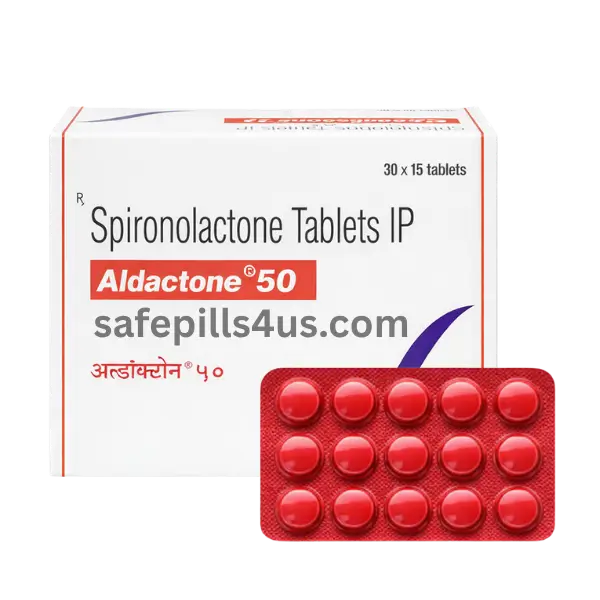
Aldactone 50 mg Spironolactone Quick Overview
Aldactone 50 mg is a potassium sparing diuretic used to reduce extra fluid, ease blood pressure, and block the effects of aldosterone. Many doctors use it for edema from heart failure or liver disease, for high blood pressure when other options are not enough, and for certain hormone related problems like primary hyperaldosteronism. In women, it is also commonly used off label to help with hormonal acne and excess hair growth when a clinician thinks it is right. The active ingredient is spironolactone, and the 50 mg tablet makes dosing simple when you need a moderate strength.
This page keeps things practical and easy to read. No jargon overload. Just what Aldactone does, how to take it, what to avoid, and the safety checks to keep on your radar.
What Aldactone 50 mg is Used for
Aldactone can be prescribed for a range of conditions where aldosterone is causing trouble or where extra fluid needs to be moved out.
- Edema from heart failure, cirrhosis, or kidney issues
- High blood pressure when add on therapy is needed
- Primary hyperaldosteronism, both diagnosis and treatment
- Low potassium from other diuretics that needs balancing
- Hormonal acne and excess hair growth in women, off label
Your exact plan depends on your diagnosis and labs. Always follow your prescriber’s instructions, not a one size fits all schedule from the internet.
How Spironolactone Balances Your Body
Spironolactone blocks mineralocorticoid receptors, which are the docking sites for aldosterone in the kidney. When aldosterone is blocked, your body lets go of sodium and water while holding on to potassium. That means less swelling and lower pressure in your blood vessels, but without wasting potassium the way some other water pills do.
It also has antiandrogen effects. In simple terms, it can dial down the impact of certain male hormones. That is one reason it can help with hormonal acne and hirsutism in women under a clinician’s care.
Typical Dosing and Simple Directions
Do not change your dose without your clinician’s okay. These are common patterns your prescriber may use.
- Edema and heart failure: often 25 to 50 mg once daily. Some plans use 25 mg at first, then increase to 50 mg if needed.
- High blood pressure: usually 25 to 100 mg daily in one or two doses, based on response and labs.
- Primary hyperaldosteronism: sometimes higher daily doses are used short term, then adjusted.
- Acne or hirsutism in women: often 50 to 200 mg daily, typically starting low and stepping up.
Take Aldactone at the same time each day with water. Food is fine. Because it can make you urinate more, many people prefer morning dosing. If it upsets your stomach, take it with a small meal.
Missed dose. Take it when you remember unless it is close to the next one. If it is close, skip the missed dose. Do not double up.
Who Should not Take Aldactone Tablets
Avoid Aldactone unless your prescriber says otherwise if you have any of the following.
- High potassium levels or a history of dangerous hyperkalemia
- Severe kidney problems or you are unable to make urine
- Addison’s disease or other conditions with low aldosterone
- Known allergy to spironolactone or any tablet ingredient
- You are pregnant or planning pregnancy
Aldactone is not recommended in pregnancy because of potential effects on a male fetus. If there is any chance you could become pregnant, use reliable contraception and talk with your clinician first.
Key Warnings and Safety Monitoring Steps
Aldactone is very helpful when used correctly, but it needs respect and routine labs.
- Potassium can rise too high. Your clinician will check blood potassium and kidney function after starting, after dose changes, and at regular intervals.
- Dehydration can sneak up. Call your prescriber if you have vomiting, diarrhea, or you are not drinking well.
- Breast changes can happen. Spironolactone can cause breast tenderness or enlargement. This can affect men as well.
- Long term animal data showed tumors in rats. Human risk is not clear, but the product label advises using Aldactone only for approved or well justified uses.
Common Side Effects and Simple Tips
Most side effects are mild and tend to improve as your body adjusts:
- Dizziness or lightheaded feeling, especially when standing up
- More frequent urination, mostly early in treatment
- Stomach upset, nausea, or mild cramping
- Breast tenderness or swelling
- Changes in menstrual periods for some women
- Lowered libido or erectile difficulty in some men
- Headache or mild fatigue
Helpful tips:
- Stand up slowly to reduce head rushes
- Take with food if your stomach is sensitive
- Keep steady fluid intake unless your doctor sets a limit
- Track your weight at the same time daily to monitor fluid changes
Drug interactions and lifestyle Cautions
Some medicines and supplements raise potassium or affect kidney function. That is where trouble starts, so keep your care team in the loop
- Avoid potassium supplements and salt substitutes that list potassium
- ACE inhibitors, ARBs, aliskiren, and renin blockers can push potassium higher
- Trimethoprim and trimethoprim sulfamethoxazole can sharply raise potassium
- NSAIDs like ibuprofen can reduce kidney blood flow and blunt the diuretic effect
- Cyclosporine, tacrolimus, and heparin products may increase potassium
- Other potassium sparing diuretics like amiloride or triamterene should not be combined
- Digoxin levels can be affected, so monitoring may be needed
- Alcohol can worsen dizziness or dehydration, so be cautious
Always give your pharmacist a full list of prescriptions, over the counter products, and herbals.
Practical Guidance for Daily Success
- Take Aldactone the same time every day
- Keep routine lab appointments to check potassium and kidney function
- Ask about a simple blood pressure and weight log at home
- Learn your personal red flags like muscle weakness or skipped heartbeats
- Do not start or stop any medicine without checking for interactions
Storage and Handling Made Simple
Store Aldactone 50 mg at room temperature in a dry place. Keep tablets in the original container until use. Do not use past the expiration date. Keep out of reach of children and pets.
Frequently Asked Questions About Aldactone 50 mg
What is Aldactone 50 mg used for?+
It is used to treat edema from heart failure or liver disease, help manage high blood pressure, and treat primary hyperaldosteronism. In women, it may also be used off label for hormonal acne and hirsutism under a clinician’s care.
How fast does Aldactone start working?+
You may notice increased urination within a day or two when treating fluid buildup. Blood pressure changes and acne improvement usually take a few weeks of consistent use.
Can I take Aldactone with other water pills?+
Sometimes yes. It is often combined with a loop diuretic for edema treatment. Your clinician will decide the plan and monitor your potassium and kidney function.
What foods should I avoid while on Aldactone?+
Avoid potassium-based salt substitutes. High-potassium foods should be taken in moderation if your levels tend to run high. Your care team will guide you based on your lab results.
Does Aldactone cause weight loss?+
It helps remove excess fluid, so weight related to swelling may decrease. It is not a weight loss medicine. If weight drops quickly or you feel weak, contact your clinician.
Is Aldactone safe in pregnancy or while breastfeeding?+
It is not recommended during pregnancy. If breastfeeding, discuss risks and benefits with your clinician to decide what is appropriate for you.
What should I do if I miss a dose?+
Take it when you remember unless it is close to your next dose. If so, skip the missed dose and continue your regular schedule. Do not take two doses at once.
How will my doctor monitor me on Aldactone?+
Expect blood tests to check potassium levels and kidney function after starting treatment and after dose changes. Your clinician will also monitor blood pressure, weight, and symptoms regularly.