

Zepbound vs Wegovy – Which Is Better for Weight Loss, Cost & Side Effects?

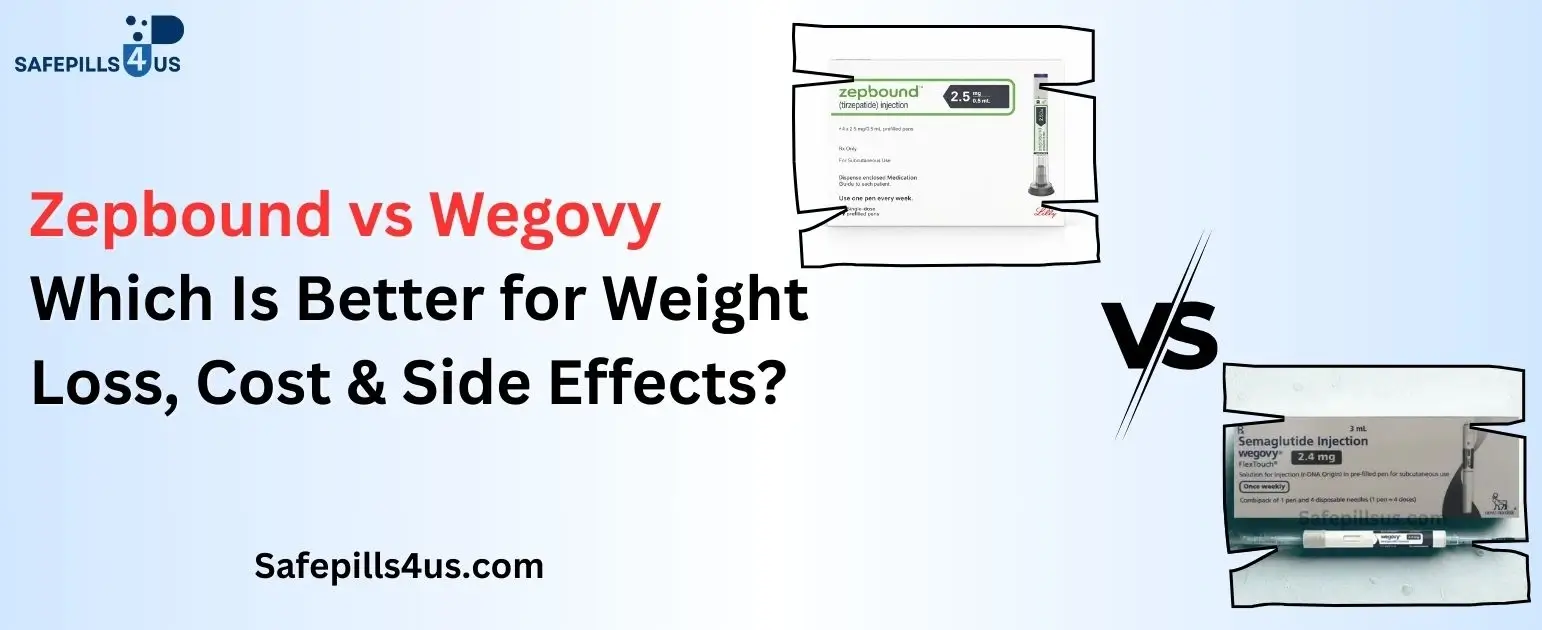
Zepbound vs Wegovy: Key Takeaways
- Zepbound (tirzepatide) and Wegovy (semaglutide) are popular prescription options for chronic weight management. They work in similar, but slightly different, ways to curb appetite and reduce calorie intake.
- Both come as once‑weekly, single‑use prefilled injection pens. In some places, an oral semaglutide pill for weight loss may also be available; if you’re using an oral option, expect special empty‑stomach instructions. Always check the current FDA label.
- Zepbound may lead to greater average weight loss than Wegovy in clinical studies. It also has strong evidence for improving obstructive sleep apnea (OSA) in adults with obesity. Wegovy is approved to reduce cardiovascular risk in certain adults and is being studied for liver disease; confirm current indications with your prescriber.
Note on evolving info:
- As of late 2024, oral semaglutide (Rybelsus) was FDA‑approved for type 2 diabetes, not weight loss. Oral semaglutide for weight management and any new Wegovy doses may have changed since verify the latest label and availability.
- Pricing and savings offers (including GoodRx or manufacturer programs) change frequently and vary by eligibility.
How They Work: Wegovy vs Zepbound
- Zepbound mechanism: Dual GIP/GLP‑1 receptor agonist. Mimics two gut hormones (GIP and GLP‑1) to reduce hunger, slow stomach emptying, and improve insulin response.
- Wegovy mechanism: GLP‑1 receptor agonist. Acts like natural GLP‑1 to increase fullness signals, slow gastric emptying, and lower cravings.
- Good to know: Their active ingredients tirzepatide (Zepbound) and semaglutide (Wegovy)—also improve blood sugar. Lower‑dose versions are used for type 2 diabetes as Mounjaro (tirzepatide), Ozempic (injectable semaglutide), and Rybelsus (oral semaglutide).
Zepbound vs Wegovy Weight Loss
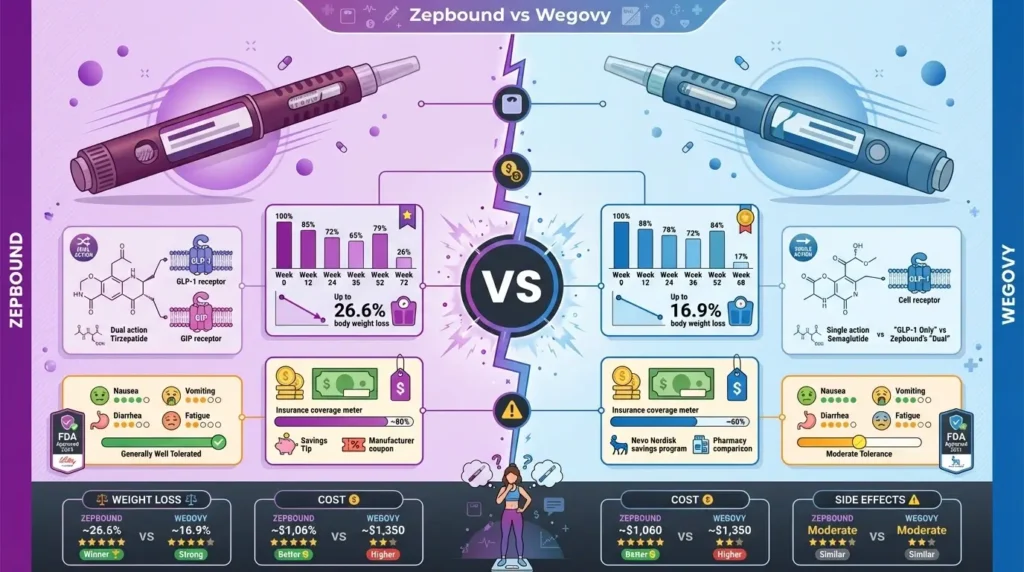
- Head‑to‑head data: A recent trial in adults without diabetes reported greater average weight loss with Zepbound vs Wegovy at 72 weeks (about 20% vs 14%). Individual results vary.
- Individual trials:
- Zepbound 15 mg: Nearly 21% average loss at 72 weeks.
- Wegovy 2.4 mg injection: Nearly 15% average loss at ~68 weeks.
- Oral semaglutide for weight loss (where available): About 14% average loss at ~64 weeks; those completing the full trial period lost more on average.
- In type 2 diabetes: Both typically yield smaller average losses than in non‑diabetic trials.
- What it means: For maximum average weight loss, Zepbound vs Wegovy often has the edge. For people with established cardiovascular disease, Wegovy has a labeled heart‑risk reduction benefit.
Zepbound vs Wegovy: Approved Uses and Age Groups
- Zepbound uses: Chronic weight management in adults with obesity or overweight plus a related condition. Strong evidence for improving obstructive sleep apnea (OSA) in adults with obesity; ask about the current FDA label.
- Wegovy uses (injection): Chronic weight management in adults and adolescents 12+. FDA‑approved to reduce major cardiovascular events in certain adults with established cardiovascular disease and a larger body size.
- Wegovy uses (pill): Availability and indication can vary. Confirm with your clinician and the current FDA label.
- Liver disease note: Semaglutide has shown promise in MASH (formerly NASH) with fibrosis in studies, but labeling changes are evolving. Confirm current approvals.
Zepbound vs Wegovy Side Effects
Common with both (often during dose increases):
- Nausea, vomiting, diarrhea, constipation, abdominal pain
- Indigestion, decreased appetite, belching
- Headache, dizziness, fatigue
- Injection‑site reactions
Serious risks to discuss promptly:
- Pancreatitis (severe abdominal pain), gallbladder issues (gallstones), dehydration‑related kidney problems
- Low blood sugar if combined with insulin or sulfonylureas in diabetes
- Mood changes, including rare reports of suicidal thoughts
Boxed warning (both):
- Risk of thyroid C‑cell tumors seen in rodents. Do not use if you or a family member has medullary thyroid carcinoma (MTC) or MEN2. Report neck swelling, hoarseness, or trouble swallowing.
Notable differences:
- Eye health (Wegovy): Rapid glucose improvements have been linked to worsening diabetic retinopathy in some people with diabetes—monitor eyes if you have retinopathy.
- Birth control (Zepbound): During dose escalation, tirzepatide may reduce absorption of oral contraceptives; consider backup contraception as advised.
- Pregnancy and breastfeeding: Not recommended. Discuss stop‑timing well before a planned pregnancy.
Zepbound vs Wegovy Cost and Savings
List prices in the US (without insurance; approximate and changing):
- Zepbound: Often around $1,000–$1,100 per month
- Wegovy: Often around $1,300–$1,400 per month
Coverage snapshot:
- Commercial insurance: Many plans cover one or both with prior authorization (BMI criteria, lifestyle documentation, follow‑ups).
- Medicare: Wegovy may be covered for select adults with established cardiovascular disease due to its heart‑risk indication; coverage for obesity alone remains limited. Zepbound vs Wegovy coverage is less common under Medicare.
- Medicaid: Varies by state and is evolving.
Ways to save (offers change; eligibility required):
- Manufacturer copay cards: With coverage, some people pay as little as $25 per month. Without coverage, cash‑pay programs can lower monthly costs but are still significant.
- Pharmacy programs: Introductory or subscription pricing may be available for a limited time and specific doses. Always confirm the latest terms, pharmacies, and supply.
- Direct programs: Some manufacturers offer lower‑cost vials or pharmacy channels at set monthly prices for certain doses; availability can change.
Dosing and Titration Basics
- Zepbound injection: Start 2.5 mg weekly, then gradually increase (5 mg → 7.5 mg → 10 mg → 12.5 mg → 15 mg) as tolerated. Maintenance is typically 5–15 mg weekly.
- Wegovy injection: Start 0.25 mg weekly, then increase (0.5 mg → 1.0 mg → 1.7 mg → 2.4 mg). Most maintain 2.4 mg weekly.
- Oral semaglutide (where approved for weight loss): Taken first thing in the morning on an empty stomach with a small amount of water; wait at least 30 minutes before eating, drinking, or taking other meds. Exact dose schedule depends on the product follow the label.
Missed dose tips:
- If you miss a weekly injection, many labels allow a catch‑up dose within a specific window; otherwise skip and resume on schedule. If you miss multiple doses, your prescriber may re‑titrate from a lower dose.
Wegovy vs Zepbound: Which Fits You Best
- Maximum average weight loss: Zepbound
- Proven cardiovascular risk reduction: Wegovy (adults with established CVD)
- Lower list price: Zepbound
- Teens and young adults: Wegovy (approved 12+ for obesity)
- Fewer side effects: Tie overall; individual tolerance varies
- Taking birth control pills: Slight edge to Wegovy (no pill‑absorption caution during dose escalations)
- Access and coverage: Often the real tiebreaker
Quick Comparison Table: Zepbound vs Wegovy
| Feature | Zepbound (tirzepatide) | Wegovy (semaglutide) |
|---|---|---|
| How it works | Dual GIP + GLP‑1 agonist | GLP‑1 agonist |
| Form(s) | Weekly injection pen | Weekly injection pen; in some places, an oral option may be available |
| Typical weight loss (no diabetes) | Up to ~21% at 72 weeks (dose‑dependent) | ~15% at ~68–72 weeks; higher doses under study |
| Key approvals | Chronic weight management in adults; OSA benefit shown in trials | Chronic weight management (adults + 12+); CV risk reduction in select adults |
| Side effects | Mostly GI; boxed thyroid warning | Mostly GI; boxed thyroid warning |
| List price (US) | Often lower | Often higher |
FAQs About Zepbound and Wegovy
Zepbound contains tirzepatide and works on both GLP-1 and GIP receptors, while Wegovy contains semaglutide and works only on GLP-1 receptors. This difference in mechanism may affect weight loss results and response.
Clinical studies suggest Zepbound may lead to greater average weight loss compared to Wegovy. However, individual results vary depending on dosage, lifestyle, and overall health.
Yes, both medications commonly cause nausea, vomiting, diarrhea, constipation, and stomach discomfort. Side effects are usually more noticeable during dose increases.
Costs depend on insurance coverage and pharmacy pricing. Zepbound often has a slightly lower list price, but actual out-of-pocket expenses vary by individual plan.
Both medications are typically taken as a once-weekly injection under medical supervision.
Yes, both require a prescription and should be used under the guidance of a healthcare professional.
The best option depends on your medical history, weight-loss goals, tolerance to side effects, and insurance coverage. A healthcare provider can help determine the right choice for you.
The Bottom Line
Zepbound vs Wegovy is a close call. If your goal is the greatest average weight loss, Zepbound generally has a slight advantage. If you have established cardiovascular disease or need an option for adolescents, Wegovy stands out. Side effects are similar and mostly gastrointestinal, and real‑world costs hinge on insurance and savings programs. The best choice is the one you can access, tolerate, and stick with paired with sustainable nutrition, activity, sleep, and stress management.
Medical disclaimer: This guide is educational and not a substitute for medical advice. Indications, dosing, and savings programs change. Always confirm the latest FDA label and talk with a licensed healthcare professional before starting, stopping, or switching Zepbound or Wegovy.