Description
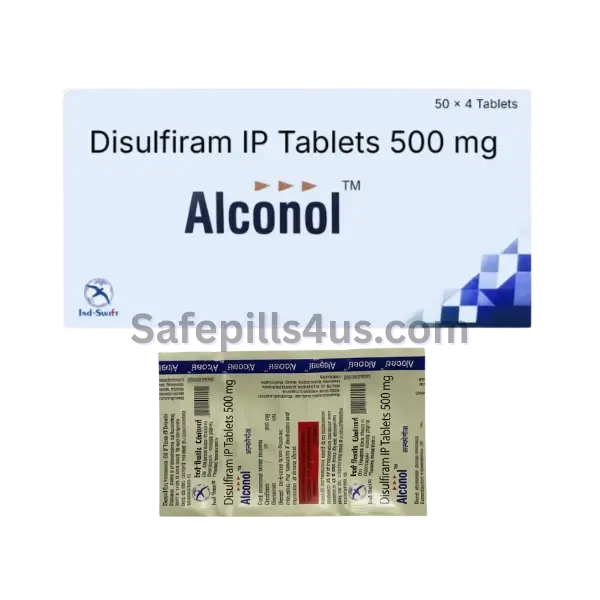
Alconol 500 mg Tablet (Disulfiram) — Support for staying alcohol‑free
Alconol 500 mg is a prescription tablet used to help people with alcohol dependence stay off alcohol. The active ingredient is disulfiram 500 mg. It doesn’t cure addiction on its own, but it adds a powerful layer of accountability if you drink alcohol while taking it, you’ll feel very sick, very fast. That strong deterrent gives you space to work on recovery plans, counseling, and healthier routines without the constant pull to drink.
What it’s for (and why people use it)
- Helps maintain abstinence in alcohol use disorder
- Works as a deterrent therapy when paired with counseling/support
- Useful if you’ve tried to quit and keep relapsing into slips or binge cycles
How it works
Your body normally breaks down alcohol in steps. Disulfiram blocks a key
enzyme (aldehyde dehydrogenase). So if you drink, acetaldehyde builds up in your system and makes you feel awful flushing, pounding headache, nausea, vomiting, chest tightness, fast heartbeat, anxiety. The message your brain gets is clear: alcohol = bad time. That wall between you and a drink helps you stick with your no‑alcohol plan.
What you’re getting
- Strength: 500 mg disulfiram per tablet
- Form: Film‑coated oral tablet
- Pack: Varies by brand; check your box for exact count
How to use (follow your clinician’s plan)
- Start after you’ve stopped drinking: usually at least 12 hours after your last alcoholic drink. Many doctors prefer 24 hours.
- Take at the same time each day, with or without food. Morning dosing is common.
- Don’t stop or change your dose on your own. If you miss a dose, take it when you remember unless it’s close to the next one then skip and continue. No doubling.
- Some providers give the first dose in the clinic to review safety and answer questions.
Alcohol is hidden in more places than you think
While on Alconol 500 mg, avoid all forms of alcohol, even small amounts in:
- Mouthwash, aftershave, hand sanitizers
- Cough syrups, cold meds, tonics, tinctures
- Cooking extracts (vanilla, almond), sauces, vinegars with alcohol, kombucha
- Certain topical products and cosmetics
Read labels and, if you’re unsure, ask a pharmacist. It’s better to pause and check than to risk a reaction.
Common benefits people notice
- Fewer urges to test yourself with a drink
- Clear structure for recovery (one tablet, daily commitment)
- A sense of control while therapy and support do the deeper work
Possible side effects
- Drowsiness, tiredness, headache
- Metallic or garlic‑like taste in the mouth
- Skin rash or acne
- Upset stomach, nausea
Serious (get medical help right away):
- Severe liver problems yellow eyes/skin, dark urine, abdominal pain, unusual fatigue
- Numbness/tingling in hands or feet, mood changes, confusion, vision issues
- Breathing trouble, chest pain, or a very strong reaction after accidental alcohol exposure
Don’t use Alconol 500 mg if
- You’re currently drinking alcohol or have used alcohol within the last 12 hours
- You’re allergic to disulfiram or similar medicines
- You have severe heart disease, serious mental illness, or significant liver disease (unless your doctor has cleared it)
- You’re pregnant or planning pregnancy (talk to your provider about safer options)
Drug interactions to watch
- Metronidazole or tinidazole: do not combine (risk of severe reactions including confusion or psychosis)
- Warfarin: disulfiram can increase INR/bleeding risk; you’ll need close monitoring
- Isoniazid: increased risk of side effects on nerves or liver
- Theophylline, phenytoin, tricyclics, and some benzodiazepines: dose adjustments/monitoring may be needed
Practical tips for day‑to‑day success
- Keep tablets where you’ll see them (next to your toothbrush or coffee mug).
- Loop in a trusted person partner, friend, counselor so you’ve got support and accountability.
- Pair medication with therapy or support groups; the combo works better than either alone.
- Carry an I’m on disulfiram note/card in case of emergencies.
Storage
- Store at room temperature, away from heat and moisture
- Keep in the original container with the lid tightly closed
- Out of reach of children and pets
- Don’t use past the expiration date
Frequently Asked Questions
Q: What is Alconol 500 mg used for?
A: It’s used to support abstinence in alcohol use disorder. If you drink while on it, you’ll get a strong, uncomfortable reaction so it helps deter drinking.
Q: How long after my last drink can I start?
A: Usually at least 12 hours, and many clinicians prefer 24 hours. Starting too soon can trigger a reaction because alcohol may still be in your system.
Q: What happens if I drink alcohol on this?
A: Expect flushing, throbbing headache, nausea, vomiting, chest tightness, rapid heartbeat, anxiety, and general misery. The reaction can be dangerous in large amounts—seek medical help if it happens.
Q: Can I use mouthwash or hand sanitizer?
A: Choose alcohol‑free versions. Even small amounts of alcohol in mouthwash or topical products can cause a reaction for some people.
Q: How long do I need to take it?
A: Plans are individualized. Many people use it for several months to a year, alongside counseling. Your provider will check in and adjust over time.
Q: Is it safe for my liver?
A: Disulfiram can affect the liver in rare cases. Your doctor may order liver function tests before and during treatment. Report yellowing of skin/eyes, dark urine, or upper‑right belly pain right away.
Q: Will it affect my mood or sleep?
A: Some people feel tired or notice mood changes. If you feel down, anxious, or not yourself, talk to your clinician promptly. Adjustments can help.
Q: Can I drive on Alconol?
A: Until you know how you react, be cautious. If you feel drowsy or dizzy, don’t drive or operate machinery.
Q: What if I accidentally have a dessert with alcohol?
A: Stop eating it immediately. If symptoms start (flushing, headache, nausea), seek medical advice. In general, avoid foods and products that list alcohol in the ingredients.
Reviews
There are no reviews yet.