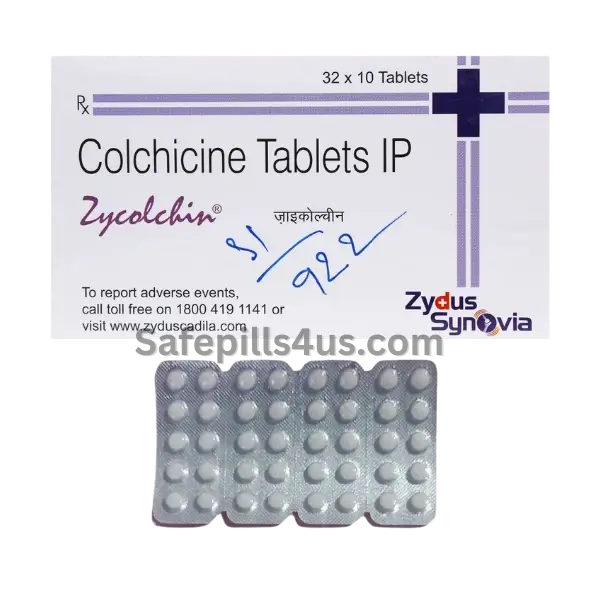
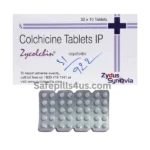
Zycolchin 0.5 mg (Colchicine) — small tablet, strong help for gout flares
Zycolchin 0.5 mg contains colchicine, a well‑known prescription medicine used to treat sudden gout attacks and to help prevent future flares. Doctors also use it for familial Mediterranean fever (FMF), and sometimes for pericarditis under specialist guidance. It doesn’t numb pain like an NSAID; instead, it cools down the inflammation inside the joint so the swelling and red‑hot pain settle. Tiny dose, big job.
| Quick facts | Details |
|---|---|
| Brand/strength | Zycolchin 0.5 mg tablets |
| Active ingredient | Colchicine |
| Main uses | Gout flare treatment and prevention; FMF; pericarditis (doctor‑directed) |
| How it works | Lowers inflammatory activity of white blood cells in the joint |
| Typical flare plan | Often 1 mg at first (2 tablets), then 0.5 mg (1 tablet) 1 hour later; follow your label |
| Prevention dose | Usually 0.5 mg once or twice daily (doctor decides) |
| Big cautions | GI upset/diarrhea, drug interactions (CYP3A4/P‑gp), kidney/liver issues |
| Not for | People on certain strong interacting meds, or those with severe renal/hepatic impairment unless closely managed |
What Zycolchin 0.5 mg is used for
- Gout flare treatment: helps cut down swelling and pain in an acute attack.
- Gout flare prevention: commonly used when starting uric‑acid–lowering therapy (like allopurinol) to keep flares at bay.
- Familial Mediterranean fever (FMF): daily therapy to reduce attacks (as prescribed).
- Pericarditis: sometimes used by cardiologists; dosing is specialist‑guided.
How it works
Colchicine doesn’t act like ibuprofen. It quietly blocks certain white blood cell actions that drive gout inflammation, so the joint calms down. That’s why it can be very effective even without being a classic “painkiller.” It’s small but potent, so taking the right amount at the right time is the whole game.
How to take Zycolchin 0.5 mg
Follow your exact prescription. Here’s the general idea many clinicians use (adjusted to 0.5 mg tablets):
- For a gout flare (adult): your prescriber may tell you to take 1 mg (2 tablets) at the first sign of the flare, then 0.5 mg (1 tablet) one hour later. Some plans add 0.5 mg once or twice daily until the flare settles. Don’t exceed the maximum on your label.
- For prevention (gout prophylaxis): commonly 0.5 mg once or twice daily.
- For FMF: daily dosing varies (often 1–2 mg/day split into doses). Your doctor will tailor it.
- With or without food is okay. Food can help if your stomach’s sensitive.
- Missed dose? Take it when you remember unless it’s almost time for the next one. Don’t double up.
What you might feel
- Common: nausea, stomach pain, vomiting, diarrhea. If diarrhea kicks in hard, that can be a sign you’ve hit your limit—call your clinician.
- Less common: fatigue, headache, loss of appetite.
- Serious (get medical help right away): severe or bloody diarrhea/vomiting, muscle pain or weakness (especially with dark urine), numbness/tingling, unusual bleeding or bruising, fever, sore throat, yellowing skin/eyes, extreme fatigue. These can signal toxicity or rare blood problems.
Who should not use it (or should be extra careful)
- Don’t use Zycolchin if you’re allergic to colchicine.
- Avoid if you have severe kidney or liver disease unless a specialist is closely managing you.
- Do not combine with certain strong CYP3A4 or P‑gp inhibitors (examples: clarithromycin, erythromycin, ketoconazole, itraconazole, ritonavir, cobicistat, cyclosporine, verapamil, diltiazem) without explicit, adjusted guidance—serious toxicity can occur.
- Use caution if you also take statins or fibrates (atorvastatin, simvastatin, gemfibrozil) due to added muscle‑injury risk—report muscle pain or weakness right away.
- Pregnancy/breastfeeding: discuss risks and benefits with your clinician first.
- Not for children unless prescribed by a specialist (e.g., FMF).
Drug and food interactions to know
- Strong CYP3A4 or P‑gp inhibitors (see list above): can raise colchicine levels dangerously.
- Grapefruit/grapefruit juice: may increase levels—best to avoid.
- Statins/fibrates: higher risk of myopathy/rhabdomyolysis, especially with kidney issues.
- Other gout meds: often used alongside NSAIDs or steroids during flares and with allopurinol/febuxostat for prevention—your doctor will line up the timing.
- Always share a full list of all meds and supplements (including herbal products) with your prescriber.
Smart tips for better results
- Start early: take your first dose at the very first sign of a gout flare for best results.
- Hydrate and baby the joint: rest, elevate, and ice as advised.
- Watch for stomach cues: significant diarrhea or vomiting = call your prescriber; you may need to pause or adjust.
- Know your limits: if you have kidney or liver issues, your safe dose is likely lower.
- Long‑term plan: if flares keep happening, talk to your provider about urate‑lowering therapy and lifestyle tweaks (hydration, alcohol limits, purine‑smart diet).
Storage and what’s inside
- Active ingredient: Colchicine 0.5 mg per tablet.
- Inactive ingredients: vary by manufacturer. If you have allergies, check your pack.
- Store at room temperature, dry, away from heat and light. Keep out of reach of kids and pets.
FAQs: Zycolchin 0.5 mg
Q: How fast does Zycolchin work for a gout attack?
A: Many people feel improvement within 12–24 hours if they start at the first twinge. Full relief can take a couple of days, depending on the flare’s severity.
Q: Can I take it with ibuprofen or naproxen?
A: Often yes, during a flare, under medical guidance. Your clinician may combine therapies for faster relief.
Q: I got diarrhea—should I stop?
A: Heavy diarrhea or vomiting can mean too much colchicine in your system. Call your prescriber right away for instructions.
Q: Can I use Zycolchin daily to prevent flares?
A: Yes, many patients use 0.5 mg once or twice daily for prevention, especially when starting urate‑lowering meds. Only do this if your doctor prescribed it.
Q: Is alcohol okay?
A: Alcohol can trigger gout flares, so it’s smart to limit it—especially beer and spirits. If you’re in the middle of a flare, skip it.
Q: I’m on a statin. Is that a problem?
A: It can increase muscle‑related risks when paired with colchicine. Report any muscle pain, weakness, or dark urine fast.
Q: What if I have kidney disease?
A: You’ll likely need a lower dose or a different schedule. Some interactions become “no‑go” with kidney or liver problems. Get personalized advice.
Q: Can I use it during pregnancy?
A: Only if your clinician believes the benefits outweigh risks. Don’t start or stop without medical guidance.
Related products you might also consider
- Zycolchin 0.5mg (colchicine) — prevention pack sizes for long‑term use (as prescribed)


Reviews
There are no reviews yet.