Description
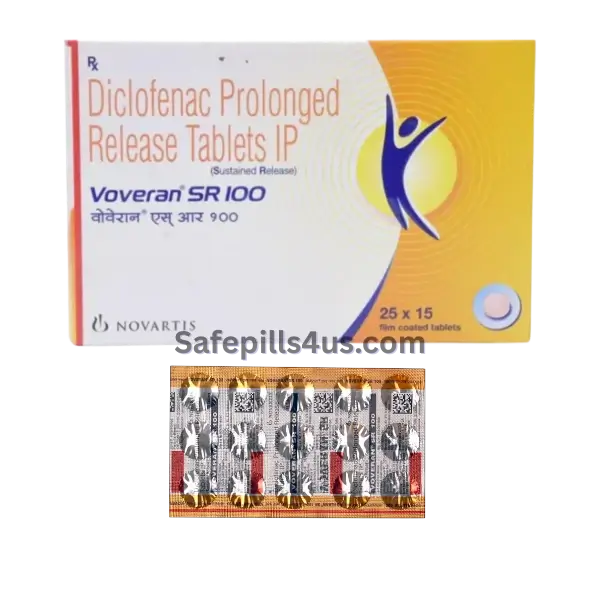
Voveran SR 100 mg is an extended release diclofenac tablet used for pain and inflammation. It belongs to the NSAID group, which simply means it lowers substances in the body that cause pain and swelling. The SR part stands for sustained release, so the tablet releases medicine slowly through the day. That helps keep pain control steady with fewer ups and downs.
Quick Highlights
- Active ingredient diclofenac sodium 100 mg extended release
- Class nonsteroidal anti inflammatory drug
- Purpose relieves pain, swelling, and stiffness
- Dosing usually once daily with food as directed
- Do not crush or chew the tablet
What It Helps With
- Osteoarthritis and rheumatoid arthritis pain and stiffness
- Ankylosing spondylitis back and hip pain
- Acute musculoskeletal pain sprains, strains, sports injuries
- Dental pain after a procedure as advised by your dentist or doctor
- Post operative pain when a doctor recommends it
- Painful periods dysmenorrhea if your clinician chooses diclofenac for you
How It Works in Simple Terms
When your body is injured or inflamed, it makes prostaglandins that trigger pain and swelling. Diclofenac blocks the enzymes that make those prostaglandins. Less prostaglandin means less pain, less heat, and less swelling. The extended release layer lets the tablet work steadily for many hours.
How To Take Voveran SR 100 mg
- Take exactly as your doctor prescribes. Do not change your dose on your own
- Swallow the tablet whole with a full glass of water
- Take it with food or milk to be kind to your stomach
- Try to take it at the same time each day
- Do not crush, split, or chew the tablet. That would break the extended release system
- Use the lowest effective dose for the shortest time needed
Missed a dose
- Take it when you remember unless it is close to your next dose. If it is close, skip the missed dose. Do not double up
Suspected overdose
- Get medical help right away. Too much diclofenac can harm the stomach, kidneys, or heart
Who Should Not Use It
- Allergy to diclofenac, aspirin, or other NSAIDs
- History of asthma, hives, or severe allergy after taking an NSAID
- Active stomach or intestinal bleeding or ulcer
- Severe heart disease or you just had heart bypass surgery
- Serious kidney or liver problems unless your doctor clearly approves
- Uncontrolled high blood pressure or heart failure
- Pregnancy in the third trimester. Ask your doctor about safer options earlier in pregnancy
- Children unless a pediatric specialist prescribes it
Possible Side Effects
Most people do fine, but some side effects can happen. Call your doctor if anything feels off.
Common:
- Stomach pain, heartburn, nausea
- Indigestion or a feeling of fullness
- Headache or dizziness
- Swelling in the legs or feet water retention
Less common but important:
- Raised blood pressure, palpitations
- Rash or itching, photosensitivity
Serious get help right away:
- Black stools, blood in vomit, or severe stomach pain signs of bleeding or ulcer
- Chest pain, shortness of breath, sudden weakness or trouble speaking possible heart or stroke event
- Little or no urine, ankle swelling kidney problems
- Yellow skin or eyes, dark urine liver trouble
- Severe allergic reaction swelling of face or throat, trouble breathing
Warnings and Precautions
- Use the lowest effective dose for the shortest time needed
- Long term or high dose use can raise the risk of stomach bleeding and heart events
- Take with food and avoid alcohol to reduce stomach irritation
- If you smoke, have diabetes, high cholesterol, or high blood pressure, discuss your heart risk before starting
- Tell your doctor if you have asthma, especially if aspirin ever made it worse
- Your provider may order blood pressure, kidney, or liver checks during treatment
Drug Interactions
Be careful with:
- Blood thinners warfarin and antiplatelets like aspirin or clopidogrel bleeding risk goes up
- SSRIs or SNRIs such as sertraline, fluoxetine, venlafaxine added bleeding risk
- Other NSAIDs or high dose aspirin more stomach and kidney risk
- Corticosteroids like prednisone higher ulcer risk
- ACE inhibitors, ARBs, and diuretics can strain the kidneys and blunt blood pressure control
- Lithium or methotrexate diclofenac can raise their levels
- Cyclosporine or tacrolimus higher kidney risk
- Digoxin possible level increase. Monitoring may be needed
Storage and Handling
- Store at room temperature away from moisture, heat, and direct light
- Keep tablets in the original strip or bottle
- Keep out of reach of children and pets
- Do not use after the expiration date
- If a tablet looks cracked or discolored, ask a pharmacist before use
Composition and Pack Info
- Name Voveran SR 100 mg
- Active ingredient diclofenac sodium 100 mg sustained release
- Form film coated extended release tablet
- Pack sizes vary by manufacturer
Frequently Asked Questions
- What is Voveran SR 100 mg used for
It is used to relieve pain and inflammation in arthritis, back and neck strain, sprains, dental pain, and period pain as advised by a clinician.
- How many times a day should I take it
Usually once daily, but follow your doctor’s exact schedule. Do not exceed your prescribed daily amount.
- Can I take it with paracetamol
Often yes, doctors pair diclofenac with paracetamol for better relief. Ask your clinician for the right doses for you.
- How long can I use it
Use the shortest time needed. If you need pain control beyond a short course, check in with your provider.
- Does it upset the stomach
It can. Taking it with food helps. If you notice black stools, vomiting blood, or severe pain, stop and get help.
- Is it safe for people with high blood pressure
It may raise blood pressure. Your doctor will weigh risks and may monitor your readings more closely.
- Can I drive after taking it
Most people can, but if you feel dizzy or drowsy, skip driving until you feel normal.
- Is it safe during pregnancy or breastfeeding
Avoid in the third trimester. For earlier pregnancy or breastfeeding, ask your doctor to review safer options.
- Can I drink alcohol
Better to limit or avoid alcohol while using NSAIDs. Alcohol increases stomach irritation and bleeding risk.
- What if I am already on aspirin for the heart
Do not start or stop anything without medical advice. Combining NSAIDs with aspirin can raise bleeding risk. Your provider will guide timing or alternatives.


Reviews
There are no reviews yet.