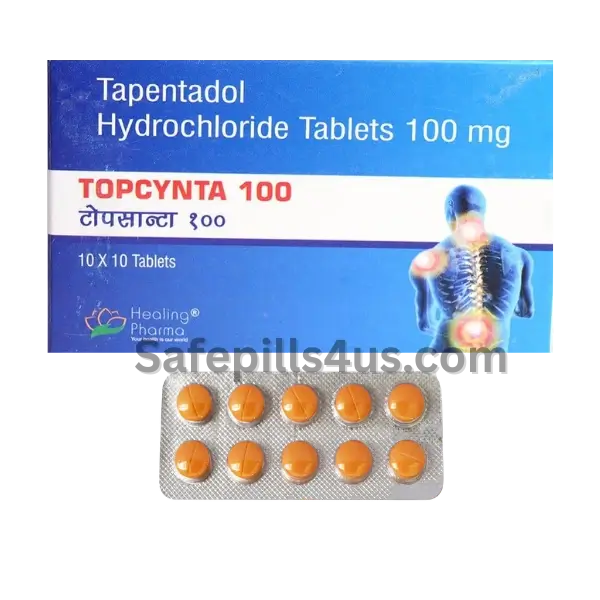
Topcynta 100 mg (Tapentadol) — strong, targeted relief for moderate to severe pain
Topcynta 100 mg contains tapentadol, a prescription opioid pain reliever used when everyday meds like ibuprofen or acetaminophen aren’t enough. It comes in immediate‑release (IR) for quick relief and extended‑release (ER) for steady, around‑the‑clock control. Use exactly as your prescriber directs. This is a controlled medicine with real benefits—and real risks if misused.
| Topcynta 100 mg at a glance |
Details |
| Active ingredient |
Tapentadol 100 mg |
| What it treats |
Moderate to severe acute pain (IR); chronic severe pain needing continuous control (ER). ER may also be used for diabetic nerve pain as prescribed |
| Release types |
IR tablets/capsules (faster onset); ER tablets (long‑acting) |
| How it works |
Dual action: mu‑opioid receptor agonist + norepinephrine reuptake inhibition for broader pain control |
| Onset window |
IR: usually 30–60 minutes; ER: gradual, steady relief |
| Big safety flags |
Addiction/misuse, respiratory depression, sedation (worse with alcohol or other depressants) |
| Hard no |
Don’t use with MAOIs or within 14 days of stopping one |
| Legal status |
Controlled substance; prescription only |
What makes Topcynta different
- Two pathways for pain control, not just one so relief can feel fuller and smoother.
- Less CYP450 metabolism than some opioids (mostly via glucuronidation). Interactions still matter, but it can be simpler to manage.
- Flexible formats (IR vs ER) so your clinician can tailor it to your pain pattern.
How Topcynta 100 mg works
Tapentadol turns down pain in the brain and spinal cord. It lightly activates opioid receptors (so pain signals don’t hit as hard) and increases norepinephrine in pain pathways (which helps the nervous system filter those signals). End result: pain feels less sharp and less constant. But it’s potent—dose and timing matter a lot.
How to take it (follow your label closely)
Immediate‑release (IR)
- Used for acute or breakthrough pain.
- Taken several times per day as prescribed.
- Don’t stack extra doses if pain spikes call your prescriber for adjustments.
Extended‑release (ER)
- For long‑lasting, severe pain that needs 24/7 coverage.
- Take at the same time every day (or every 12 hours, depending on the product).
- Swallow tablets whole. Do not crush, split, or chew.
General rules:
- Never exceed the total daily amount on your label.
- Missed dose? Take it when you remember unless it’s close to the next one. Don’t double up.
- If you’re stopping therapy, ask for a taper to avoid withdrawal.
Who should not use Topcynta 100 mg
- Anyone taking MAOIs, or who stopped one in the last 14 days
- People with severe breathing problems, acute asthma without monitoring, or suspected paralytic ileus
- Those with a known allergy to tapentadol or any component of the product
- Not for children; use in under‑18s requires specialist direction
Use with caution (often lower doses or extra monitoring) if you:
- Are older, or have sleep apnea, head injury, or a seizure disorder
- Have liver or kidney impairment
- Are pregnant or breastfeeding (talk to your clinician about risks and alternatives)
Possible side effects
Common (often ease as your body adjusts)
- Nausea, vomiting, constipation
- Dizziness, sleepiness, headache
- Dry mouth, sweating, itching
- Lightheadedness, low blood pressure
Serious get medical help now
- Slow or difficult breathing, severe drowsiness, fainting
- Confusion, severe agitation, hallucinations
- Seizures
- Signs of an allergic reaction (rash, swelling of face/lips/tongue, wheezing)
Interactions to watch
- Alcohol and CNS depressants (benzodiazepines, sleep meds, muscle relaxants, antipsychotics): stack sedation and breathing risk—avoid unless your prescriber explicitly says otherwise.
- Antidepressants/migraine meds (SSRIs, SNRIs, TCAs, triptans, St. John’s wort): risk of serotonin syndrome is lower than with tramadol but still possible. Watch for agitation, sweating, fever, shivering, diarrhea, fast heartbeat.
- Other opioids or sedatives: dramatically increases overdose risk—coordinate all meds through one prescriber.
- MAOIs: contraindicated. Don’t use with or within 14 days of an MAOI.
- Always share a full list of prescription meds, OTCs, and supplements with your clinician.
Practical safety tips
- First few days no driving or risky tasks until you know how you react.
- Prevent constipation hydrate, add fiber, consider a stool softener if your clinician suggests it.
- Lock it up. Count your tablets. Never share your medication.
- Ask if you should keep naloxone at home—smart backup for all opioid users.
- Keep a simple pain log (dose, relief, side effects). It helps your prescriber tune the plan.
FAQs — Topcynta 100 mg
- Is Topcynta 100 mg immediate‑release or extended‑release?
Both exist. Check your label. IR is for quicker relief and is taken multiple times per day. ER is long‑acting and taken on a set schedule. ER tablets must be swallowed whole.
- How fast will it work?
IR often starts helping within 30–60 minutes. ER builds steady relief and isn’t meant for sudden flares.
- Can I take it with ibuprofen or acetaminophen?
Often yes—combo therapy can lower the total opioid you need. Only combine under medical guidance, especially with acetaminophen (watch total daily dose from all sources).
- What if one dose doesn’t cover my pain?
Don’t self‑increase. Contact your prescriber. They may adjust timing, change the release type, or try a different therapy.
- Will I get dependent on Topcynta?
Physical dependence can happen with ongoing opioid use. That’s why clinicians aim for the lowest effective dose, shortest time, and a taper when stopping.
Related products you may also consider (ask your clinician)
Reviews
There are no reviews yet.