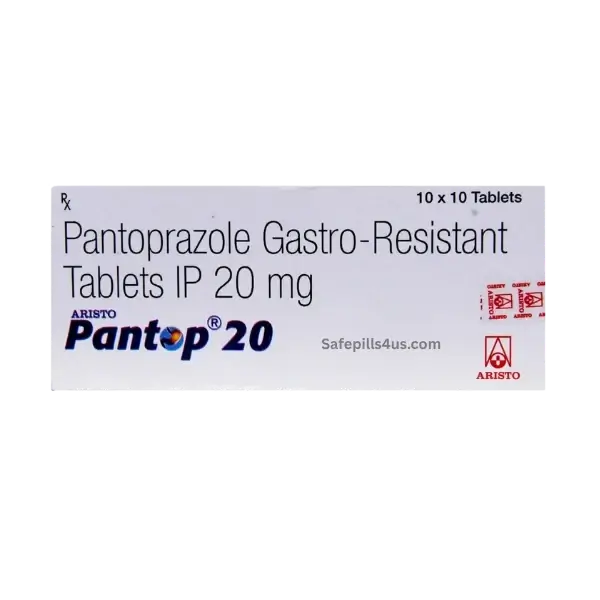
Pantop 20 mg Tablet (Pantoprazole 20 mg) – Product Description
Pantop 20 mg is a stomach acid–reducing tablet that helps calm heartburn, acid reflux, and related irritation. In plain words: if you feel burning in your chest after meals, sour burps, a bitter taste, or night‑time reflux that messes with your sleep, Pantop 20 mg helps dial down the acid so your food stays where it should and your esophagus can settle. The active ingredient is pantoprazole, a proton pump inhibitor (PPI) trusted by doctors worldwide.
Quick note up front: In some regions Pantop 20 mg is prescription‑only; in others it’s available for short courses without a prescription. Either way, follow your pack label or your doctor’s advice for safe, effective use.
What Pantop 20 mg is used for
Your doctor or pharmacist may recommend Pantop 20 mg for:
- Frequent heartburn and acid reflux (GERD)
- Healing and maintenance of erosive esophagitis (often maintenance is 20 mg; initial healing may use higher doses)
- Long‑term symptom control of GERD when needed (doctor‑guided)
- Gastric protection in at‑risk patients taking certain painkillers (NSAIDs), as advised
- Part of Helicobacter pylori eradication therapy when your clinician prescribes it (usually a higher PPI dose with antibiotics)
- Conditions causing excess acid like Zollinger–Ellison syndrome (typically higher or individualized dosing)
Simple idea: Got ongoing heartburn two or more days a week? Pantop 20 mg is commonly used to get ahead of it, not just chase it.
How Pantop 20 mg works (no jargon)
Think of your stomach like a kitchen stove that sometimes runs too hot. Antacids are like splashing water on the pan after it sizzles.
Pantoprazole is more like turning the burner down. It blocks proton pumps (tiny acid‑making machines) so your stomach produces much less acid. Less acid = less burn, better comfort, and a chance for your esophagus to heal. It’s not an instant fix like a chewable antacid, but it’s stronger and longer lasting.
Who can use Pantop 20 mg
- Adults: Yes, commonly used.
- Teenagers: Often okay with medical advice.
- Children: Use only if a pediatrician recommends it.
- Pregnancy/breastfeeding: Generally considered when benefits outweigh risks—ask your clinician first.
- Liver problems: Tell your doctor; dose or monitoring may be adjusted in significant impairment.
Not for everyone. If you have alarm symptoms—like trouble swallowing, black stools, blood in vomit, unintentional weight loss, severe or persistent chest pain—see a doctor before using any acid reducer.
How to take Pantop 20 mg (the right way)
- Dose: Typically 20 mg once daily.
- Timing: Take it about 30–60 minutes before breakfast. If you’re on a twice‑daily plan, take the second dose before your evening meal as directed.
- Swallow whole with water. Do not crush, chew, or split this tablet is enteric‑coated so it survives stomach acid and releases in the intestine.
- Be consistent. Same time each day helps.
- If you miss a dose, take it when you remember unless it’s close to the next dose. Don’t double up.
How soon will you feel better?
- Some relief can show up within 24 hours.
- Best effect usually builds over 2–4 days. So, keep taking it daily even if day one feels “meh.”
How long to use it?
- For frequent heartburn self‑care: many labels suggest a 14‑day course, once daily. Don’t repeat too often without medical advice.
- For diagnosed GERD or other conditions: follow your doctor’s duration—could be weeks for healing, then a lower dose for maintenance.
What to avoid or watch while using Pantop 20 mg
- Don’t expect instant relief. Use an antacid for breakthrough symptoms while Pantoprazole gets going (but avoid taking antacids at the exact same minute every day; separate them).
- Coffee, alcohol, very spicy or fatty meals, late‑night snacking, and large portions can still trigger symptoms. Tweak the routine a bit for better results.
- Smoking worsens reflux; cutting down helps your medicine work better.
- If you need long‑term daily PPIs, do regular check‑ins with your clinician to keep dosing as low as necessary.
Possible side effects
Most people do well. If
side effects show up, they’re usually mild and pass on their own.
Common (usually short‑lived):
- Headache
- Stomach pain, gas, bloating
- Nausea, vomiting, diarrhea or constipation
- Dizziness or a “foggy” feeling
- Dry mouth
Less common:
- Rash or itching
- Joint or muscle aches
- Sleep changes
Serious but uncommon get medical help:
- Severe diarrhea that doesn’t stop, especially with fever or blood (C. difficile is rare but possible with acid‑lowering meds)
- Low magnesium (cramps, tremors, palpitations); more likely with long‑term use or if combined with certain meds
- Kidney problems (unusual fatigue, swelling, changes in urination, flank pain) rare interstitial nephritis has been reported
- Vitamin B12 deficiency with long‑term, high‑dose use (tingling, fatigue, pallor)
- Bone fracture risk increases slightly with long‑term/high‑dose use (generally not a concern for short courses)
- Cutaneous or systemic lupus erythematosus (very rare) presenting with rash/joint pain seek advice
If anything feels off or intense, check in with your doctor or pharmacist.
Drug interactions and important cautions
Tell your healthcare provider about all medicines, vitamins, and herbs you take. Key notes:
- Drugs that need stomach acid to absorb well: ketoconazole, itraconazole, posaconazole, erlotinib, atazanavir, rilpivirine (and some others) may be less effective with PPIs. Your doctor may avoid combining or adjust therapy.
- Warfarin and other anticoagulants: PPIs can influence INR in some patients monitoring may be needed.
- Methotrexate (especially high dose): Levels may rise; doctors often pause PPIs around high‑dose methotrexate.
- Tacrolimus: Levels can increase; monitoring may be considered.
- Digoxin: Risk of higher levels if magnesium is low watch electrolytes.
- Clopidogrel: Pantoprazole has less CYP2C19 interaction than some PPIs, but your doctor will still consider the overall picture.
- Diuretics: Combined with long‑term PPI use, can contribute to low magnesium periodic checks may help.
- Lab tests: Pantoprazole can raise Chromogranin A levels and affect H. pylori tests (urea breath/stool antigen). You may need to stop PPIs for a period before certain tests ask your doctor.
Allergy alert: Don’t use if you’re allergic to pantoprazole or other PPIs (omeprazole, esomeprazole, rabeprazole, lansoprazole).
Practical tips for best results
- Eat earlier dinners and go easy on late‑night snacks.
- Elevate the head of your bed 10–15 cm if night reflux is your nemesis.
- Smaller, more frequent meals > giant plates.
- Tight waistbands and heavy belts can push reflux—loosen up a bit.
- Alcohol, caffeine, chocolate, peppermint, tomatoes, citrus, and very spicy or fried foods may trigger symptoms—observe your pattern and tweak.
- Keep a simple “symptom + food” diary for a week. You’ll spot triggers fast.
- Pair Pantop 20 mg with a short course only. If heartburn returns often, talk to a clinician rather than self‑treating forever.
Who should be extra careful
- People with alarm symptoms: difficulty swallowing, vomiting blood, black/tarry stools, persistent vomiting, chest pain that could be cardiac, unexplained weight loss, severe fatigue—seek medical evaluation before or during use.
- Severe liver disease: dosing and monitoring may change.
- Osteoporosis or low calcium/vitamin D: discuss fracture risk and supplementation for long‑term PPI therapy.
- Those prone to infections: long‑term acid suppression may slightly raise risk of certain gut infections—use the lowest effective dose for the shortest time needed.
Storage and handling
- Store below 25°C, away from moisture and direct heat.
- Keep tablets in the original blister until you’re ready to take one.
- Keep out of reach of children and pets.
- Don’t use after the expiry date on the pack.
- Don’t crush or split the tablet; the coating matters.
Frequently asked questions (FAQ)
Q: What is Pantop 20 mg used for?
A: It’s for frequent heartburn, GERD symptoms, and acid‑related irritation. Doctors also use it to maintain healing of erosive esophagitis and, in some plans, protect the stomach in at‑risk patients on NSAIDs.
Q: How fast does Pantop 20 mg work?
A: Some people feel better within a day, but peak relief usually takes 2–4 days of daily use. It’s a control medicine, not an instant antacid.
Q: When should I take it—before or after food?
A: Take it 30–60 minutes before a meal, usually breakfast. That timing helps it bind to active acid pumps.
Q: Can I take Pantop 20 mg as needed?
A: It works best taken daily for the prescribed course. For occasional, one‑off heartburn, an antacid or H2 blocker might feel quicker. Ask your pharmacist what fits your pattern.
Q: Can I use it long term?
A: Some people need long‑term therapy, but it should be the lowest effective dose with periodic reviews. If you’re refilling nonstop, check in with your doctor to see if step‑down or on‑demand strategies are possible.
Q: Is Pantop 20 mg safe in pregnancy or while breastfeeding?
A: Pantoprazole is generally considered when benefits outweigh risks, but you should use it only on medical advice during pregnancy or breastfeeding.
Q: Can I take other heartburn meds with Pantop?
A: You can use an antacid for breakthrough symptoms, spaced a bit from Pantop. Avoid stacking multiple long‑acting acid reducers together unless your doctor says so.
Q: Any food or drinks I should avoid?
A: The usual suspects: large fatty meals, very spicy food, caffeine, chocolate, alcohol, peppermint, citrus, and tomato‑heavy dishes. But triggers vary—watch what sets yours off.
Q: What if I forget a dose?
A: Take it when you remember, unless it’s near your next scheduled dose. Skip the missed one—don’t double up.



Reviews
There are no reviews yet.