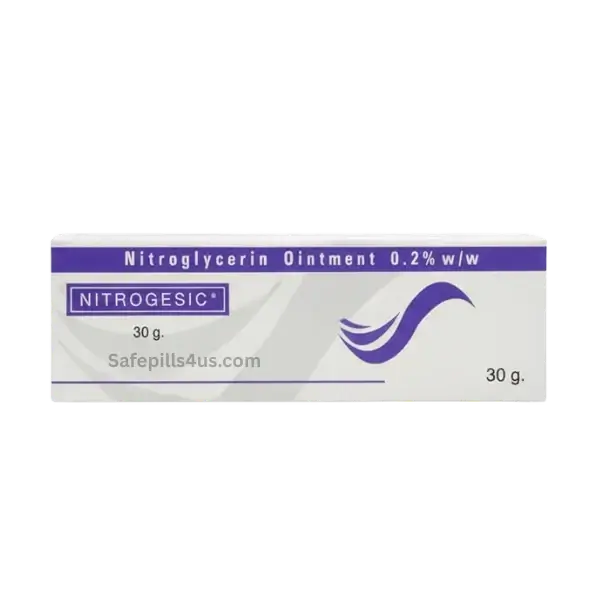
Nitroglycerin Ointment (Glyceryl Trinitrate) – Product Description
Nitroglycerin Ointment, also called glyceryl trinitrate or GTN, is a topical nitrate medicine designed to relax smooth muscle and widen blood vessels right where it’s applied. In plain words, it helps tight or spasm‑y areas let go, improves blood flow, and eases pain. Doctors commonly use it for two main jobs: preventing angina (chest pain) in people with coronary artery disease, and relieving pain from chronic anal fissures by relaxing the internal anal sphincter. Different strengths and directions exist for these uses, so always follow your prescriber’s exact instructions.
What it does
- For angina prevention: The ointment slowly delivers nitroglycerin through the skin. It turns into nitric oxide, relaxes blood vessels, and reduces the heart’s workload. That can mean fewer chest pain episodes with activity.
- For anal fissure pain: A small amount applied inside the anal canal relaxes the internal sphincter, improves local blood flow, and helps reduce the sharp, tearing pain during and after bowel movements.
You might see the name glyceryl trinitrate (GTN) on the label same active ingredient, just a different name.
Who it’s for
- Adults with stable angina who need nitrate therapy to help prevent exertional chest pain (using transdermal 2% nitroglycerin ointment, per clinician guidance).
- Adults with chronic anal fissure pain (using rectal nitroglycerin ointment, often 0.4%, as prescribed).
Not for immediate chest pain relief. If you need fast relief of active angina, your clinician will usually prescribe nitroglycerin sublingual tablets or spray. This ointment is for prevention or for anal fissure pain relief, not for stop‑the‑pain‑right‑now moments.
Why people choose ointment
- Steady delivery: Ointment offers controlled release through the skin or locally in the rectal area.
- Flexible dosing: Your prescriber can adjust how much ointment you apply and how often.
- Local action (for fissures): Targets the problem spot and reduces spasm without swallowing a pill.
Strengths and forms (what to expect)
- Transdermal nitroglycerin ointment (often 2%): used to prevent angina. Measured in inches on an applicator paper.
- Rectal nitroglycerin ointment (often 0.4%): used to relieve pain with chronic anal fissures. Applied in a tiny amount just inside the anal canal.
Packaging, exact strength, and applicators can vary by brand and region. Read the package insert you receive, and when in doubt, ask your pharmacist.
Benefits you may notice
- Angina prevention: Fewer chest pain episodes with activity, better tolerance for chores, walks, or climbs. It’s not a stimulant; it simply eases the heart’s workload.
- Anal fissure pain relief: Less searing pain with bowel movements, reduced spasm, and a chance for the tissue to heal more comfortably.
Everyone’s different. Some people feel improvement within days; others need a bit longer and a dose tweak from their clinician.
How to use (general guidance—follow your prescription)
Important: Use exactly as your prescriber instructed. These are high‑level pointers, not personal medical directions.
For angina prevention (typical 2% transdermal ointment):
- Measure, don’t guess: Use the supplied applicator paper to measure the prescribed length (for example, ½ to 2 inches of ointment—your clinician will specify).
- Where to apply: Spread a thin, even layer on a clean, hairless area (chest, upper arm, or back). Don’t apply to broken, irritated, or infected skin.
- Do not rub in vigorously: Gently spread it, then place the applicator paper over the ointment and cover with clothing or a dressing if advised.
- Rotate sites: Change application spots to protect your skin.
- Nitrate‑free interval: To prevent “tolerance,” your prescriber may schedule a daily nitrate‑free window (often 10–12 hours). Stick to it.
- Not for sudden chest pain: Keep your sublingual nitro (if prescribed) for attacks.
For anal fissure pain (typical 0.4% rectal ointment):
- Amount: Your prescription will specify. Often a small strip (for example, about 1 inch of ointment) is applied every 12 hours, but follow your label exactly.
- How to apply: Wash hands. Wear a finger cot or disposable glove. Place a small amount on your fingertip and gently apply just inside the anal canal (usually about the first joint of the finger). Do not insert deeply.
- Go slow: It can sting at first. That usually eases as the muscle relaxes.
- Headaches are common: More on that below. If headaches get rough, talk to your prescriber rather than stopping on your own.
General tips:
- Wash hands before and after application.
- Avoid eyes, mouth, and open wounds. If contact happens, rinse well.
- Don’t suddenly stop long‑term nitrate therapy without medical advice.
Safety notes and warnings
Common effects (especially at the start):
- Headache (very common with nitrates)
- Dizziness or lightheadedness
- Flushing or warmth
- Nausea
- Fast heartbeat (palpitations)
Headache is the big one. It often fades as your body gets used to the medicine. Your clinician may suggest timing doses or using simple pain relievers if appropriate. If headaches are severe or persistent, call your prescriber.
Serious get medical help right away:
- Fainting, severe dizziness, or very low blood pressure
- Chest pain that’s new, worse, or different from usual
- Shortness of breath, bluish lips, or confusion
- Signs of allergic reaction (swelling of face/lips, hives, trouble breathing)
- Vision changes or severe, sudden headache after a head injury
Do not use if:
- You take a PDE5 inhibitor for erectile dysfunction or pulmonary hypertension (sildenafil, tadalafil, vardenafil, avanafil). The combo can cause a dangerous drop in blood pressure.
- You take riociguat (for pulmonary hypertension).
- You have severe anemia or have had a known hypersensitivity to nitrates.
- You’ve been told you have increased intracranial pressure or recent head trauma unless a specialist okays it.
Use with caution and only under close guidance if you have:
- Low blood pressure, dehydration, or are on multiple blood pressure meds
- Heart valve problems, right‑sided heart issues, or hypertrophic cardiomyopathy
- Glaucoma (talk with your eye specialist if you notice pressure changes)
- Liver disease or other conditions your clinician is monitoring
- Pregnancy or are breastfeeding—ask your prescriber to weigh benefits and risks
Driving and falls:
- Because nitrates can drop blood pressure, you might feel woozy at first. Stand up slowly. See how you feel before driving or operating tools.
Interactions to keep in mind
Absolutely avoid:
- PDE5 inhibitors (sildenafil, tadalafil, vardenafil, avanafil)
- Riociguat
Use caution with:
- Alcohol (can intensify blood pressure drops and dizziness)
- Other blood pressure medications, beta‑blockers, calcium channel blockers, diuretics
- Tricyclic antidepressants and antipsychotics that may lower blood pressure
- Ergot medicines (e.g., dihydroergotamine)—may reduce anti‑anginal effects
- Heparin and other anticoagulants (monitoring may be adjusted by your clinician)
- Other nitrates or nitrites (risk of additive effects)
Always share a full list of your meds and supplements with your healthcare provider.
Tolerance and “nitrate‑free” time
Your body can get used to continuous nitrates, making them less effective (tolerance). That’s why many angina plans include a daily nitrate‑free interval, often overnight. Don’t change your schedule on your own your prescriber will set this up to keep protection while reducing tolerance.
Practical, real‑world tips
- Start low, move slow: Early effects (especially headache) tend to be strongest at the beginning.
- Hydrate and rise slowly: Helps reduce lightheadedness.
- For anal fissures: Soften stools. A fiber‑rich diet, plenty of water, and a gentle stool softener (if your clinician agrees) can make a big difference.
- Protect clothes: The ointment is greasy and can stain fabrics. Use the applicator paper and cover the area.
- Heat and patches: Don’t apply heat pads over the ointment. Heat can boost absorption and drop your blood pressure more than planned.
- Keep consistent: Same time, same routine. Consistency helps your clinician judge what’s working.
What to expect
- Timing: For angina prevention, benefit builds with steady use as scheduled. For fissures, pain relief can start within days, with more comfortable bowel movements as the muscle relaxes.
- If things feel “too strong”: Head‑rush, pounding headache, or wooziness may mean the dose or timing needs a tweak. Don’t guess—call your prescriber.
- Not curing coronary disease or doing the healing alone: This ointment supports symptom control. Your broader treatment plan (diet, exercise as approved, other meds) still matters. For fissures, gentle stool habits and local care help the tissue heal.
Frequently Asked Questions
Q: What is Nitroglycerin Ointment used for?
A: It’s commonly used to prevent angina attacks (2% transdermal ointment) and to relieve pain from chronic anal fissures (0.4% rectal ointment). It relaxes smooth muscle and improves blood flow.
Q: How fast does it work?
A: For anal fissure pain, some people feel relief within a few days. For angina prevention, the benefit is preventive—think fewer episodes over time, not instant relief. For sudden chest pain, use your rapid‑acting nitroglycerin tablets or spray if prescribed.
Q: Can I use it with my ED medication?
A: No. Do not use nitroglycerin with sildenafil, tadalafil, vardenafil, or avanafil. The combination can cause dangerous, even life‑threatening, drops in blood pressure.
Q: Why do I get a headache?
A: Headaches are very common with nitrates because your blood vessels widen. They often improve as your body adjusts. If they’re severe or persistent, ask your prescriber about options—don’t stop the medicine on your own.
Q: Can I drink alcohol while using this?
A: It’s best to minimize or avoid alcohol. Both alcohol and nitrates lower blood pressure. Together, they can make dizziness or fainting more likely.
Q: Is this safe during pregnancy or breastfeeding?
A: Your clinician will weigh risks and benefits based on why you need it. Do not start, stop, or change the dose without medical advice.
Q: How do I measure the right amount?
A: Use the applicator paper or measuring guide that comes with your tube. Your prescription should list an exact length (like ½ inch or 1 inch). If you didn’t receive a guide, ask your pharmacist.
Q: Can I apply more if I still have pain?
A: Don’t adjust on your own. Too much can drop your blood pressure and make you feel unwell. If pain isn’t controlled, contact your clinician to recheck the plan.
Q: Will this ointment heal my fissure?
A: It helps relax the muscle and improve blood flow, which can reduce pain and support healing. Good bathroom habits and stool softening also matter. Sometimes other treatments are needed—your clinician will guide you.
Q: Is nitroglycerin ointment flammable?
A: The ointment base is typically petroleum‑like and can be combustible. Keep away from open flames and high heat, and close the cap tightly.
Q: Can I use heating pads over the application site?
A: No. Heat can increase absorption and drop your blood pressure more than intended.
Q: What if I miss a dose?
A: Apply it when you remember unless it’s close to the next scheduled time. Don’t double up. If you’re unsure, check with your pharmacist or prescriber.


Reviews
There are no reviews yet.