
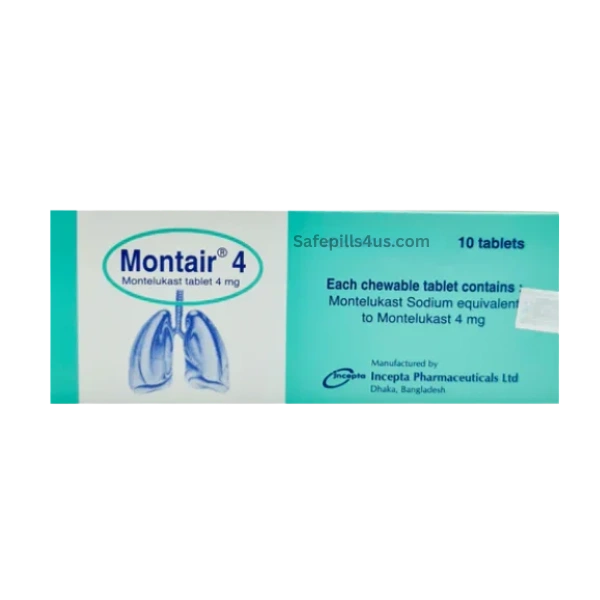
Montair Chewable 4 mg — Child-Friendly Asthma & Allergy Tablet
Montair Chewable 4 mg is a pediatric chewable tablet that contains montelukast sodium. In plain words, it’s a once-a-day medicine for young kids to help control asthma symptoms and ease
allergic rhinitis — think runny nose, sneezing, and stuffy nights. It’s not a rescue inhaler, so don’t use it for sudden breathing trouble. Instead, it’s part of a daily plan to reduce how often symptoms show up. The chewable form is handy for toddlers and preschoolers who find swallowing pills tough.
Active ingredient
Montelukast sodium — 4 mg per chewable tablet
Montelukast blocks leukotrienes those are chemicals your body makes in response to allergens or triggers. Leukotrienes cause airways to tighten, swell, and produce more mucus. By blocking them, Montair helps calm inflammation and cut down on coughing, wheezing, and nasal symptoms.
Key benefits
- Made for young children: Usually used for ages 2–5, but follow your pediatrician’s advice.
- Easy to give: Chewable tablet no measuring, no messy syringes.
- Once a day: One tablet a day helps parents keep to a routine.
- Dual benefit: Helps with both asthma control and allergic rhinitis.
- Flexible use: Take with or without food — many caregivers give it at night.
How Montair works — simply put
When your child meets an allergen like pollen or dust the body makes leukotrienes. Those chemicals narrow and inflame the airways and add mucus. Montair stops leukotrienes from doing that. So instead of treating an attack after it starts, it helps prevent symptoms from starting in the first place. That’s why it’s called a controller, not a rescue medicine.
When to use Montair Chewable 4 mg
- Long-term control of mild to moderate asthma in young children (commonly 2–5 years).
- Relief from seasonal or year-round allergic rhinitis.
- As part of a doctor-prescribed asthma or allergy management plan.
- Not for sudden asthma attacks keep the rescue inhaler ready.
Dosage & administration
- Usual dose: 1 chewable tablet (4 mg) once daily, often given in the evening.
- How to give it: Let the child chew the tablet thoroughly don’t swallow whole.
- Food: It can be taken with or without food.
- If your child has liver problems or takes other medicines, the doctor may adjust the dose.
- Always follow the pediatrician’s instructions dosing can change based on health or other meds.
If your child vomits after taking the tablet
If vomiting happens right after a dose, contact your doctor or pharmacist for guidance. Don’t automatically re-dose without asking.
Missed dose
- Give the missed dose as soon as you remember.
- If it’s nearly time for the next dose, skip the missed one.
- Do not give two doses at once to make up for a missed one.
Side effects — what to watch for
Most children tolerate Montair well, but watch for the following:
Common (usually mild)
- Runny or stuffy nose, cough
- Slight fever
- Mild stomach pain or upset
- Sleepiness or restlessness in some kids
Less common / noteworthy
- Headache
- Skin rash or itching
- Changes in sleep or activity trouble sleeping, vivid dreams
Rare but serious
- Severe allergic reaction: swelling of face, lips, tongue, or trouble breathing call emergency services.
- Neuropsychiatric symptoms: mood changes, depression, aggression, or suicidal thoughts have been reported rarely. If you notice big mood swings, new behavioral problems, or anything worrying, contact your doctor immediately.
Precautions & interactions
- Montair is not for acute attacks. Always keep the rescue inhaler or emergency plan as directed by your child’s doctor.
- Tell the doctor about all medicines your child takes. Enzyme-inducing drugs (some anticonvulsants, for example) can lower montelukast levels. The doctor will check for interactions.
- If your child has serious liver disease, the doctor may choose an alternative or adjust the dose.
- Monitor behavior during treatment. Any sudden or severe changes in mood or behavior should be reported right away.
- Pregnant or breastfeeding mothers should discuss any medication use with their healthcare provider this product is specifically formulated for children, though.
Storage & handling
- Store at room temperature, away from moisture and direct sunlight.
- Keep the medicine in its original packaging until use.
- Keep out of reach of children (yes, even though it’s made for them).
- Do not use after the expiry date.
Practical tips for parents
- Give the tablet at the same time each day evening tends to work well and fits bedtime routines.
- If taste is an issue, offer a small snack or drink afterward. Don’t crush or split chewable tablets unless a pharmacist says it’s okay.
- Keep a simple symptom diary for a few weeks note coughing, wheezing, night wakings, and allergy flare-ups. That helps the doctor see if the treatment is working.
- If your child can’t or won’t chew, ask the pharmacist about montelukast granules or other formulations.
- Always have the child’s asthma action plan and rescue medication available, even when they’re taking Montair regularly.
Why parents choose Montair Chewable 4 mg
Parents like the chewable form because it’s straightforward: no measuring, less mess, and one daily tablet is easier to remember. Many caregivers see fewer flare-ups and better nights when the medicine is used consistently with a doctor’s plan. It’s a practical option for busy families.
Frequently Asked Questions (FAQ)
Q: What age is this chewable tablet for?
A: It’s usually for children aged 2–5 years. The pediatrician will confirm if it’s right for your child.
Q: Can Montair be used during an asthma attack?
A: No. It’s not a rescue medicine. Use the quick-relief inhaler or treatment your doctor prescribed for sudden attacks.
Q: How soon will I notice improvement?
A: Allergy relief may start in a few days for some kids. For better asthma control, give it a couple of weeks of regular use to see effects.
Q: Can I give it with other medicines?
A: Often yes, but always check with your doctor or pharmacist. Some drugs can affect how montelukast is processed in the body.
Q: What if my child spits out or refuses the tablet?
A: Talk to your pharmacist or pediatrician. There are granules and other formats that might be easier for picky kids.
Q: Are behavioral changes common?
A: No, they’re uncommon, but they’ve been reported. Watch for big mood or behavior shifts and tell the doctor if you see them.
Related products
- Montair Plus — for older children/adolescents and adults (follow age guidance).
- Montair LC Kid — alternative chewable strength for older kids.
- Montelukast 4 mg chewable (generic) — same active ingredient, sometimes at a lower cost.
- Montelukast granules — useful for very young children or anyone who won’t chew tablets.
Reviews
There are no reviews yet.