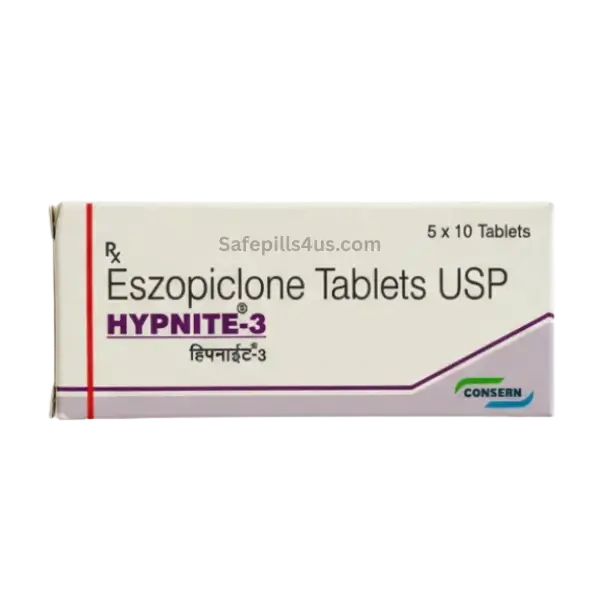
Hypnite 3 mg (Eszopiclone) – Product Description
Hypnite 3 mg is a prescription sleep tablet with eszopiclone, a modern, non‑benzodiazepine hypnotic made to help you fall asleep faster and stay asleep longer. In plain words, it’s a night‑time helper for real insomnia the kind that keeps you tossing, turning, clock‑watching, and dragging the next day. Take it only when you can get a full night’s rest and only as your healthcare professional directs.
What it is and what it’s for
- Active ingredient: Eszopiclone 3 mg per tablet
- Use: Short‑term or physician‑guided longer‑term treatment of insomnia, including trouble falling asleep, waking too often, or waking up too early
- What it does: Calms overactive wake signals in your brain so sleep can start and keep going more smoothly
- Who it’s for: Adults with diagnosed insomnia, under clinician care
Not for casual sleepless nights or jet lag without medical guidance. If you snore heavily, stop breathing during sleep, or have lung disease, talk with your prescriber before using any sedative.
How Hypnite works (simple version)
Eszopiclone acts on GABA‑A receptors think of it as gently tapping the quiet button in your brain. It’s not a classic benzodiazepine, but it works on some of the same pathways to reduce arousal. That’s why it can:
- Shorten sleep latency (the time it takes to fall asleep)
- Cut down night awakenings
- Improve total sleep time and sleep quality
Because it’s fast‑acting, take it right before bed, when you’re truly ready to sleep. Give yourself a solid 7–8 hours in bed to avoid groggy mornings.
Why the 3 mg strength
3 mg is the highest commonly prescribed strength for adults and is usually considered when lower doses (like 1 mg or 2 mg) don’t quite do the job. Some people need that extra nudge for sleep maintenance (staying asleep). Others do great on less. Your prescriber will pick the dose that fits your body, your age, and your other meds.
Quick notes:
- Older adults and people with liver issues usually start lower.
- If you’re sensitive to medicines, ask about 1 mg or 2 mg first.
- Never increase your dose on your own.
What you may notice (once dialed in)
Everyone’s sleep story is different. But when Hypnite 3 mg fits well, people often report:
- Falling asleep faster, with less mind racing
- Fewer middle‑of‑the‑night wakeups
- Less early‑morning popping awake
- Better sleep satisfaction, and steadier daytime focus
Fair warning: results can take a night or two to settle. Give it a consistent routine same time, same setup and let your body learn the pattern.
How to take it (general guidance follow your label)
- Take once nightly, right before bed.
- Only when you can stay in bed for 7–8 hours.
- Avoid heavy or high‑fat meals near dosing; they can slow the onset.
- Swallow whole with water. Don’t crush or chew unless your pharmacist specifically says it’s okay for your brand.
- Don’t take more than one dose in a night.
- Skip alcohol mixing the two is risky.
Missed your bedtime dose?
- If you’re already past the point of getting 7–8 hours in bed, skip it. Taking it late can leave you impaired in the morning.
Stopping the medicine:
- If you’ve been on it regularly, don’t just quit cold turkey. Talk to your clinician about a slow step‑down to reduce “rebound” insomnia.
Driving and next‑day tasks:
- Until you know how Hypnite hits you, avoid driving, operating tools, or anything that needs sharp focus the next morning. If you still feel fuzzy after a full night’s sleep, tell your prescriber.
Safety, side effects, and boxed warnings
Common effects (often mild and short‑lived):
- Unusual or bitter/metallic taste in the mouth
- Dry mouth
- Drowsiness, dizziness, or lightheadedness
- Headache
- Mild memory fog or trouble focusing if you didn’t get a full night’s sleep
Less common but important:
- Next‑day impairment (even if you feel “fine”, reaction time can be slower)
- Mood shifts, irritability, or anxiety changes
- Nightmares or vivid dreams
Serious warnings stop the medicine and seek help:
- Complex sleep behaviors: sleepwalking, sleep‑driving, making phone calls, eating, or other activities while not fully awake, with no memory afterward. This can be dangerous. If it happens even once, stop and contact your prescriber immediately.
- Allergic reactions: swelling of face or tongue, hives, trouble breathing
- Suicidal thoughts or unusual behavior changes
- Severe confusion or hallucinations
Dependence and misuse:
- Eszopiclone is a controlled substance. Taking more than prescribed, using it with alcohol or other sedatives, or chasing a “high” is unsafe and can be addictive. If you’re worried about tolerance (needing more for the same effect), bring it up with your clinician early.
Use with caution or adjusted dosing if:
- You’re 65+ (higher risk of falls, confusion, or next‑day effects)
- You have liver impairment
- You have breathing problems (COPD, sleep apnea)
- You have depression, bipolar disorder, or a history of substance use disorder
- You’re pregnant or breastfeeding (discuss risks vs. benefits with your clinician)
Interactions and what to avoid
Avoid alcohol completely. It multiplies sedation and can lead to dangerous
side effects, including breathing suppression and blackouts.
Tell your prescriber about all meds and supplements. Eszopiclone is mainly broken down by CYP3A4, so certain drugs can raise or lower its levels.
Can increase sleepiness or require dose changes:
- Opioid pain meds (oxycodone, hydrocodone, morphine)
- Benzodiazepines (alprazolam, clonazepam, lorazepam)
- Other sleep aids or sedating antihistamines (diphenhydramine, doxylamine)
- Muscle relaxants (cyclobenzaprine, tizanidine)
- Antipsychotics or sedating antidepressants (quetiapine, mirtazapine, trazodone)
- Alcohol (again don’t mix)
Raise eszopiclone levels (may need a lower dose):
- Strong/moderate CYP3A4 inhibitors like ketoconazole, itraconazole, clarithromycin, erythromycin, ritonavir, cobicistat, nefazodone, verapamil, diltiazem, and even cimetidine
- Grapefruit or grapefruit juice may increase levels—best to avoid unless your clinician says otherwise
Lower eszopiclone levels (may feel weaker effect):
- CYP3A4 inducers like rifampin, carbamazepine, phenytoin, phenobarbital, and St. John’s wort
Herbals and PM products:
- Be cautious with valerian, kava, chamomile concentrates, or any product labeled night or PM. Many are sedating and can add up.
Who should not take Hypnite
- Anyone with a known allergy to eszopiclone or related ingredients
- People who’ve had complex sleep behaviors with this or similar medicines in the past
- People who drank alcohol that evening
- Children (safety and dosing for pediatric patients have not been established)
Practical tips that actually help
- Build a sleep window: Same bedtime and wake time, even on weekends.
- Keep it dark and cool: Blackout curtains, dim lights, and a comfy room temp.
- Limit late caffeine and screens: Coffee, energy drinks, and blue light are sneaky sleep thieves.
- Try a wind‑down ritual: Quiet reading, a warm shower, or breathing exercises for 10–20 minutes before bed.
- If you awaken and can’t sleep: Don’t re‑dose. Jot down any worries, step out for a few minutes to reset, then return to bed.
These basics make Hypnite work better with fewer side effects. It’s a team effort—habits plus medicine.
What to ask your clinician
- Is 3 mg right for me, or should I start lower?
- How long should I stay on this? What’s the plan to review or taper?
- Which of my current meds might interact?
- What should I do if I still feel groggy after 8 hours?
- Are there non‑drug steps you want me to add to my routine?
Frequently Asked Questions
Q: What is Hypnite 3 mg used for?
A: It’s a prescription sleep medicine with eszopiclone, used for insomnia—helping you fall asleep faster and stay asleep longer under medical supervision.
Q: How fast does it work?
A: Usually within about 30 minutes, faster on an empty stomach. Heavy or high‑fat meals can slow it down, so bedtime dosing without a big meal tends to work best.
Q: How long does Hypnite last?
A: Eszopiclone’s effects generally cover a full night, and its half‑life averages around 6 hours in healthy adults. That’s why you need 7–8 hours in bed to avoid next‑day fog.
Q: Can I take Hypnite every night?
A: Follow your prescriber’s plan. Some people use it nightly for a period; others use it as needed. Regular check‑ins help keep dosing appropriate and minimize dependence.
Q: Is Hypnite addictive?
A: It can be habit‑forming. Use the lowest effective dose for the shortest time that still gives you relief, and never take more than prescribed. If you notice you “need” more, talk to your clinician before making any changes.
Q: Will I feel groggy the next day?
A: Possibly especially if you didn’t allow a full 7–8 hours of sleep, took it with alcohol (don’t), or take interacting meds. If daytime drowsiness persists, your prescriber may lower the dose or adjust timing.
Q: What’s that bitter or metallic taste people mention?
A: It’s a known side effect of eszopiclone for some users. Sipping water, brushing teeth after dosing, or a sugar‑free mint can help a bit. If it’s annoying or persistent, tell your clinician.
Q: Can I drink alcohol with Hypnite?
A: No. Alcohol plus eszopiclone can cause severe sedation, memory gaps, breathing problems, and unsafe behaviors. Skip alcohol completely on nights you use Hypnite.
Q: Can I take Hypnite with melatonin or valerian?
A: Combining sedatives can stack up. Always ask your prescriber first. Many “natural” sleep aids still sedate and can add to next‑day impairment.
Q: Is it safe in pregnancy or breastfeeding?
A: Safety isn’t clearly established. Your clinician will weigh risks and benefits with you. Don’t start or stop any sleep medicine in pregnancy without medical advice.
Q: What if I wake up in the middle of the night?
A: Don’t re‑dose. Using more than prescribed can cause dangerous next‑day impairment. Try non‑drug strategies to settle back to sleep, and let your prescriber know if awakenings keep happening.
Q: Can Hypnite cause sleepwalking or other odd behaviors?
A: Yes, rarely, and it’s serious. Activities like sleepwalking, sleep‑driving, or eating while not fully awake have been reported. If any occur, stop the medication and contact your clinician immediately.






Reviews
There are no reviews yet.