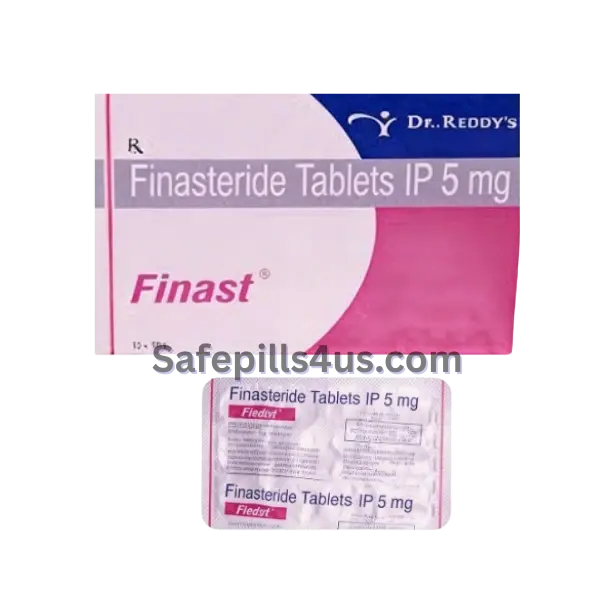
What Finast 5 mg does
Finasteride blocks 5‑alpha‑reductase Type II, the enzyme that turns
testosterone into dihydrotestosterone (DHT). High DHT makes the prostate grow. Lower DHT, and the prostate gradually shrinks. When the prostate is smaller, urine flows better, urgency and frequency ease up, and the risk of sudden urinary retention drops. It’s not an overnight fix think months, not days but the gains are steady.
Common BPH symptoms it helps
- Frequent urination, especially at night (nocturia)
- Weak urine stream, dribbling
- Straining to start peeing
- “Incomplete emptying” feeling
- Urgency and stop‑start flow
Why men choose Finast 5 mg
- Once‑daily tablet, with or without food
- Proven to shrink the prostate and improve urine flow
- Lowers the chance of needing BPH surgery down the road
- Can be used alone or combined with an alpha‑blocker (like tamsulosin) for faster symptom relief
Who should use it (and who shouldn’t)
- Good fit: Adult men with confirmed BPH who want long‑term symptom control and prostate size reduction
- Not for: Women, children, or teens. Do not use during pregnancy or breastfeeding
- Avoid if: You’re allergic to finasteride or any tablet ingredient
Special cautions
- Liver disease: Use with care; your doctor may monitor you closely
- Kidney disease: Usually no dose change needed, but keep your provider in the loop
- Prostate cancer screening: Finasteride lowers PSA about 50% after ~6 months. Your doctor will “adjust” the reading (often by doubling it) and watch for any rise from your personal baseline
How to take Finast 5 mg
- Dose: One tablet (5 mg) once daily
- Food: With or without food—your call
- Time of day: Any time, just be consistent
- Missed dose: Skip it if it’s close to the next one. Don’t double up
- How long to see results: Some symptom relief may show in 4–12 weeks; best effect on prostate size often takes 6–12 months
What you might feel while starting
- Many men notice bathroom trips at night slowly dropping over a few months
- Urine stream gets a bit stronger, straining lessens
- If you’re also on an alpha‑blocker, you may feel relief faster
Handling and safety around others
- Finast tablets are film‑coated, so intact tablets are safe to handle
- Do not crush or break tablets
- Women who are or may become pregnant should not handle broken or crushed tablets finasteride can be absorbed through the skin and may harm a male fetus
- Don’t donate blood while taking finasteride and for at least 1 month after stopping (prevents exposure to pregnant recipients)
Side effects: the honest list
Most men tolerate finasteride well. Still, side effects can happen.
Common (usually mild):
- Decreased libido
- Erectile dysfunction
- Decreased semen volume
- Breast tenderness or enlargement (gynecomastia)
Less common, but important—contact your clinician if you notice:
- Breast lumps, nipple discharge, or breast pain (rare; get checked)
- Persistent sexual side effects or reduced fertility
- Testicular pain, skin rash, swelling of lips/face (possible allergy)
- Mood changes, depression, or suicidal thoughts (seek help urgently)
- Any unusual change in urination or symptoms getting worse
Interactions: what to know
Finasteride has few known drug interactions. That said:
- Always share your full medication list, including supplements
- Combining with alpha‑blockers (tamsulosin, alfuzosin, silodosin) is common; your doctor guides the combo
- No routine dietary restrictions
- Alcohol doesn’t directly interact, but go easy if it worsens urinary symptoms
Real‑world results and monitoring
- PSA: Expect PSA to drop about 50% by 6 months. Any rise from your lowest level should be checked
- Prostate size: Often shrinks ~20% over 6–12 months
- Symptom scores (like IPSS): Gradual improvement with continued use
- Follow‑ups: Your clinician may track symptom scores, PSA, and urinary flow over time
Deep‑dive Table 1: Product snapshot (quick reference)
| Item |
Details |
| Brand/Generic |
Finast 5 mg / Finasteride 5 mg |
| Class |
5‑alpha‑reductase inhibitor (Type II) |
| Primary use |
Benign Prostatic Hyperplasia (BPH) in adult men |
| What it does |
Lowers DHT → shrinks prostate → improves urine flow |
| Dose |
5 mg once daily, same time each day |
| With food? |
Can be taken with or without food |
| Time to benefit |
4–12 weeks for symptom relief; 6–12 months for max size reduction |
| Long‑term benefits |
Lowers risk of acute urinary retention and BPH surgery |
| PSA effect |
~50% reduction after ~6 months; clinicians adjust interpretation |
| Not for |
Women, children; do not use in pregnancy/breastfeeding |
| Key warnings |
Sexual side effects, mood changes, rare male breast changes |
| Handling |
Don’t crush. Pregnant persons shouldn’t handle broken/crushed tablets |
| Blood donation |
Avoid during therapy and for ≥1 month after stopping |
| Storage |
Room temp, dry place, away from kids and light |
| Rx status |
Prescription‑only in most regions |
Deep‑dive Table 2: Dosing, combos, and special cases (for understanding—follow your prescription)
| Scenario |
Typical approach |
Practical notes |
| Standard BPH start |
5 mg once daily |
Be consistent; review at 3–6 months |
| Need faster relief |
Add an alpha‑blocker (e.g., tamsulosin) |
Alpha‑blocker helps quickly; finasteride works long‑term |
| PSA monitoring |
Check baseline, recheck at ~6 months |
Clinician “doubles” PSA to compare; any rise warrants evaluation |
| Missed a dose |
Skip and take next dose as usual |
No doubling doses |
| Moderate liver impairment |
Use with caution |
Doctor may monitor more closely |
| Kidney impairment |
Usually no dose change |
Keep prescriber informed |
| Sexual side effects |
Reassess risks/benefits |
Effects may improve over time or after stopping; tell your clinician |
| Planning fatherhood |
Discuss first |
Rare reports of altered semen parameters; usually reversible |
| Hair loss interest |
Use 1 mg strength (doctor‑directed) |
5 mg is for BPH; don’t self‑adjust or split without advice |
How it compares (quick context)
- Finasteride vs alpha‑blockers: Alpha‑blockers act fast but don’t shrink the prostate. Finasteride changes the prostate over months and reduces future complications. Together, they can be a strong team.
- Finasteride vs dutasteride: Both block DHT; dutasteride inhibits Type I and II enzymes. Some men respond similarly; your doctor will match the option to your case.
Smart tips for better results
- Take it at the same time every day—simple, but it helps
- Keep follow‑up appointments (PSA tracking matters)
- Limit late‑night fluids and alcohol if they spike nighttime urination
- If you start a new med or supplement, mention it—just in case
Frequently asked questions (FAQ)
Q: What is Finast 5 mg used for?
A: It’s finasteride 5 mg, used to treat benign prostatic hyperplasia (BPH) in adult men—helps improve urine flow and shrink the prostate over time.
Q: How long before I notice a difference?
A: Some men feel improvement in 1–3 months. The full effect on prostate size usually shows up by 6–12 months. It’s a slow‑and‑steady medicine.
Q: Can I take it for hair loss?
A: The 1 mg strength is typically used for male pattern hair loss. Finast 5 mg is for BPH. Use only what your clinician prescribes.
Q: Will it affect my PSA test?
A: Yes. Finasteride lowers PSA by about 50% after several months, so your doctor will adjust how they read your result. Any rise from your lowest level is taken seriously.
Q: What about sexual side effects?
A: Decreased libido, erectile issues, or reduced semen volume can happen. For many men these are mild and may ease with time. If they bother you or persist, talk to your clinician.
Q: Can I drink alcohol with Finast?
A: There’s no direct interaction, but alcohol can worsen nighttime urination for some men. Keep it moderate.
Q: Is finasteride safe long‑term?
A: Many men use it for years under medical supervision. Your clinician will monitor symptoms, PSA, and general health to keep it safe and effective.
Q: Can women take Finast?
A: No. It’s not for women and is contraindicated in pregnancy. Women who are or may become pregnant should not handle broken or crushed tablets.
Q: Do I need to stop before a PSA test?
A: No. Keep taking it, but make sure your doctor knows you’re on finasteride so they can interpret PSA correctly.
Q: Can I just stop if I feel better?
A: If you stop, benefits gradually wear off and symptoms may return. Don’t change your plan without checking with your clinician.
Q: Any signs I should call my doctor right away?
A: Yes breast lumps, nipple discharge, severe mood changes, suicidal thoughts, swelling of the face/lips, or any sudden worsening of urinary symptoms.
Q: Can I donate blood while on Finast?
A: Avoid donating while taking finasteride and for at least 1 month after your last dose.





Reviews
There are no reviews yet.