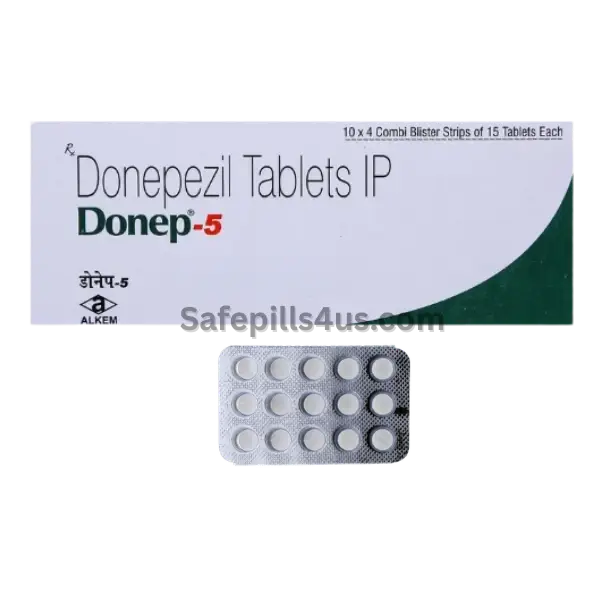
Donep 5 mg Tablet — Donepezil for Memory and Thinking Support
Donep 5 mg is a prescription tablet used to help manage symptoms of mild to moderate Alzheimer’s disease. It doesn’t cure Alzheimer’s, but it can help with day‑to‑day thinking, memory, and function so routines feel a bit smoother. One pill a day, simple plan your clinician can adjust over time.
Quick Highlights (so you know what you’re getting)
- Strength: 5 mg donepezil hydrochloride per tablet
- Use: Helps with memory, attention, and daily function in Alzheimer’s
- Class: Acetylcholinesterase inhibitor (boosts acetylcholine in the brain)
- Dosing: Usually once daily, same time each day
- With or without food (take with a light snack if your stomach feels queasy)
- Prescription only
What Is Donep 5 mg?
Donep 5 mg contains donepezil, a well‑known medicine for Alzheimer’s symptoms. Doctors often start at 5 mg to see how your body handles it. If you’re doing well after a few weeks, they may discuss moving to a higher dose totally individualized.
How It Works
Your brain cells use a chemical messenger called acetylcholine to talk to each other. In Alzheimer’s, there’s less of it around, so the signal gets weak.
Donepezil slows the breakdown of acetylcholine, which helps strengthen that signal. Not a miracle, but it can support memory, focus, language, and daily tasks.
Why People Choose Donep 5 mg
- Once‑daily dosing keeps things easy
- Often well‑tolerated at the 5 mg start dose
- Can help maintain everyday independence a bit longer
- Doctor‑trusted option with years of use behind it
Who It’s For
- Adults diagnosed with mild to moderate Alzheimer’s disease
- People who need a starter dose of donepezil before any dose increase
- Caregivers looking for a steady, simple routine for their loved one
How to Take Donep 5 mg
- Take 1 tablet once daily, exactly as prescribed.
- Evening dosing is common. But if it causes vivid dreams or sleep issues, mornings can work better—ask your prescriber.
- Swallow whole with water. Don’t crush unless your clinician says it’s okay.
- If nausea shows up, try taking it with a small snack.
Missed a Dose?
Take it when you remember the same day. If it’s the next day already, skip the missed dose and go back to your normal schedule. Don’t double up. If you miss several days in a row, check with your prescriber about how to restart.
What to Expect (realistic timeline)
- First few days: your stomach may feel off, or sleep might be a little weird. Many folks adjust.
- 2–4 weeks: you and your caregiver may notice small improvements—more “good” moments, a bit more focus, steadier daily tasks.
- Ongoing: your doctor may reassess after 4–6 weeks to decide whether to stay at 5 mg or consider a higher dose.
Possible Side Effects
Most are mild and tend to fade as your body adjusts:
- Nausea, vomiting, diarrhea, or stomach cramps
- Loss of appetite or slight weight change
- Headache, dizziness, or fatigue
- Insomnia, vivid dreams, or unusual dreams
- Muscle cramps
Less common but important to watch:
- Slow heartbeat, fainting, or feeling like you might pass out
- Stomach pain, black/tarry stools, or vomiting blood (possible GI bleeding)
- Trouble breathing (especially if you have asthma/COPD)
- Seizures (rare), confusion that’s suddenly worse, or severe weakness
Safety Notes (read before starting)
- Heart rhythm issues: Use caution if you have a history of bradycardia, heart block, or fainting.
- Stomach ulcers or GI bleeding: Risk can be higher, especially with NSAIDs (like ibuprofen, naproxen).
- Lung conditions: Cholinergic effects can aggravate asthma/COPD in some people.
- Seizure disorders, urinary problems, or liver issues: Tell your clinician.
- Surgery/anesthesia: Let the surgical team know you take donepezil; it can interact with certain muscle relaxants.
Medicine Interactions to Keep on Your Radar
- Anticholinergic meds (like some bladder, allergy, or motion‑sickness meds) can counteract donepezil’s benefits.
- NSAIDs may raise the risk of GI irritation/bleeding use only as directed by your clinician.
- Enzyme inducers (rifampin, carbamazepine, phenytoin, dexamethasone) may lower donepezil levels.
- Enzyme inhibitors (ketoconazole, erythromycin, some antidepressants like fluoxetine, and quinidine) may increase levels and side effects.
- Beta‑blockers and other meds that slow the heart can add to bradycardia risk.
Storage and Handling
- Store at room temperature, dry place, away from direct heat and light.
- Keep in the original blister/bottle with the label.
- Out of reach of kids and pets always.
Frequently Asked Questions
- What does Donep 5 mg treat?
It’s used to manage symptoms of mild to moderate Alzheimer’s disease things like memory, attention, and daily function.
- How long before I notice a difference?
Some people notice changes within 2–4 weeks. Benefits are usually modest but meaningful for daily routines.
- Is it better to take Donep at night or in the morning?
Many start at night to ease stomach upset. If sleep gets weird (dreams, insomnia), mornings can be better. Ask your prescriber which timing fits you.
- Can Donep 5 mg be taken with food?
Yes—take it with or without food. If you feel queasy, a small snack helps.
- What if side effects don’t go away?
If nausea, dizziness, or sleep issues stick around or feel rough, contact your clinician. A timing change or dose adjustment may help.
- Will Donep 5 mg cure Alzheimer’s?
No. It helps manage symptoms and may support daily independence for a while. It doesn’t stop the underlying disease.
- Is alcohol okay while on Donep?
Best to limit it. Alcohol can worsen dizziness or confusion. If you drink, keep it light and discuss with your provider.
Reviews
There are no reviews yet.