Combunex 800 mg – Easy Product Guide
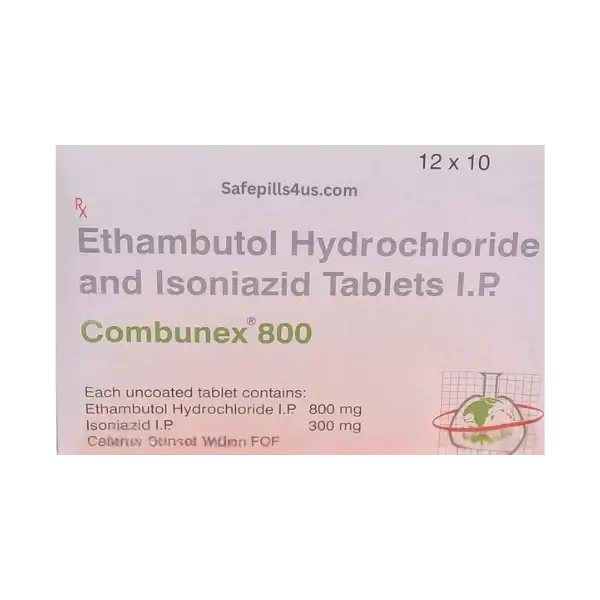
Combunex 800 mg is a prescription anti‑TB tablet that helps slow down and stop the growth of tuberculosis bacteria. In plain words: it’s one piece of a bigger plan. You don’t take it alone you take it with other TB drugs your doctor chooses. Steady, consistent dosing is the whole game here. Miss fewer doses, give it time, and let the combo do its job.
Prescription only. Use exactly as your TB specialist advises.
Product snapshot
| Item |
Details |
| Name |
Combunex 800 mg |
| Active ingredient |
Ethambutol hydrochloride 800 mg |
| Therapeutic class |
Antimycobacterial (anti‑TB) |
| Indication |
Part of combination therapy for active tuberculosis |
| Dosage form |
Film‑coated tablet |
| Route |
Oral |
| Usual schedule |
Once daily (weight, kidney function, and phase of therapy decide the exact dose) |
| Key interaction |
Separate from aluminum‑containing antacids by 2+ hours |
| Storage |
Keep below 25°C, dry, away from light |
| Pack type |
Blister strips; pack size can vary |
| Rx status |
Prescription only |
What it does (in simple terms)
Combunex 800 mg contains ethambutol. It targets the TB bug’s cell wall think of it as messing with the bricklayer the bacteria need to build their protective wall. When that wall isn’t built right, the bacteria struggle to multiply. That helps bring the infection under control when combined with other TB meds like rifampicin, isoniazid, and pyrazinamide.
- Not a general antibiotic. It won’t help with a cold, flu, or a routine chest infection.
- Works best as part of a full TB regimen, not by itself.
Who it’s for and who should be careful
Good fit:
- Adults and adolescents diagnosed with active TB, as part of a standard combination plan.
- Patients under a TB specialist’s care, with baseline tests and follow‑ups in place.
Use with caution or avoid:
- Known allergy to ethambutol.
- Active optic neuritis (eye nerve inflammation) unless your doctor decides the benefits outweigh the risks.
- Impaired kidney function dose adjustments may be needed.
- History of gout or high uric acid.
- Very young children who can’t report vision changes—requires specialist oversight.
Pregnancy and breastfeeding:
- TB must be treated during pregnancy. Ethambutol is often used when benefits outweigh risks. Your specialist will guide you.
- If breastfeeding, your doctor will weigh the pros and cons and may advise monitoring the infant.
How to take it
- Take by mouth with water. Swallow whole—don’t crush unless your prescriber says it’s okay.
- Same time each day helps a lot. Morning is common, but any consistent schedule works.
- With or without food: take with food if you feel queasy. It can make the stomach happier.
- Keep it away from aluminum‑containing antacids. If you need one, take it at least 2 hours before or after your dose.
Missed a dose?
- If you remember soon, take it then.
- If it’s close to the next dose, skip the missed one. Don’t double up.
- Try not to miss again—TB therapy really depends on regular dosing.
How long will you be on it?
- TB treatment isn’t a weekend thing. It lasts months. There’s usually an “intensive phase” first, then a “continuation phase.” Your doctor sets the plan and adjusts based on tests and response.
Everyday tips that actually help:
- Set phone reminders. Simple, but it works.
- Keep all follow‑ups. Eye checks and blood tests might be part of your plan.
- Go light on alcohol. Several TB meds stress the liver, so it’s smart not to add more strain.
- Before taking new OTC meds or supplements, check with your provider.
Side effects and safety signals
Common (often mild and manageable):
- Nausea, stomach upset, or loss of appetite
- Headache or dizziness
- Skin rash or itch
- Joint pains, general body aches
- Higher uric acid (can trigger gout in people who are prone)
Less common but important:
- Vision changes: blurred vision, reduced sharpness, trouble with red‑green colors, eye pain
- Severe allergic reaction (swelling, breathing trouble, hives)
- Numbness or tingling in hands/feet
- Severe skin reactions (very rare)
Stop the medicine and contact your doctor right away if you notice:
- Any change in vision or color vision
- A severe rash, swelling, or signs of an allergic reaction
- Persistent symptoms that feel new, scary, or just not right
Extra watch‑outs:
- Eyes: Ethambutol can affect the optic nerve in rare cases. Baseline and periodic eye exams are often advised—especially if therapy runs long.
- Kidneys: Dose may be adjusted if kidney function is reduced.
- Gout: Tell your doctor if you’ve had gout before. They may monitor uric acid.
- Driving and machines: If you feel dizzy or your vision is off, skip driving or operating machinery.
- Kids: For small children, dosing is weight‑based and they’ll be monitored closely by a specialist team.
Interactions to know about
- Antacids with aluminum: lower absorption. Separate by 2+ hours.
- Other TB drugs: Your team will balance the whole regimen (rifampicin, isoniazid, pyrazinamide, etc.) so each one supports the others.
- Alcohol: best limited during TB treatment.
- Supplements and herbal products: always share your full list with your TB team—no surprises.
Storage and handling
- Store below 25°C, in a cool, dry spot. Keep away from sunlight and moisture.
- Keep tablets in the original blister until use.
- Keep out of reach of kids and pets.
- Don’t use after the expiry date on the pack.
- Don’t flush unused tablets. Ask a pharmacist about safe disposal.
Why patients are prescribed Combunex 800 mg
- Reliable ethambutol strength for adult dosing.
- Helps protect the overall regimen against resistance when used correctly with companion drugs.
- Once‑daily schedules are common, which can make adherence a bit easier.
- Compatible with standard national and international TB treatment plans, as directed by specialists.
Frequently asked questions (FAQ)
Q1) What is Combunex 800 mg used for?
- It’s ethambutol 800 mg, used with other medicines to treat active tuberculosis. It slows the growth of TB bacteria so the combo can work better.
Q2) Can I take Combunex 800 mg alone?
- No. It must be part of a combination TB regimen. Taking it solo can lead to failure and resistance.
Q3) How long do I need to take it?
- Usually for months. Your doctor will pin down the exact duration based on tests, your response, and the treatment phase.
Q4) Can I take it with food?
- Yes. If your stomach feels off, food can help. Just avoid aluminum antacids near the dose time.
Q5) What vision problems should I watch for?
- Blurry sight, trouble seeing red/green, reduced sharpness, or eye pain. Report these immediately. Eye checkups are often planned.
Q6) What if I forget a dose?
- Take it as soon as you remember—unless it’s almost time for the next one. Skip the missed dose if it’s close. Never double up.
Q7) Is it safe during pregnancy?
- TB needs treatment in pregnancy. Ethambutol is often used when benefits outweigh risks. Follow your specialist’s advice.
Q8) Can I drink alcohol while on it?
- Best to limit or avoid alcohol during TB therapy, as it can add strain to the liver, especially with other TB meds.
Q9) Will it affect my uric acid or gout?
- It can raise uric acid. If you have gout or get sudden joint pain, tell your doctor.
Q10) Can kids take Combunex?
- Possibly, under specialist care. Dosing is weight‑based and vision monitoring is important.
Directions at a glance
- Dose: As prescribed, often once daily, based on body weight and kidney function.
- With food: Allowed; may ease nausea.
- Antacids: Separate aluminum‑containing antacids by 2+ hours.
- Adherence: Don’t stop early, even if you feel better. That’s how resistance starts.
- Teamwork: Keep your healthcare team in the loop about side effects and other meds.
Related products (use only if your doctor prescribes)
- Combunex 400 mg (ethambutol 400 mg) for dose adjustments
- Ethambutol 200 mg tablets for precise, weight‑based dosing
- Rifampicin 450 mg / 600 mg, core companion TB medicine
- Isoniazid 300 mg, first‑line TB drug (often with vitamin B6)
- Pyrazinamide 500 mg / 750 mg, common in the initial phase
- Pyridoxine (Vitamin B6) 10–25 mg, often added when isoniazid is used
- Fixed‑dose combination TB tablets (as per national protocols), if your specialist recommends them







Reviews
There are no reviews yet.