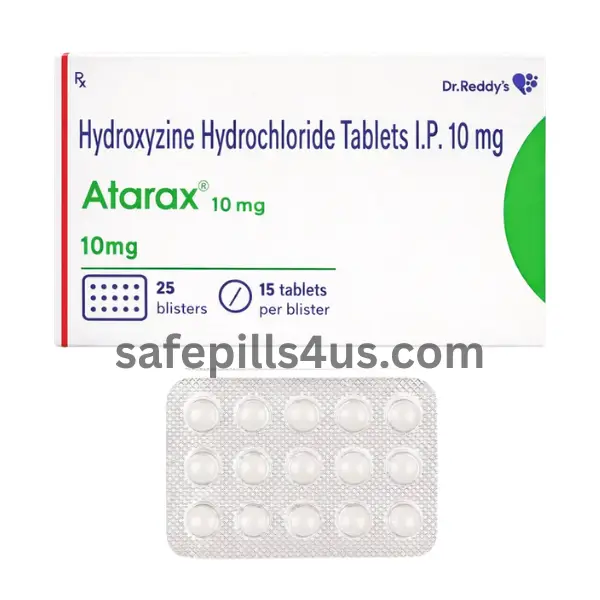
Atarax 10mg Hydroxyzine Tablets
Some days your skin itches so badly you cannot concentrate on anything else. Other days anxiety creeps in and sits on your chest like a weight that will not lift. Atarax 10mg understands both of those struggles because it was designed to address them. Containing hydroxyzine hydrochloride as its active ingredient, this medication occupies a unique space in medicine. It is one of the few drugs that genuinely works for both allergic itching and anxiety, and it has been doing so reliably for over six decades. Doctors across the United States continue prescribing it because it delivers predictable results for patients who need calm in their skin and calm in their mind.
Not Your Typical Antihistamine
Most antihistamines do one thing. They block histamine and your
allergy symptoms improve. Hydroxyzine does that too, but it goes considerably further.
It crosses into the central nervous system, which is exactly where it needs to be to address anxiety. Once there, it produces a calming effect that eases tension, reduces nervousness, and quiets the mental noise that anxious patients know all too well. This is not a sedative in the traditional sense and it is not habit forming like benzodiazepines. It simply takes the edge off in a way that feels natural and manageable.
Two Problems One Tablet
Patients dealing with severe itching from hives, eczema flares, or contact dermatitis often find that the itching itself creates anxiety. And patients living with generalized anxiety frequently develop physical symptoms including skin irritation and tension-related itching. Atarax addresses both sides of that cycle simultaneously, which is something very few medications can claim.
That dual capability is not a marketing gimmick. It is rooted in how hydroxyzine interacts with multiple receptor systems in your body, and it is the reason physicians have trusted this drug across generations of patients.
Understanding Hydroxyzine Inside Your Body
Hydroxyzine absorbs quickly through your digestive tract and reaches peak levels in your blood within roughly two hours. Once circulating, it blocks H1 histamine receptors throughout your body. In your skin, this stops the itch signal from reaching your brain. In your nasal passages and eyes, it calms allergic inflammation the same way other antihistamines do.
But hydroxyzine also suppresses activity in certain areas of the subcortical region of the central nervous system. This is the mechanism behind its anxiolytic properties. It reduces overactivity in the parts of your brain responsible for worry, fear, and tension without altering your consciousness the way stronger psychiatric medications might. Your liver eventually converts hydroxyzine into cetirizine, which is itself a well-known antihistamine. So even as the parent drug is metabolized, its breakdown product continues providing allergy relief.
Real World Benefits Patients Notice
The itching relief from Atarax tends to be profound. People who have scratched themselves raw from chronic hives or eczema often describe the first day on hydroxyzine as the first time in weeks their skin felt quiet. That word comes up frequently. Quiet. The constant urge to scratch just fades into the background.
For anxiety, the effect is more subtle but equally meaningful. Patients report feeling less wound up, less reactive to stress, and more capable of handling everyday situations that previously felt overwhelming. It does not create euphoria or a detached feeling. It simply lowers the volume on anxious thoughts enough for you to function normally.
Sleep improvement is another benefit worth mentioning. Many patients with anxiety or chronic itching struggle terribly with sleep. Hydroxyzine's mild sedative quality helps people fall asleep more easily and stay asleep longer without the dependence risks associated with prescription sleep medications.
When Doctors Typically Prescribe It
Atarax 10mg finds its way onto prescription pads in several different clinical situations.
Allergic skin conditions rank high on the list. When hives persist for weeks, when eczema flares resist topical treatments alone, or when contact dermatitis causes unbearable itching, hydroxyzine offers systemic relief that creams and ointments cannot always provide.
Generalized anxiety disorder is another common reason for prescription, particularly when a doctor wants to avoid starting a patient on benzodiazepines or when a patient has a history of substance use that makes habit-forming medications risky.
Some surgeons and anesthesiologists prescribe Atarax before medical procedures to calm nervous patients and reduce nausea. It is also occasionally used alongside pain medications to enhance their effectiveness and reduce the amount of opioid needed after surgery.
Finding the Right Dose
The Atarax 10mg strength of Atarax is often the starting point. Your doctor may keep you at this dose or increase it depending on how you respond and what condition is being treated.
For anxiety, the typical adult range is 50 to 100 mg spread across the day in divided doses, though many patients start at Atarax 10mg and gradually work upward. For itching and allergic conditions, 25 mg taken three to four times daily is common, but again the Atarax 10mg tablet allows your physician to fine-tune the amount precisely.
Take each dose with a glass of water. Food does not significantly affect absorption, so timing around meals is flexible. Your doctor will likely suggest taking the largest portion of your daily dose at bedtime to take advantage of the sedative effect while minimizing daytime drowsiness.
Getting Used to the Medicine
Drowsiness during the first few days is almost guaranteed. This is the single most predictable effect of hydroxyzine and honestly the one that concerns new patients the most. The reassuring news is that most people develop tolerance to the sedation within a week while the therapeutic benefits remain fully intact.
During those initial days, be smart about your schedule. Avoid driving until you understand how the medication affects your alertness. Skip the alcohol entirely. Give yourself permission to rest a bit more than usual knowing that this adjustment period is temporary.
Side Effects You Should Understand
Drowsiness tops the list and affects a significant number of users, especially at higher doses. Dry mouth is the second most common complaint and can usually be managed by sipping water throughout the day or using sugar-free lozenges.
Headache, dizziness, and mild stomach upset show up occasionally during the first few days. Blurred vision and constipation are less common but possible, particularly in older adults.
Serious side effects are rare but require immediate attention. A rapid or irregular heartbeat, tremors, seizures, difficulty urinating, or signs of a severe allergic reaction like throat swelling and breathing trouble are all reasons to seek emergency care without delay. Hydroxyzine has been associated with QT prolongation in certain patients, which is a heart rhythm issue that your doctor should evaluate if you have preexisting cardiac conditions.
Precautions That Truly Matter
Elderly patients need careful dosing. Older adults are more susceptible to the sedative and anticholinergic effects of hydroxyzine, which increases fall risk and can worsen confusion in those with cognitive decline.
Patients with heart rhythm disorders or those already taking medications known to prolong the QT interval must discuss this thoroughly with their physician. The combination can be dangerous.
Hydroxyzine is not recommended during early pregnancy. Evidence suggests potential risks to the developing fetus, particularly during the first trimester. Breastfeeding mothers should also avoid it since the drug passes into breast milk.
People with narrow-angle glaucoma, prostate enlargement causing urinary obstruction, or severe liver disease should use hydroxyzine only under very close medical supervision.
Combining With Other Medications
Hydroxyzine intensifies the effects of other central nervous system depressants. That includes prescription sedatives, opioid pain relievers, benzodiazepines, barbiturates, and alcohol. The combined sedation can become dangerously heavy, impairing breathing and consciousness.
MAO inhibitors can amplify and extend the anticholinergic effects of
hydroxyzine, creating potentially serious complications. Medications with their own anticholinergic properties such as certain bladder drugs, older antidepressants, and some antipsychotics can compound side effects like dry mouth, constipation, urinary retention, and confusion.
Even everyday medications deserve scrutiny. Over-the-counter sleep aids, cold medicines containing antihistamines, and herbal supplements like valerian or kava can interact unpredictably. Always share your complete medication list with your doctor and pharmacist including everything you consider harmless.
Storing Your Tablets Properly
Atarax 10mg tablets should live in a cool dry place at room temperature between 59 and 86 degrees Fahrenheit. Original packaging provides the best protection against moisture and light, so keep tablets sealed until you need them.
Avoid storing them in the bathroom where daily showers create humidity fluctuations. A bedroom drawer or linen closet shelf is a much better option. Expired tablets should be returned to a pharmacy for proper disposal rather than flushed or thrown in household trash. This medication must be stored securely away from children and pets at all times.
Patient Questions Answered
Will Atarax 10mg make me feel drugged?+
At the Atarax 10mg dose, most people feel mildly relaxed rather than heavily sedated. The effect is usually calming, not intoxicating. Higher doses may cause stronger sedation.
Is hydroxyzine addictive?+
No. Hydroxyzine is not considered addictive and does not cause physical dependence like some anxiety medications. However, always follow your doctor’s guidance when starting or stopping it.
How long can I stay on Atarax 10mg?+
The duration depends on your condition and your doctor’s advice. Some people use it short term, while others may take it longer under medical supervision.
Can I take Atarax 10mg only when I feel anxious?+
Yes, in some cases it is prescribed as needed for situational anxiety. In other cases, it may be taken regularly. Follow the plan your doctor recommends.
Does Atarax 10mg help with sleep?+
Many people notice better sleep due to its calming and mildly sedating effects. However, it is not officially classified as a sleep medicine.
Can teenagers take Atarax 10mg?+
Hydroxyzine can be used in adolescents, but the dose must be decided by a doctor based on age, weight, and condition. Never share your prescription without medical advice.