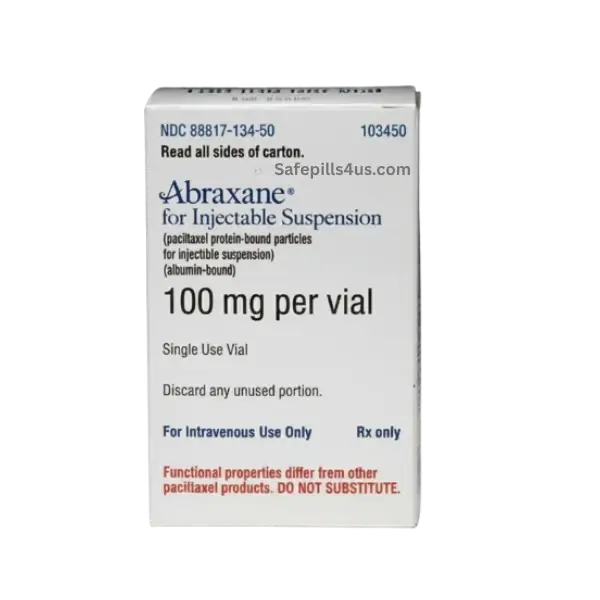
Abraxane 100 Mg Injection is a prescription anti-cancer medicine used in adults. It contains paclitaxel (protein-bound), sometimes called nab-paclitaxel. In plain words, it’s paclitaxel attached to tiny particles of human albumin. This helps the medicine travel in the bloodstream and reach the tumor more efficiently. It’s given as an intravenous infusion by trained healthcare professionals never at home.
This is a solvent-free formulation, so premedication with steroids to prevent hypersensitivity is usually not required. The infusion time is typically shorter compared to conventional paclitaxel, which many patients and clinics appreciate. If you’ve been told you’ll receive Abraxane, your care team will guide you through each session, check your blood counts, and adjust your schedule if needed.
What Abraxane 100 Mg Injection Is Used For
Your oncologist may prescribe Abraxane for:
- Metastatic breast cancer (often after failure of combination therapy or if relapse occurs)
- Locally advanced or metastatic non-small cell lung cancer (usually with carboplatin)
- Metastatic adenocarcinoma of the pancreas (in combination with gemcitabine)
Every case is unique. The final decision on whether Abraxane is right for you—and how often you’ll receive it comes from your cancer care team.
How It Works (Simple Version)
Abraxane belongs to a group called taxanes. It stops cancer cells from dividing by stabilizing microtubules think of it as messing with the cell’s inner scaffolding so it can’t split and grow. The albumin-bound part helps deliver the drug without solvents like Cremophor EL. That matters because:
- It often allows shorter infusions
- It usually means no steroid premedication (your doctor decides)
- It helps the medication move through the body in a controlled way
What’s Inside the Vial
- Paclitaxel (protein-bound) 100 mg
- Human albumin (from screened donors) as the carrier protein
It’s supplied as a sterile, lyophilized powder. Your nurse or pharmacist reconstitutes it before infusion. You won’t be handling this at home.
How It’s Given
- Route: Intravenous infusion (IV)
- Setting: Clinic or hospital, under supervision
- Timing: Typically shorter infusion time than conventional paclitaxel
- Monitoring: You’ll have blood tests to check white cells, red cells, platelets, liver function, and more
The dose and schedule depend on your body surface area, cancer type, and your lab results. Your doctor may adjust, delay, or stop treatment based on
side effects or test results. So, the plan can change—this is normal and part of safe cancer care.
What You May Notice During Treatment
Everyone’s experience is a little different, but here are some common things patients report:
- Tiredness that can ebb and flow
- Some hair thinning or hair loss
- Numbness or tingling in fingers and toes (peripheral neuropathy)
- Mild nausea or reduced appetite
- Changes in blood counts (you won’t feel this labs pick it up)
If anything feels off, speak up early. In plain words: don’t power through. Your team can tweak things to help you feel better.
Safety First: Warnings and Precautions
- Do not use if you have a known allergy to paclitaxel, human albumin, or any component of the formulation.
- This medicine can lower blood counts. Even a small fever matters call your doctor if you feel unwell.
- Peripheral neuropathy (numbness, tingling) can occur. Report symptoms early.
- Use effective contraception. Abraxane can harm an unborn baby. If you’re pregnant, planning pregnancy, or breastfeeding, tell your doctor right away.
- Liver function matters. Your doctor may adjust the dose if your liver tests are high.
- Not interchangeable: You can’t swap Abraxane dose-for-dose with other paclitaxel products. They’re formulated differently.
Possible Side Effects
Not a complete list, but here’s what’s commonly seen. Some are mild, some need quick attention.
Common:
- Fatigue, weakness
- Nausea, vomiting, diarrhea, or constipation
- Hair loss (usually reversible after treatment)
- Peripheral neuropathy (tingling or numb fingers/toes)
- Low blood counts (neutropenia, anemia, thrombocytopenia)
- Joint or muscle aches
- Mouth sores
Less common but important:
- Severe infections due to low white cells
- Severe neuropathy (trouble with buttons, dropping objects, unsteady walk)
- Allergic-like reactions during infusion (rare with Abraxane, but possible)
- Liver enzyme changes
- Severe diarrhea or dehydration
- Chest pain or breathing issues
If you get fever, chills, sore throat, unusual bruising or bleeding, severe weakness, or trouble breathing—seek medical help promptly.
Drug Interactions
Paclitaxel is processed by liver enzymes. Some medicines and herbal products can affect this. Examples include:
- Certain antifungals, antibiotics, antivirals
- Some seizure medicines
- St. John’s wort and other herbal supplements
Share a full list of everything you take—prescriptions, OTC, vitamins, and herbals. Don’t start or stop anything without your doctor’s okay.
Storage and Handling (For Clinics)
- Store vials as directed by the manufacturer, generally at controlled room temperature
- Protect from light
- Reconstitution and dilution must be done by trained personnel using aseptic technique
- Single-use vial: discard any unused portion
For patients: your clinic handles all of this. You don’t need to store Abraxane at home.
Why Patients Are Often Prescribed Abraxane
- Solvent-free formulation (albumin-bound), which often means no routine steroid premedication
- Efficient tumor delivery via albumin-mediated transport
- Shorter infusion time vs traditional paclitaxel
- Well-studied in breast cancer, NSCLC (with carboplatin), and pancreatic cancer (with gemcitabine)
Just a quick note: benefits vary from person to person. Your oncologist weighs your overall health, prior treatments, and goals of care.
Packaging Details
- One vial containing Abraxane 100 mg (paclitaxel protein-bound)
- For single use after reconstitution
- Prescribed and administered in a clinical setting only
Who Should Not Use Abraxane
- People allergic to paclitaxel or human albumin
- Patients with very low baseline neutrophil counts (your doctor checks this)
- Those who are pregnant or breastfeeding (unless your oncologist decides benefits outweigh risks and appropriate precautions are in place)
Always discuss your full medical history—liver issues, heart history, nerve problems, infections, prior reactions to chemotherapy so your care team can keep you safe.
Tips for Patients (Plain, Practical Stuff)
- Keep all lab appointments. These tests help prevent complications.
- Tell your team about any numbness or tingling right away don’t wait.
- Stay hydrated if your doctor says it’s okay. Small, frequent sips help.
- Eat what you can tolerate nutrient-dense snacks are often easier than big meals.
- At the first sign of fever (or if you just feel “off”), call the clinic. Better to over-report than miss something important.
Frequently Asked Questions (FAQ)
Q: What is Abraxane 100 Mg Injection used for?
A: It’s used in adults to treat certain cancers, including metastatic breast cancer, NSCLC (usually with carboplatin), and metastatic pancreatic cancer (with gemcitabine), as decided by your oncologist.
Q: Is Abraxane the same as regular paclitaxel?
A: No. Abraxane is an albumin-bound form of paclitaxel (solvent-free), and it is not interchangeable milligram-for-milligram with conventional paclitaxel. Doses and infusion details differ.
Q: Do I need premedication with steroids?
A: Often, no. Abraxane typically does not require routine steroid premedication to prevent hypersensitivity. Your doctor will decide based on your history and risk.
Q: How is Abraxane given?
A: Through an IV infusion in a clinic or hospital. The infusion time is usually shorter than conventional paclitaxel. Only trained professionals should handle and administer it.
Q: Can I take Abraxane during pregnancy or while breastfeeding?
A: No. It can harm an unborn baby, and breastfeeding is not recommended during treatment. Use effective contraception and talk with your doctor about family planning.
Q: What are the common side effects?
A: Fatigue, hair loss, nausea, changes in blood counts, and tingling/numbness in the hands or feet. Report any severe or unusual symptoms right away.
Q: How will my doctor monitor me?
A: Regular blood tests and check-ins before each cycle. They’ll watch your counts, liver function, symptoms (like neuropathy), and overall tolerance.
Q: Can I drive after an infusion?
A: Many patients can, but if you feel dizzy, fatigued, or unwell, don’t drive. Plan a ride for your first session until you know how you react.
Q: Is Abraxane safe for people with liver problems?
A: Your doctor may adjust the dose or schedule if your liver tests are high. Keep all monitoring appointments.
Q: Do I need to follow a special diet?
A: There’s no one-size-fits-all diet. Eat what you can tolerate. If you’re losing weight or struggling with nausea, ask for a nutrition referral. 

Reviews
There are no reviews yet.