Description
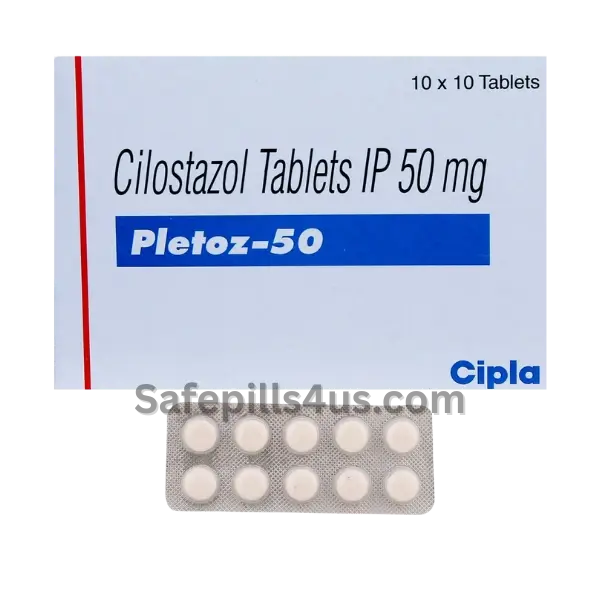
Pletoz 50 mg (Cilostazol) — everyday help for leg pain from PAD
Pletoz 50 mg is a cilostazol tablet used to improve walking distance and ease leg pain (intermittent claudication) in people with peripheral arterial disease (PAD). In plain English: it helps more blood reach your leg muscles while you walk, so the cramps don’t cut you short as quickly. It’s not an instant fix, but with steady use—and a walking plan—you can usually feel real progress over a few weeks.
| Quick facts |
What to know |
| Name |
Pletoz 50 mg (Cilostazol) |
| What it’s for |
Intermittent claudication due to PAD — helps you walk farther with less leg pain |
| Drug class |
PDE3 inhibitor (vasodilator + antiplatelet effect) |
| How it helps |
Relaxes blood vessels and reduces platelet stickiness to improve blood flow in the legs |
| Usual dose |
Often 100 mg twice daily; 50 mg twice daily if you’re on certain interacting meds or don’t tolerate higher doses |
| When to take |
30 minutes before or 2 hours after breakfast and dinner (empty stomach works best) |
| When you’ll notice |
Some relief in 2–4 weeks; full benefit may take up to 12 weeks |
| Key warning |
Do not use if you have any degree of heart failure |
| Common side effects |
Headache, diarrhea, palpitations, dizziness, edema, nausea |
| Interactions |
CYP3A4/2C19 inhibitors or inducers, blood thinners/antiplatelets, grapefruit products |
| Rx status |
Prescription only; follow your clinician’s plan |
What it’s for (and why people use it)
- Reduces leg pain from intermittent claudication, so walking is less stop‑and‑go.
- Supports a supervised walking/exercise program—great combo for building distance.
- Can be a next step when lifestyle changes alone aren’t enough.
How Pletoz 50 mg works
Cilostazol blocks an enzyme (PDE3) in blood vessel walls and platelets. That:
- Relaxes and widens blood vessels (vasodilation), especially in the legs.
- Makes platelets less sticky, so blood flows more freely.
Result your muscles get more oxygen while you move, which can mean longer walks with fewer painful stops.
How to take it
- Take exactly as prescribed. Many adults end up on 100 mg twice daily, but 50 mg twice daily is used if you’re taking certain interacting medicines or you’re sensitive to side effects.
- Timing matters: take your dose 30 minutes before or 2 hours after breakfast and dinner. Food can change how the drug is absorbed.
- Be consistent. It can take 2–4 weeks to notice a change and up to 12 weeks for full benefit.
- If there’s no meaningful improvement after about 3 months, your provider may reassess.
- If you miss a dose, take it when you remember unless it’s close to the next one. Don’t double up.
Who should not use Pletoz 50 mg
- Anyone with heart failure (of any severity). This is a firm no for cilostazol.
- People with active bleeding or a serious bleeding disorder—use only if your clinician says it’s appropriate.
- Those with serious heart rhythm problems, uncontrolled high blood pressure, or unstable angina—get specific medical guidance first.
- Severe liver disease or severe kidney problems—requires careful assessment.
- Pregnancy or breastfeeding: not recommended unless your doctor decides the benefits outweigh risks.
Possible side effects
Most are mild and fade as your body adjusts:
- Headache, dizziness, lightheadedness
- Diarrhea, upset stomach, nausea
- Palpitations, faster heartbeat, chest discomfort
- Swelling in the ankles/feet, flushing
Stop and contact your clinician right away if you notice:
- Signs of bleeding (black/tarry stools, vomiting blood, nosebleeds that don’t stop, unusual bruising)
- Irregular heartbeat, fainting, severe chest pain
- Fever, sore throat, mouth ulcers, or extreme fatigue (could signal rare blood cell issues)
Drug and food interactions
Tell your provider about all medicines and supplements you take.
- Strong CYP3A4 inhibitors (ketoconazole, itraconazole, clarithromycin) or strong CYP2C19 inhibitors (omeprazole, ticlopidine): can boost cilostazol levels. Your dose may be kept at 50 mg twice daily.
- CYP inducers (rifampin, carbamazepine, phenytoin, St. John’s wort): can lower effectiveness.
- Blood thinners/antiplatelets (warfarin, apixaban, rivaroxaban, aspirin, clopidogrel, SSRIs/SNRIs): higher bleeding risk—close monitoring needed.
- Grapefruit or grapefruit juice: can raise drug levels; better to avoid.
- Smoking: may reduce the effect of cilostazol—quitting helps your circulation and your results.
Storage and what’s inside
- Active ingredient Cilostazol 50 mg per tablet.
- Inactive ingredients vary by manufacturer. If you have allergies, check the pack insert.
- Store at room temperature, dry, away from heat and light. Keep out of reach of children and pets. Don’t use after the expiration date.
Tips to get the most from Pletoz 50 mg
- Stick to empty‑stomach dosing for steady absorption.
- Pair it with a structured walking plan. Short walks, rest, repeat—build distance week by week.
- Keep blood pressure, cholesterol, and blood sugar on target. These all affect PAD.
- Hydrate, wear supportive shoes, and avoid cold‑weather “overexertion” that can cramp muscles faster.
- Report new chest pain, irregular heartbeat, or any bleeding right away.
Frequently Asked Questions
Q: How soon will Pletoz 50 mg start working?
A: Some people feel a difference by week 2–4; the full effect can take up to 12 weeks. If there’s no real improvement by 3 months, your clinician may change the plan.
Q: Why do I have to take it away from meals?
A: Food can increase absorption and change peak levels, which may raise side effects. Taking it 30 minutes before or 2 hours after meals keeps things consistent.
Q: Is 50 mg the standard dose?
A: The common target is 100 mg twice daily. 50 mg twice daily is used if you’re on certain interacting medications or you’re sensitive to side effects. Follow your prescriber’s instructions.
Q: Can I take Pletoz with aspirin or clopidogrel?
A: It’s sometimes combined under medical supervision, but the bleeding risk goes up. Your provider will weigh benefits and monitor you.
Q: What if I have a history of heart failure?
A: Don’t use cilostazol. It’s contraindicated in any degree of heart failure.
Q: Are headaches normal?
A: Headache is common early on and often improves with time. If it’s severe or persistent, tell your clinician—dose changes may help.
Q: Can I drink alcohol?
A: Light drinking is usually okay, but alcohol can worsen dizziness or bleeding risk. Keep it modest and see how you feel.
Q: Do I need to stop if I’m having surgery or dental work?
A: You might. Always tell your surgeon or dentist you’re on cilostazol; they’ll advise when to pause and restart.


Reviews
There are no reviews yet.