Description
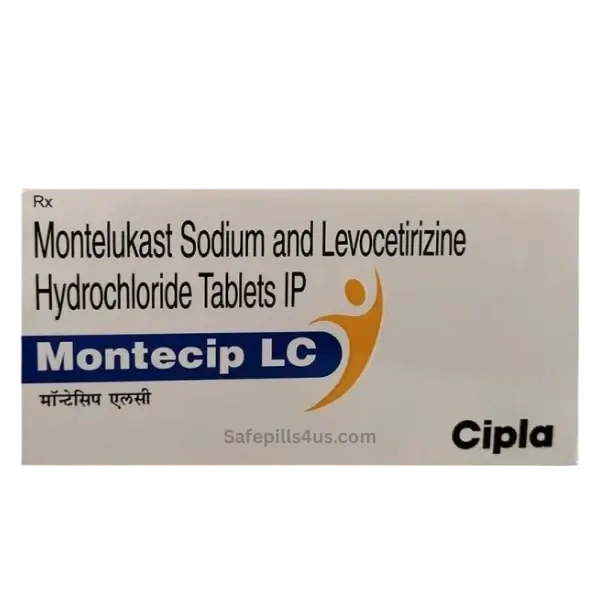
Montecip LC is a once‑daily anti‑allergy tablet that pairs two proven actives montelukast and levocetirizine to calm sneezing, runny nose, itchy/watery eyes, and night‑time allergy flare‑ups. In plain words, it tackles both the histamine part of allergies and the inflammation part, so you can breathe easier and sleep better. It’s a practical pick for hay fever, dust and pet allergies, and hives, when your symptoms need more than a simple antihistamine.
Most brands of Montecip LC contain montelukast 10 mg + levocetirizine 5 mg per tablet. Always check your pack to confirm the exact strength.
What it treats
- Allergic rhinitis: sneezing, runny/stuffy nose, nasal itching, post‑nasal drip
- Eye allergy symptoms: itchy, watery, red eyes from pollen, dust, pet dander
- Hives/itchy skin (urticaria): reduces itch and wheal size
- Night‑time allergy symptoms and exercise‑ or allergen‑induced bronchospasm support (as your doctor advises). Important: it does not replace your rescue inhaler.
If your main struggle is a blocked nose, a steroid nasal spray may still be the MVP. Montecip LC complements that by dialing down the overall allergy response.
How it works
- Levocetirizine blocks histamine. Histamine is the quick‑acting chemical that causes sneezy, itchy annoyance. Blocking it calms symptoms fast, usually with less drowsiness than older antihistamines.
- Montelukast blocks leukotrienes. Leukotrienes are inflammation messengers that tighten airways and swell nasal passages. By blocking them, montelukast helps with night cough/wheeze and reduces nasal congestion and inflammation.
Together, you get broader relief: quick symptom control plus deeper, ongoing calm of the allergy cascade.
Who can consider Montecip LC
- Adults and adolescents who get moderate to strong allergy symptoms, especially if a plain antihistamine hasn’t been enough
- People whose allergies trigger night‑time cough/wheeze or disturb sleep
- Those dealing with seasonal pollen waves or year‑round dust/pet exposure
- Patients with recurrent hives, under medical guidance
Kids: Pediatric doses exist (often syrups or lower‑strength tablets). Don’t use the adult tablet for children unless a clinician okays it and gives the right dose.
What’s inside each tablet
- Montelukast (commonly 10 mg)
- Levocetirizine (commonly 5 mg)
- Standard tablet excipients and film coat
If you have allergies to dyes, lactose, or gelatin, check the pack for excipient details.
How to take it
- Usual adult dose: One tablet once daily
- Best timing: Evening works well for many (helps night symptoms), but morning is fine if you prefer. Pick a time and stick to it.
- With or without food: Either is okay. Take with a glass of water.
- Don’t crush unless your tablet is scored and your clinician says it’s fine.
Missed a dose?
- If it’s still the same day, take it when you remember.
- If it’s the next day, skip the missed dose do not double up.
Important: This medicine won’t open tight airways during an acute asthma attack. Keep your reliever inhaler (like salbutamol/albuterol) handy if you’re asthmatic, and follow your asthma action plan.
Benefits you may notice
- Fewer sneezes and less runny/itchy nose
- Calmer, less watery eyes
- Less night‑time cough and fewer wake‑ups
- Better “day after” feeling (allergy hangovers are real)
- Support for hives relief when taken consistently
Some people feel improvement the first day. For stubborn symptoms, give it 2–3 days of regular use to hit full stride.
Smart tips for better control
- Rinse away allergens: Saline nasal rinse once or twice daily can help.
- Use a steroid nasal spray if your doctor advised it: They play nicely together.
- Keep it consistent: Allergies love routine; your medicine should have one too.
- Go easy on triggers: Shut windows during high pollen times, wash bedding hot, use HEPA filters if possible, bathe pets regularly, and change clothes after outdoor time.
- Hydrate and rest: Boring advice, but it really helps the nose and throat.
Possible side effects
Most are mild and fade as your body adapts. Keeping to one tablet daily and taking it in the evening can minimize daytime drowsiness.
Common:
- Drowsiness or tiredness (levocetirizine can still make some people sleepy)
- Dry mouth, dry throat
- Headache, dizziness
- Stomach discomfort, nausea, diarrhea, or constipation
- Cough or sore throat during allergy season (hard to separate from the allergy itself)
Less common:
- Rash or itching
- Palpitations (rare)
- Elevated liver enzymes (usually symptom‑free; rare)
Important mental health warning (montelukast):
- Very rarely, montelukast has been linked to mood or behavior changes (agitation, anxiety, sleep problems, bad dreams, depression, hallucinations, suicidal thoughts). If you or your child notice unusual mood changes, stop the medicine and contact a clinician right away. For mild seasonal allergies, some doctors prefer trying other options first.
Serious but rare get medical help:
- Facial/lip/tongue swelling, wheeze, severe rash (allergic reaction)
- Severe upper‑right abdominal pain, yellowing eyes/skin, dark urine (possible liver issue)
- Worsening breathing or chest tightness
Warnings and precautions
Do not use if:
- You’re allergic to montelukast, levocetirizine/cetirizine, or any tablet ingredient
Talk to your doctor before use if:
- You have kidney problems (levocetirizine is cleared by the kidneys; dose may need adjustment)
- You have liver disease (montelukast is processed in the liver; use with caution)
- You have a history of mood disorders, depression, anxiety, or sleep disturbances
- You have prostate enlargement or urinary retention (antihistamines can worsen these in some people)
- You’re pregnant, trying to conceive, or breastfeeding—use only if the expected benefit outweighs the risk, as advised by your clinician
Driving and alcohol:
- Levocetirizine is “less drowsy” but not zero‑drowsy. See how you feel before driving or operating machines.
- Avoid alcohol and other sedatives (sleep pills, benzodiazepines, opioids). They can add to drowsiness.
Asthma note:
- This tablet helps allergy‑linked inflammation but does not treat acute attacks. Keep your reliever inhaler with you and follow your doctor’s plan.
Drug interactions
- Alcohol and CNS depressants (sleep aids, anxiety meds, strong painkillers): Increase drowsiness.
- Other antihistamines or cold/flu combos: Risk of duplicate ingredients and extra sedation—don’t stack without advice.
- Rifampin, carbamazepine, phenytoin, phenobarbital: May lower montelukast levels (they speed up liver enzymes).
- Gemfibrozil: Can raise montelukast levels—doctor may adjust.
- Theophylline: Usually okay, but if used with certain antihistamines, monitoring is sensible.
- MAO inhibitors/anticholinergics: Be cautious with combinations that dry you out further.
Always share your full medication and supplement list with your clinician or pharmacist.
Storage and handling
- Store at room temperature away from moisture, heat, and direct light
- Keep tablets in the blister until use
- Do not use after the expiry date on the pack
- Keep out of reach of children
What to expect and when
- First dose: Less sneezing/itching may show up within a few hours.
- 2–3 days: Congestion and night symptoms often improve as montelukast’s anti‑inflammatory effect builds.
- 1–2 weeks: You should have a good sense of how well it’s working for you. If symptoms still roar, ask about adding or switching to a nasal steroid or reviewing triggers.
- Hives: Continuous daily use tends to work better than “on‑and‑off.”
If you only need help during a short pollen season, your doctor may suggest using it just for that window. If symptoms persist year‑round, longer use may be reasonable with periodic check‑ins.
Who shouldn’t rely on Montecip LC alone
- People with severe nasal blockage who haven’t tried a steroid nasal spray yet
- Anyone having frequent wheeze/attacks—this needs an asthma review, not only allergy tablets
- Folks needing heavy decongestant use daily (time to rethink the plan with your clinician)
Frequently Asked Questions (FAQ)
Q: How should I take Montecip LC for best results?
A: Take one tablet once daily, preferably in the evening, with water. You can take it with or without food. Use it consistently during your allergy season or as your doctor directed.
Q: Will it make me sleepy?
A: It’s less sedating than old‑school antihistamines, but some people still feel drowsy. If that’s you, switch to evening dosing and avoid alcohol. Don’t drive until you know how you react.
Q: Does Montecip LC help with a blocked nose?
A: It can reduce congestion somewhat (thanks to montelukast), but a steroid nasal spray is usually the best fix for heavy blockage. They can be used together.
Q: Is this safe for long‑term use?
A: Many use it through allergy seasons or longer for chronic hives under medical guidance. Because montelukast carries a mental health warning, your doctor may check in on mood/sleep and use the lowest effective duration.
Q: Can I take it with a decongestant like pseudoephedrine?
A: Sometimes, yes—but only if a clinician okays it. Avoid stacking multiple antihistamines or “multi‑symptom” cold meds without checking labels to prevent duplicates.
Q: Can I drink alcohol while taking it?
A: Best to avoid. Alcohol can increase drowsiness and dry you out, which isn’t great for allergy‑irritated airways.
Q: Is it okay for kids?
A: Pediatric dosing is different (often montelukast 4–5 mg + levocetirizine 2.5–5 mg depending on age/weight). Use only products and doses prescribed for children by a clinician.
Q: I have asthma. Is Montecip LC enough?
A: It may help with allergy‑triggered symptoms but it’s not a rescue treatment. Keep your reliever inhaler handy and follow your asthma plan. If you’re using the inhaler often, you need a review.
Q: How fast does it work?
A: Itchy/sneezy symptoms often ease within hours. Congestion and night cough usually improve within a couple of days of steady dosing.
Q: What if I miss a dose?
A: Take it when you remember if it’s the same day. If you remember the next day, skip the missed dose—don’t double up.
Q: Can I take Montecip LC during pregnancy or while breastfeeding?
A: Only if your doctor advises. If allergies are mild, non‑drug options or topical treatments (like saline or certain nasal sprays) may be preferred first.
Q: Does it treat colds or flu?
A: No. It doesn’t kill viruses. It may blunt runny nose/itch for overlap symptoms, but it won’t treat the infection itself.
Q: I’m feeling low and having vivid dreams since starting. Normal?
A: Not typical—stop the medicine and speak to a clinician. Rare mood/sleep changes have been reported with montelukast.
Q: Can I use eye drops or a nasal spray along with it?
A: Yes. Antihistamine eye drops and steroid or antihistamine nasal sprays often pair well for full coverage. Ask your pharmacist which ones fit your symptoms.




Reviews
There are no reviews yet.