Description
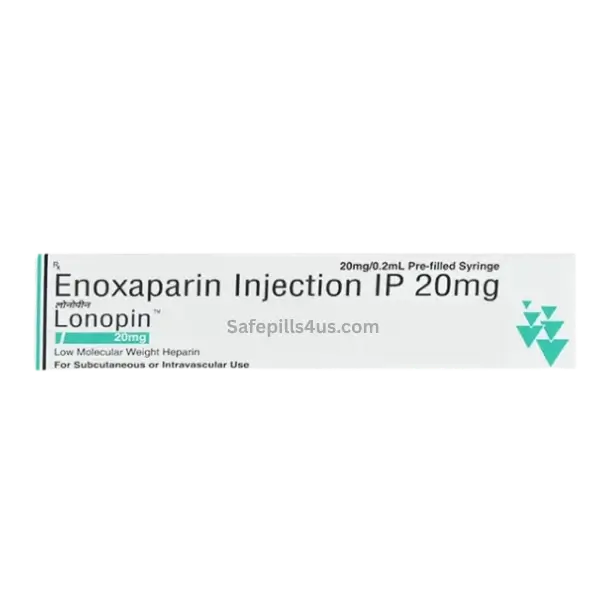
Lonopin (generic name: Enoxaparin) is a low molecular weight heparin (LMWH) anticoagulant. In plain words, it’s a blood thinner your doctor prescribes to help prevent or treat dangerous clots. It’s commonly used after surgery or during hospital stays, for people at higher risk of deep vein thrombosis (DVT) or pulmonary embolism (PE), and in certain heart conditions like unstable angina or non–ST elevation myocardial infarction. It comes as prefilled syringes for subcutaneous (under the skin) injection, so it’s practical at home once you’ve been shown how to use it safely.
Simple idea: clots cause big problems; Lonopin helps your body avoid making new ones and stops existing ones from growing. It doesn’t “dissolve” clots by itself. It gives your system a better chance to stay open and flowing while your doctor handles the root cause.
What Lonopin (Enoxaparin) does
Think of blood clotting like a fast emergency patch system. Useful when you get a cut, but risky if it switches on at the wrong time. Lonopin helps dial down part of that system. Technically, enoxaparin boosts antithrombin and mainly blocks Factor Xa (and to a lesser degree Factor IIa). That means your blood is less likely to form harmful clots, especially after surgery or long periods of immobility. So you can move, heal, and breathe easier—literally.
Who it’s commonly prescribed for
Your clinician may prescribe Lonopin if you:
- Are recovering from hip/knee replacement, abdominal, or other major surgery
- Are hospitalized and mostly in bed, with higher clot risk
- Need treatment for DVT or PE (often weight-based dosing)
- Have unstable angina or NSTEMI as part of hospital care
- Are pregnant and at risk of clotting (specialist oversight required)
- Are transitioning to another anticoagulant (e.g., bridging therapy), under medical supervision
Note: The exact dose depends on your condition, body weight, kidney function, and bleeding risk. So your prescription may look different than someone else’s, and that’s normal.
What’s inside
- Enoxaparin sodium solution in a sterile, single-use prefilled syringe
- Strength is clearly labeled on the syringe and box
- Needle is already attached; the syringe may include a safety shield (varies by pack)
- Preservative-free; latex info varies by brand packaging—check the box if you have latex sensitivity
How to use (general reminders)
This section is a friendly refresher, not a replacement for training. If you haven’t been shown how to inject, ask your nurse or pharmacist first.
- Route: Subcutaneous only. Do not inject into a muscle. Do not use IV unless your clinician specifically directs in a clinical setting.
- Where: The fatty area of your abdomen at least 2 inches away from your belly button, or alternate sites as taught. Rotate sides/locations each time to reduce bruising.
- Prep: Wash hands. Clean the skin with an alcohol swab and let it dry.
- Air bubble: Do not expel the small air bubble in prefilled syringes—it helps deliver the full dose and reduces leakage.
- Technique: Pinch a fold of skin. Insert the needle straight in (90° unless you were taught otherwise). Inject slowly and steadily.
- After: Withdraw the needle, activate the safety shield (if present), and don’t rub the site. A little pressure with gauze is fine.
- Disposal: Single use only. Drop the used syringe straight into a sharps container. No re-capping. No reuse. Ever.
If you miss a dose, take it as soon as you remember unless it’s close to the next one. Don’t double-dose. Call your clinic or follow the instructions your care team provided.
Safety first (important warnings)
- Bleeding risk: The number one concern. Watch for unusual bruises, nosebleeds, pink/red urine, black or tarry stools, coughing blood, vomiting that looks like coffee grounds, or severe headache/dizziness. Seek medical help right away if these happen.
- Spinal/epidural warning: If you’ve had spinal/epidural anesthesia or a spinal puncture, there’s a risk of spinal/epidural hematoma, which can cause paralysis. Timing of doses around catheter placement/removal is critical. Always tell your surgeon/anesthetist you’re on enoxaparin.
- Platelets: Rarely, enoxaparin can cause heparin-induced thrombocytopenia (HIT). Your doctor may check platelet counts, especially in the first 2 weeks.
- Kidneys: Dose adjustments may be needed if your kidney function is reduced. Tell your doctor if you have chronic kidney disease.
- Allergies: Do not use if you’re allergic to enoxaparin, heparin, or pork products.
- Avoid intramuscular injections of other meds while using enoxaparin to reduce bleeding into muscle.
Who should not use it (unless a specialist says otherwise)
- Active major bleeding or very high bleeding risk
- History of HIT
- Severe uncontrolled hypertension
- Recent hemorrhagic stroke
- Known hypersensitivity to enoxaparin/heparin or components of the syringe
Drug and supplement interactions
Some medicines and supplements can raise bleeding risk when combined with enoxaparin. Always give your provider a full list of everything you take, including over-the-counter items.
Use caution or avoid combining without medical advice:
- Other anticoagulants: warfarin, apixaban, rivaroxaban, dabigatran, heparin
- Antiplatelets: aspirin, clopidogrel, prasugrel, ticagrelor
- NSAIDs: ibuprofen, naproxen, diclofenac, indomethacin, high-dose salicylates
- Thrombolytics: alteplase, streptokinase, etc.
- Certain antidepressants: SSRIs/SNRIs (may slightly increase bleeding risk)
- High-dose omega-3s and some herbs/supplements: ginkgo, garlic, ginseng, turmeric, high-dose vitamin E
Alcohol: Go easy. Heavy drinking can increase bleeding risk.
What to expect during therapy
- You might notice small bruises at injection sites normal and usually not a big deal.
- Your care team may order occasional blood tests (platelets; kidney function). Anti-Xa monitoring is reserved for special situations (e.g., pregnancy, obesity, renal impairment).
- Duration: Varies widely. Could be a few days post-surgery, or weeks for DVT/PE treatment. Follow your plan exactly—don’t stop early without your doctor’s okay.
Pregnancy and breastfeeding
Enoxaparin is often used in pregnancy when a specialist believes the benefits outweigh the risks, and it does not cross the placenta in significant amounts. That said, dosing and timing are more delicate here. If you’re pregnant, planning to be, or
breastfeeding, use Lonopin only under specialist care. Always mention upcoming labor, epidurals, or procedures timing matters a lot.
Storage and handling
- Store at room temperature (generally 20–25°C). Don’t freeze.
- Keep in the original box to protect from light.
- Single-use only; do not reuse or share syringes.
- Keep out of reach of children and pets.
- Always have a proper sharps container on hand for disposal.
Common side effects
- Mild pain, redness, or small bruises at the injection site
- Nosebleeds or bleeding gums (usually minor)
- Mild anemia on blood tests
Call your doctor if you notice:
- Large or unexplained bruises
- Prolonged bleeding you can’t stop
- Severe headache, weakness, chest pain, shortness of breath
- Signs of an allergic reaction (rash, swelling, trouble breathing)
When to pause and call your clinician
- Before dental work, surgery, or a spinal/epidural procedure
- If you fall, hit your head, or have any major injury
- If you’re passing blood, coughing blood, or have black stools
- If you suspect pregnancy or are planning pregnancy
- If you think you injected the wrong dose or into muscle
Frequently asked questions (FAQ)
Q: What is Lonopin used for?
A: It’s a prescription anticoagulant used to prevent and treat blood clots (DVT/PE) and as part of care in certain heart problems like unstable angina or NSTEMI. Your doctor decides the exact plan and duration.
Q: Is Lonopin the same as enoxaparin?
A: Yes. Lonopin is a brand of enoxaparin sodium, a low molecular weight heparin.
Q: Can I inject Lonopin at home?
A: Many patients do, after a nurse or pharmacist shows them how. It’s a quick subcutaneous shot in the fatty layer of the abdomen. If you’re not trained yet, get a demonstration first.
Q: Do I push out the air bubble before injecting?
A: No. With prefilled enoxaparin syringes, the small air bubble is intentional. Don’t expel it.
Q: What happens if I miss a dose?
A: Take it when you remember unless it’s almost time for the next one. Don’t double up. If you’re unsure, call your clinic for advice.
Q: Can I take Lonopin with aspirin or painkillers?
A: Don’t add aspirin, clopidogrel, or NSAIDs like ibuprofen/naproxen unless your doctor specifically tells you to. These can increase bleeding risk.
Q: How long will I need to use it?
A: It depends anything from a few days after surgery to several weeks for DVT/PE treatment. Follow your doctor’s schedule exactly.
Q: Do I need blood tests while on enoxaparin?
A: Routine INR checks aren’t needed. Your doctor may check platelets and kidney function. Anti-Xa levels are used in special cases only.
Q: Is it safe in pregnancy?
A: Often used when clot risk is high, but always under specialist care. Timing around delivery and epidurals is important—don’t self-manage.


Reviews
There are no reviews yet.