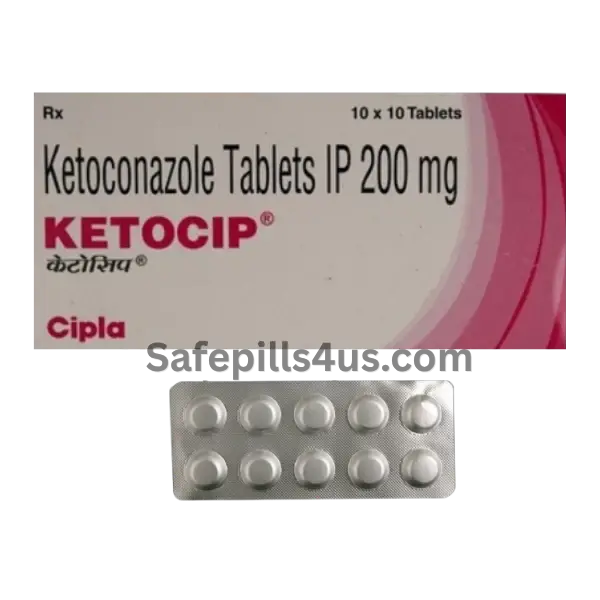
What this is Ketocip 200 mg
Ketocip 200 mg contains ketoconazole, an oral antifungal tablet. It is prescribed for certain fungal infections when other treatments are not suitable or have failed. Because oral ketoconazole can affect the liver, Ketocip 200 mg is used under close medical supervision and for carefully selected conditions only.
Core medical uses
Your clinician may choose Ketocip 200 mg for systemic or persistent
fungal infections confirmed by testing, such as some forms of candidiasis or endemic mycoses, when safer first line options (for example itraconazole, fluconazole, or terbinafine) are not appropriate. Ketocip 200 mg is not a routine choice for simple skin fungus, dandruff, or nail infections.
Important safety alert
Oral ketoconazole can cause serious liver injury and, rarely, adrenal problems. Use Ketocip 200 mg only exactly as prescribed. Baseline and periodic liver function tests are usually required. Stop the medicine and seek urgent care if you notice yellowing of the eyes or skin, dark urine, pale stools, severe tiredness, loss of appetite, or upper right belly pain.
Dose and schedule
Follow your prescription label precisely. Many adults start with Ketocip 200 mg once daily with food; some infections require 400 mg daily or a longer course. Duration varies from a few days to several weeks based on the site and organism. Do not self medicate or change your dose without medical advice.
How to take
Swallow Ketocip 200 mg with a full glass of water and preferably with food to lessen stomach upset. The tablet absorbs best in an acidic stomach; antacids, H2 blockers, or proton pump inhibitors can reduce absorption. If you use these, your clinician may adjust timing or advise taking Ketocip 200 mg with an acidic beverage. Do not drink alcohol while on therapy because it increases liver stress.
Who should avoid
Do not use Ketocip 200 mg if you have a known allergy to ketoconazole or had liver injury from azole antifungals before. People with active liver disease, a history of heavy alcohol use, or adrenal problems generally should not take it. Discuss risks carefully if you are pregnant or breastfeeding; alternative treatments are usually preferred.
Major drug interactions
Ketocip 200 mg strongly inhibits the enzyme CYP3A4 and can dangerously raise levels of many medicines. Tell your clinician and pharmacist about every prescription, over the counter drug, and supplement you use. High risk combinations include:
- Certain heart rhythm medicines (for example quinidine, dofetilide)
- Some benzodiazepines (midazolam, triazolam) and sleep aids
- Ergot alkaloids, certain statins (simvastatin, lovastatin), and some immunosuppressants (cyclosporine, tacrolimus)
- Drugs that also prolong the QT interval or cause electrolyte problems
Antacids, H2 blockers, and PPIs can lower Ketocip 200 mg absorption; dosing separation or alternatives may be needed.
Possible side effects
Common effects include nausea, abdominal discomfort, headache, dizziness, or mild rash. More serious effects can involve liver injury (see safety alert), adrenal suppression, swelling, severe skin reactions, or hormonal changes such as decreased libido or breast tenderness in men. If you notice dark urine, intense fatigue, yellowing skin or eyes, severe rash, or fainting, stop Ketocip 200 mg and get medical help promptly.
Monitoring and tests
Before starting Ketocip 200 mg, clinicians often order liver function tests and review all current medicines. During treatment, they may repeat blood tests, check for symptoms of liver stress, and assess for drug interactions at every visit. Do not miss your scheduled labs or follow ups.
Missed dose advice
If you miss a dose of Ketocip 200 mg, take it when you remember unless it is close to the next scheduled time. Skip the missed dose if it is nearly time for the next one. Do not double up to catch up.
Overdose or emergency
In case of suspected overdose of Ketocip 200 mg, seek emergency care or contact a poison control center right away. Bring the medication container with you.
Pregnancy and breastfeeding
Systemic
ketoconazole is generally avoided during pregnancy and breastfeeding unless the potential benefit clearly outweighs risk. If treatment is considered essential, it should be managed by a specialist with informed consent and close monitoring. Discuss family planning and safer alternatives with your clinician.
Everyday use tips
Take Ketocip 200 mg at the same time each day. Avoid alcohol and limit new nonessential medicines or supplements while on therapy. Report any new symptoms promptly, even if they seem minor. Do not share your tablets or save leftovers; fungal infections require tailored regimens.
Storage and handling
Store Ketocip 200 mg at room temperature, away from moisture and direct heat. Keep the tablets in the original container with the lid tightly closed and out of reach of children. Do not use the product past its expiration date.
Quick Help Faqs
What infections does it treat?+
Only certain confirmed fungal infections when other antifungals are not appropriate; your clinician will specify the exact diagnosis.
How fast will it work?+
Some symptoms may ease within a few days, but full courses can take weeks. Do not stop early unless your prescriber tells you to.
Can I take antacids?+
They may reduce absorption. Ask your clinician about timing or alternatives if you need acid-reducing medicines.
Is routine blood testing needed?+
Yes. Liver function monitoring is commonly required while taking Ketocip 200 mg.
Can I drive on this medicine?+
If Ketocip 200 mg makes you dizzy or drowsy, avoid driving or operating machinery until you feel normal.