Description
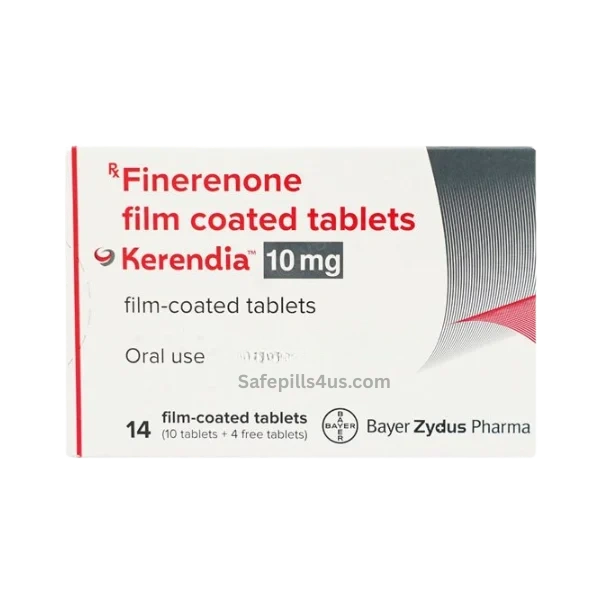
Kerendia 10 mg is a once‑daily tablet used to protect your kidneys and heart if you have chronic kidney disease (CKD) linked to type 2 diabetes. The active ingredient is finerenone, a non‑steroidal mineralocorticoid receptor antagonist (yeah, long name—but in plain words, it blocks a hormone signal that drives kidney inflammation, scarring, and fluid/salt problems). So, less ongoing damage, steadier kidney function, and a lower chance of certain heart issues over time.
If your doctor has you on an ACE inhibitor or an ARB already (like losartan, telmisartan, or ramipril), Kerendia is often added on top to get more kidney and heart protection. It’s not for sudden emergencies. It’s a slow, steady guardrail for your kidneys.
How it helps (in plain words)
When you have type 2 diabetes and CKD, the kidneys are under a constant “stress signal” from hormones like aldosterone. That signal tells tissues to hold salt, inflame, and scar. Finerenone blocks that receptor signal calming the overreaction. The result is a lower rate of kidney damage over time and, as a bonus, fewer heart‑related problems like heart failure hospitalizations.
It’s not a diuretic like furosemide, and it’s not the same as older MRAs (
spironolactone/eplerenone). Finerenone is designed to be gentler on hormones like testosterone or progesterone (so fewer hormone‑related side effects) and focused on the kidney/heart protection you actually need.
Who it’s for
Kerendia 10 mg is prescribed for adults who:
- Have type 2 diabetes, and
- Have chronic kidney disease (usually with albumin in the urine and reduced eGFR), and
- Are already on standard kidney‑protective therapy (ACE inhibitor or ARB) at the highest tolerated dose
Not for:
- Type 1 diabetes
- People on dialysis or with very advanced kidney failure where it hasn’t been studied
- Anyone with high potassium at baseline that can’t be brought down safely
Key benefits you may notice (and some you won’t “feel”)
- Slower decline in kidney function (less drop in eGFR over time)
- Lower risk of reaching end‑stage kidney disease
- Reduced albumin/protein in the urine (a good sign for kidney health)
- Fewer heart issues (like hospitalization for heart failure) in high‑risk patients
- Easy routine: one small tablet daily, with or without food
Heads up: You won’t feel kidney protection day to day. The proof shows up in your labs and in fewer complications down the road. That’s the point.
What’s inside each tablet
- Finerenone 10 mg
- Standard tablet excipients and film coat
If you have allergies or intolerances to certain dyes or excipients, check your pack.
How to take it
- Dose: One tablet once daily, same time each day
- With or without food: Either is fine—just be consistent
- Swallow whole with water; don’t crush unless your clinician tells you it’s okay
Missed a dose?
- If you remember on the same day, take it then.
- If you only remember the next day, skip the missed tablet. Don’t double up.
Starting dose and adjustments (simple guide)
Your starting dose depends mainly on your kidney function (eGFR) and your blood potassium (K+).
- eGFR ≥ 60 mL/min/1.73 m² AND K+ ≤ 5.0 mEq/L: start 20 mg once daily
- eGFR 25 to < 60 AND K+ ≤ 5.0 mEq/L: start 10 mg once daily (this is where Kerendia 10 mg fits in)
- eGFR < 25: not recommended to start
- Do not start if K+ > 5.0. If K+ is 4.8–5.0, some doctors still start it with close monitoring.
After 4 weeks, your doctor will look at your potassium:
- K+ ≤ 4.8: aim for/continue 20 mg once daily
- K+ > 4.8 to 5.5: keep the current dose (don’t increase)
- K+ > 5.5: pause Kerendia; restart at 10 mg once K+ is ≤ 5.0
This check and tweak rhythm helps keep potassium in the safe zone.
Monitoring you can expect
- Before starting: blood potassium (K+), eGFR/creatinine, urine albumin‑to‑creatinine ratio (UACR), and blood pressure
- After starting or changing dose: recheck K+ and kidney function at about 4 weeks
- Ongoing: periodic K+, eGFR, UACR checks (timing depends on your risk and results)
- If you add drugs that raise potassium (or get dehydrated/ill): extra checks
Small eGFR dips can happen early (a hemodynamic effect). Your clinician looks at the trend, not a single number.
What to expect and when
- Weeks 2–4: No big “feels,” but labs may show early signals (slight eGFR shift, stable potassium if all good)
- Months 3–6: UACR (urine albumin) often improves; kidney and heart protection builds over time
- Long term: The aim is fewer kidney events and fewer heart‑related hospital visits
Stick with it. This is a protect‑the‑future medication.
Side effects and how to handle them
The main thing to watch is potassium.
Common/important:
- Hyperkalemia (high potassium): may cause muscle weakness, fatigue, tingling, slow or irregular heartbeat (in severe cases). Often symptomless—this is why labs matter.
- Mild drop in blood pressure or lightheadedness, especially if you’re on multiple BP meds
- Small early dip in eGFR (usually stabilizes)
Less common:
- Dizziness, tiredness
- Mild GI upset (nausea)
Call your clinician promptly if you notice:
- Persistent muscle weakness, palpitations, or chest discomfort
- Fainting, severe dizziness
- Swelling, shortness of breath, or anything that feels not‑right
Warnings and precautions
Do not use Kerendia if:
- You’re on a strong CYP3A4 inhibitor (e.g., itraconazole, ketoconazole, clarithromycin, ritonavir, cobicistat). This can raise finerenone levels too high.
- Your baseline potassium is high (>5.0 mEq/L) and can’t be controlled
Use with care and close monitoring if:
- You have moderate liver impairment (your doctor may start/keep you at 10 mg and monitor)
- You’re prone to high potassium (advanced CKD, potassium‑sparing diuretics, high‑potassium diet, salt substitutes)
- You’re on multiple RAAS‑acting drugs Kerendia is typically added to ONE ACE inhibitor or ONE ARB, but not combined with another MRA (like spironolactone or eplerenone)
- You’re dehydrated from illness (vomiting/diarrhea); this can shake up your labs tell your care team
Pregnancy and breastfeeding:
- Data are limited. Not typically recommended. If you’re planning pregnancy or find yourself pregnant, talk to your doctor about safer alternatives. Breastfeeding advice is individualized—ask your clinician.
Driving/machines:
- Dizziness can happen in some people. See how you feel first.
Drug and food interactions
- Strong CYP3A4 inhibitors: Avoid (ketoconazole, itraconazole, clarithromycin, ritonavir, cobicistat, etc.)
- Strong or moderate CYP3A4 inducers: Avoid (rifampin, carbamazepine, phenytoin, St. John’s wort). They can make Kerendia less effective.
- Moderate CYP3A4 inhibitors: Use caution/monitor (diltiazem, verapamil, erythromycin, grapefruit juice in large amounts). Your doctor may lean toward the 10 mg dose and keep a closer eye on potassium.
- Other MRAs or potassium‑sparing diuretics: Avoid stacking (spironolactone, eplerenone, amiloride, triamterene)
- Potassium supplements and salt substitutes with potassium: Use only if your doctor says so
- ACE inhibitors/ARBs: Typically used together with Kerendia, but this combo needs potassium checks
- SGLT2 inhibitors (dapagliflozin, empagliflozin): Often a good partner for CKD/heart protection; still monitor potassium and kidney function routinely
Always bring your full med/supplement list to appointments vitamins and herbals too.
Practical kidney‑friendly tips
- Keep blood pressure in target. Take your BP meds consistently.
- If you’re advised to follow a potassium‑aware diet, stick with that plan. Don’t switch to salt substitutes without asking (many are potassium‑based).
- Stay hydrated, especially during hot weather or illness.
- If you get a stomach bug or are fasting for a procedure, ask if you should pause anything temporarily.
- Keep blood sugars in range—SGLT2 inhibitors and GLP‑1 RAs are often part of the big picture if suitable for you.
Frequently Asked Questions (FAQ)
Q: What is Kerendia 10 mg used for?
A: It’s for adults with chronic kidney disease linked to type 2 diabetes. Kerendia helps reduce the risk of kidney decline, end‑stage kidney disease, and certain heart events when used with standard care like an ACE inhibitor or ARB.
Q: How is Kerendia different from spironolactone or eplerenone?
A: It’s a non‑steroidal MRA. Compared with older MRAs, finerenone is more targeted for kidney/heart protection and tends to have fewer hormone‑related side effects. The main safety watch is still potassium.
Q: Do I need to be on an ACE inhibitor or ARB first?
A: Usually yes. Trials used Kerendia on top of maximally tolerated ACE inhibitor or ARB therapy. If you can’t take those, your clinician will decide the best path.
Q: Can I take Kerendia with an SGLT2 inhibitor like dapagliflozin or empagliflozin?
A: Frequently, yes. SGLT2 inhibitors plus Kerendia can be a strong kidney‑ and heart‑protective combo. You’ll still need routine potassium and kidney labs.
Q: What starting dose will I get?
A: If your eGFR is 25–59, 10 mg once daily is typical. If it’s 60 or above, many start at 20 mg daily. Your baseline potassium and other meds can shift that plan.
Q: How often will I need blood tests?
A: Before starting, again about 4 weeks later, and then periodically. If your potassium rises or medicines change, you’ll test more often for a bit.
Q: What happens if my potassium goes up?
A: If potassium hits >5.5, your doctor will usually pause Kerendia, adjust other meds/diet, and restart at 10 mg once potassium is ≤5.0. Sometimes the dose stays the same with closer monitoring if K+ is just slightly elevated.
Q: Does Kerendia lower blood pressure?
A: It can nudge BP down a bit, but it’s not a primary BP drug. Keep your other BP meds as prescribed.
Q: I’m on spironolactone already. Can I switch?
A: Don’t swap on your own. Your clinician might switch to finerenone if kidney protection with lower hormonal side effects is the goal, but they’ll plan the transition and labs.
Q: Is grapefruit juice a problem?
A: Large amounts can act like a moderate CYP3A4 inhibitor and raise finerenone levels. Best to limit or avoid unless your clinician says it’s okay and you’re being monitored.
Q: Can I use salt substitutes?
A: Many salt substitutes are potassium‑based. That can spike your K+. Please ask before using.
Q: How long will I need to take Kerendia?
A: Often long‑term, as part of your CKD and diabetes care plan. As long as you’re benefiting and labs look safe, it stays in the mix.
Q: Is it safe in pregnancy or while breastfeeding?
A: Not enough data. It’s generally not recommended. If you’re planning pregnancy or become pregnant, talk to your doctor right away.
Q: What if I forget a dose?
A: Take it when you remember if it’s the same day. If not, skip and take your next tablet at the usual time. Don’t double up.
Q: Will I feel anything when Kerendia starts working?
A: Not really. It’s protective in the background. The wins show up in your lab trends and fewer kidney/heart events over time.



Reviews
There are no reviews yet.