Description
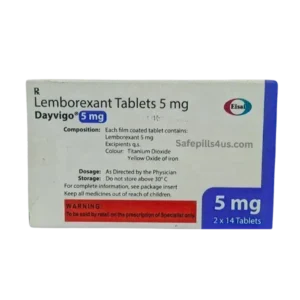
Dayvigo 10 mg (Lemborexant) — Nightly Tablet for Adult Insomnia
Tossing and turning? Or you fall asleep fine but wake up way too early? Dayvigo 10 mg is a modern prescription sleep tablet for adults. It helps with sleep onset (falling asleep) and sleep maintenance (staying asleep) by dialing down your brain’s wake signal. In plain words: it quiets the “stay awake” switch so you can get real rest.
What Is Dayvigo 10 mg?
Dayvigo 10 mg contains lemborexant, a dual orexin receptor antagonist (DORA). Orexin is your brain’s “on” signal. By blocking orexin, Dayvigo helps your natural sleep take the wheel—without the heavy, blanket-like sedation you may get from older sleep meds. It’s used for adults with insomnia where falling asleep, staying asleep, or both are a struggle.
- Active ingredient: Lemborexant 10 mg
- Class: DORA (Dual Orexin Receptor Antagonist)
- Who it’s for: Adults with insomnia (sleep onset and/or maintenance)
- Who it’s not for: People with narcolepsy; children and teens
Why People Choose the 10 mg Strength
- You’ve tried 5 mg and still have trouble sleeping? Your prescriber may step you up to 10 mg if you tolerated 5 mg.
- It targets both kinds of insomnia falling asleep and staying asleep so you’re not just out fast, you’re out longer.
- Designed to reduce next‑day grogginess compared with many older sedatives (but yep, morning sleepiness can still happen).
How Dayvigo 10 mg Works
Your brain runs on wake and sleep signals. Orexin is the loud, chatty “wake” messenger. Dayvigo turns down orexin, so your natural sleep process can kick in. It doesn’t knock you out; it lowers the urge to stay awake. That’s the key difference.
How to Take Dayvigo 10 mg
- When to take: Right before bed.
- Time in bed: Only take it if you can get a full 7+ hours of sleep. Seriously—it matters for morning alertness.
- Food: Avoid taking with or right after a meal (especially heavy/fatty meals). Food can delay the onset, so the tablet might kick in late.
- One dose per night: Don’t re‑dose at 2 a.m. if you wake up.
- Swallow whole with water. Don’t crush unless your pharmacist says your brand allows it.
Safety First: Who Should Be Careful
Tell your clinician about your health history and all meds.
- Do not use if you have narcolepsy.
- Use with caution if you have depression, anxiety, or a history of suicidal thoughts.
- Untreated sleep apnea or COPD? Get clearance from your clinician first.
- Liver issues Mild usually fine; Moderate keep to 5 mg max (10 mg is not recommended); Severe generally avoid.
- Older adults Start low and go slow. Fall risk and next‑day drowsiness matter.
- Pregnancy/breastfeeding Limited data your prescriber will weigh risks and benefits.
Side Effects: What You Might Notice
Most people do fine. If side effects show up, they usually ease with time.
Common:
- Next‑day sleepiness, fatigue, or feeling “slow”
- Headache
- Vivid or odd dreams
Less common but important:
- Sleep paralysis (briefly can’t move as you wake) or hallucinations at sleep/wake
- Complex sleep behaviors (sleepwalking, cooking, even trying to drive while not fully awake). If this happens, stop Dayvigo and call your clinician don’t wait
- Mood changes or worsening depression seek help fast
- Confusion or significant trouble concentrating the next day
Interactions You Need to Know
Lemborexant is metabolized by CYP3A. Some meds crank that pathway up or down.
Avoid combining with:
- Strong or moderate CYP3A inhibitors: e.g., ketoconazole, itraconazole, clarithromycin, ritonavir (can raise levels too high)
- Strong or moderate CYP3A inducers: e.g., rifampin, carbamazepine, phenytoin, St. John’s wort (can make it too weak)
- Alcohol and other sedatives (benzodiazepines, opioids, sedating antihistamines): ups the risk of next‑day impairment and complex sleep behaviors
When 10 mg Makes Sense
- Makes sense: You tried 5 mg for a few nights and still had trouble. You tolerated 5 mg without next‑day fogginess. Your prescriber agreed to step up.
- Doesn’t make sense: You had morning grogginess or safety concerns on 5 mg. You’re on a weak CYP3A inhibitor (often max is 5 mg). You have moderate liver impairment (stick to 5 mg).
Two Deep‑Dive Tables You Can Scan Fast
Table 1: Dayvigo 10 mg Snapshot
| Item |
Details |
| Product |
Dayvigo 10 mg (lemborexant) |
| Class |
Dual Orexin Receptor Antagonist (DORA) |
| Indication |
Adult insomnia: sleep onset and/or sleep maintenance |
| Dose here |
10 mg once nightly (doctor-directed; usually after trying 5 mg) |
| When to take |
Immediately before bedtime, only with 7+ hours available |
| Food guidance |
Avoid with/after meals (heavy/fatty meals delay onset) |
| Half-life |
About 17–19 hours (can affect morning alertness) |
| Metabolism |
CYP3A (big interaction driver) |
| Contraindicated |
Narcolepsy, known serious allergy to ingredients |
| Use with caution |
Depression, sleep apnea/COPD, older adults, liver impairment |
| Liver |
Mild: usual dosing; Moderate: 5 mg max; Severe: generally avoid |
| Kidneys |
No routine adjustment |
| Next‑day warning |
Don’t drive/operate machinery until you know your response |
| Status |
Prescription-only; controlled in some regions |
| Storage |
Room temp, dry, away from light/kids |
Table 2: Dosing & Real‑World Scenarios (guide only—follow your prescription)
| Scenario |
Recommended approach |
Practical tip |
| New to Dayvigo |
Start 5 mg nightly |
Reassess after a few nights; allow 7+ hours in bed |
| Still not sleeping on 5 mg |
Consider 10 mg nightly |
Only if you tolerate 5 mg without next‑day issues |
| Took with a heavy dinner |
Onset may be delayed |
Try dosing at least 2–3 hours after dinner next time |
| Nighttime awakening |
Do not re‑dose |
Use non‑drug sleep tactics; discuss if frequent |
| On weak CYP3A inhibitor |
Usually keep at 5 mg max |
Avoid alcohol; monitor morning alertness |
| On strong/moderate CYP3A inhibitor |
Avoid combination |
Ask about alternative meds or a different sleep aid |
| On strong/moderate CYP3A inducer |
Avoid combination |
Inducers can make Dayvigo ineffective |
| Moderate liver impairment |
5 mg max |
10 mg not recommended |
| Severe liver impairment |
Generally do not use |
Consider alternatives with your clinician |
| Older adult with fall risk |
Prefer 5 mg, reassess often |
Keep the path to the bathroom well lit at night |
Simple Use Tips That Actually Help
- Keep your bedtime and wake time steady (yep, even on weekends)
- Caffeine after lunch? Probably skip it
- Dark, cool, quiet room = easier sleep
- Park screens 30–60 minutes before bed; blue light is sneaky
- If you wake up, avoid doom‑scrolling—try a calm breathing routine instead
What Results to Expect
- Many people notice improvement in the first few nights
- If 10 mg still isn’t doing enough or you feel too groggy talk to your prescriber
- It’s okay to adjust over time. The goal is the lowest dose that gets you reliable sleep and a safe, clear morning
Packaging, Strengths, and Storage
- Strengths: 5 mg and 10 mg tablets
- Form: Film‑coated tablet
- Packs: Blister strips or bottles (varies by region/manufacturer)
- Storage: Room temperature, dry place, away from light and children.
Frequently Asked Questions (FAQ)
Q: What is Dayvigo 10 mg used for?
A: Adult insomnia. It helps with falling asleep and staying asleep by blocking orexin, your brain’s wake signal.
Q: Do I need to start at 5 mg first?
A: In most cases, yes. Doctors usually start at 5 mg and go to 10 mg only if needed and if 5 mg was well tolerated.
Q: How fast will Dayvigo 10 mg work?
A: It varies. Many feel it within the first few nights. Taking it with or right after a meal can slow the onset—so bedtime on an emptier stomach is best.
Q: Can I take another tablet if I wake up during the night?
A: No. Only one dose per night. If night wakings are frequent, talk to your clinician.
Q: Will I feel groggy the next day?
A: You might, especially at first. Make sure you allow 7+ hours in bed. If grogginess sticks around, tell your prescriber—timing or dose may need a tweak.
Q: Is Dayvigo 10 mg addictive?
A: Dayvigo has a low abuse potential compared with many older sleep meds, but it’s still a prescription drug. Use exactly as directed.
Q: Can I drink alcohol with Dayvigo?
A: Best to avoid it. Alcohol plus sleep meds increases next‑day drowsiness and the risk of doing things while not fully awake.
Q: Is it safe if I have sleep apnea?
A: Only if your clinician says it’s okay and your apnea is being treated. Dayvigo doesn’t treat sleep apnea.
Q: Any medicines I should avoid with Dayvigo?
A: Yes. Strong/moderate CYP3A inhibitors (like certain antifungals and some antibiotics) and strong/moderate CYP3A inducers (like rifampin, carbamazepine, phenytoin, St. John’s wort). Always share your full med list.
Q: Do I need to taper off?
A: You can stop without tapering, but insomnia might rebound for a short time. Plan changes with your clinician.
Q: Can older adults use Dayvigo 10 mg?
A: They can, but many do better staying at 5 mg due to fall risk and morning grogginess. Always start low and reassess.
Q: Is Dayvigo okay in pregnancy or while breastfeeding?
A: Data is limited. Your prescriber will weigh benefits and risks for your situation.
Q: Does food really matter?
A: Yep. A heavy or late meal can delay the effect. Try taking it away from meals for a smoother onset.





Reviews
There are no reviews yet.