Description
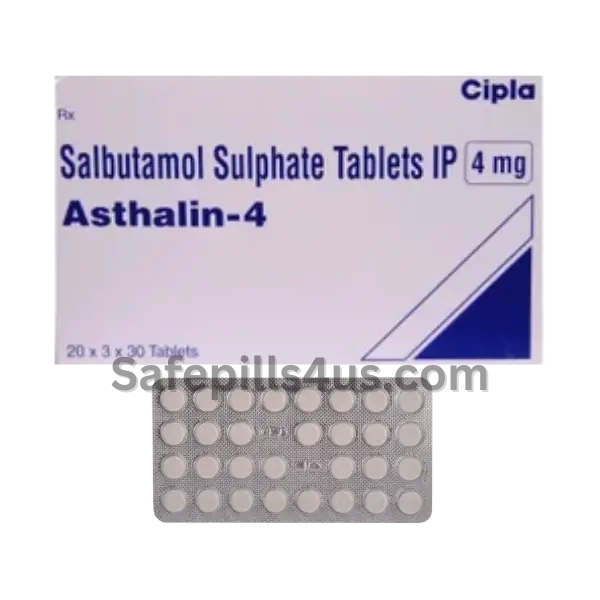
Asthalin 4mg — Oral Salbutamol Tablets for Bronchospasm Relief
Asthalin 4mg is an oral salbutamol (albuterol) tablet that helps relax the muscles around your airways, easing wheeze, chest tightness, and shortness of breath. It’s a short‑acting bronchodilator (SABA). Use exactly as prescribed by your clinician. Brand names and approvals can vary by country.
| Quick Specs |
Details |
| Strength |
Salbutamol (Albuterol) 4 mg tablet |
| What it does |
Opens airways; relieves bronchospasm in asthma/COPD/bronchitis |
| Onset/Duration |
Starts in ~30 minutes; relief often lasts 4–6 hours |
| Typical adult dosing |
Often 2–4 mg, 3–4 times daily (max per prescriber; commonly up to 32 mg/day) |
| Not for |
Replacing your rescue inhaler during a sudden attack |
| Age use |
Adults (children only if specifically prescribed with pediatric dosing) |
What It Is Asthalin 4mg
This is the tablet form of salbutamol. Inhalers get medicine to your lungs fast. Tablets work body‑wide and a bit slower, so they’re used when your doctor wants an oral option along with (not instead of) your inhaled plan.
How It Works
- Asthma and COPD can tighten airway muscles.
- Salbutamol is a beta2 agonist that relaxes those muscles.
- Opened airways = easier breathing, less wheeze.
- Tablets are slower than inhalers keep your fast‑acting inhaler handy for sudden symptoms per your action plan.
Who Should (and Shouldn’t) Use It
Good fit (if prescribed):
- Adults with asthma or COPD who need oral add‑on relief
- People who struggle with inhaler technique or need a temporary bridge under clinician guidance
Use with caution or avoid if:
- You’re allergic to salbutamol/albuterol
- You have serious heart disease, arrhythmias, or uncontrolled hypertension
- You have hyperthyroidism, diabetes (can raise blood sugar), seizure history, or low potassium
- You’re pregnant or breastfeeding—use only if your clinician says benefits outweigh risks
How to Take Asthalin 4mg
- Follow your prescriber’s directions. Don’t self‑adjust.
- Common adult plan: 2–4 mg three to four times daily. Your clinician may tailor the dose.
- Do not exceed your prescribed daily max (often capped at 32 mg/day).
- Swallow with water; with or without food (food may help if your stomach is sensitive).
- If you’re needing it more often than usual, contact your clinician—your control plan may need an update.
Practical timing notes:
- Tablets typically start helping around 30 minutes in.
- For a sudden flare, use your quick‑relief inhaler (asthma action plan).
Possible Side Effects
Most are mild and fade as the dose wears off. Call your clinician if anything feels severe or unusual.
Common:
- Tremor/shakiness, nervousness
- Fast heartbeat or palpitations
- Headache, trouble sleeping
- Nausea, muscle cramps
Less common but important:
- Chest pain, severe dizziness, fainting
- Paradoxical bronchospasm (worsening wheeze right after use—rare)
- Low potassium (weakness, cramps, irregular heartbeat)
- Significant rise in blood sugar (in people with diabetes)
Drug and Supplement Interactions
Tell your provider everything you take, including OTC and herbal products.
- Beta‑blockers (propranolol, atenolol): may reduce effect and trigger bronchospasm
- MAOIs or tricyclic antidepressants (current/recent): can raise heart‑related side effects
- Diuretics or systemic steroids: may increase risk of low potassium
- Other stimulants/sympathomimetics (decongestants, high caffeine, ephedra): more jitters and faster heart rate
- Theophylline: additive side effects possible
- Digoxin: levels may change—monitoring may be needed
Smart Use Tips
- Don’t skip controller meds (like inhaled steroids) if prescribed—this tablet doesn’t replace them.
- Learn your Asthma/COPD Action Plan (green/yellow/red zones).
- Track symptoms and rescue use; more frequent relief needs are a red flag.
- Stay hydrated; it can help thin mucus.
- If tablets upset your stomach, try with food.
Storage & Handling
- Store at room temperature (68–77°F/20–25°C), away from moisture and heat.
- Keep in the original blister/bottle and tightly closed.
- Keep out of reach of children and pets.
FAQs: Asthalin 4mg (Salbutamol Tablets)
Q: Is the 4 mg tablet stronger than the 2 mg?
A: Yes. Both contain the same active ingredient, but 4 mg is the higher strength. Your clinician chooses the dose that fits your symptoms and tolerance.
Q: How fast will it work?
A: Tablets usually start helping in about 30 minutes, with effects lasting 4–6 hours. Inhalers act faster for sudden symptoms.
Q: Can I use these instead of my rescue inhaler?
A: No. Keep your fast‑acting inhaler for sudden attacks. Tablets aren’t a replacement for immediate relief.
Q: What if I miss a dose?
A: Take it when you remember unless it’s close to your next dose. Don’t double up.
Q: Can I take it before exercise?
A: Inhaled albuterol before exercise works faster and more reliably. Ask your clinician about the best pre‑exercise plan.
Q: I feel shaky and my heart is racing—is that normal?
A: Mild tremor and faster heartbeat are common. If it’s severe, persistent, or you have chest pain, seek medical help.
Q: Is it safe with blood‑pressure meds?
A: Some BP meds (especially beta‑blockers) can clash with salbutamol. Share your full med list with your provider.
Q: Can children take Asthalin tablets?
A: Pediatric dosing is different and must be prescribed by a clinician. Don’t give adult tablets to children without medical advice.
Related Products to Discuss with Your Clinician



Reviews
There are no reviews yet.