Description
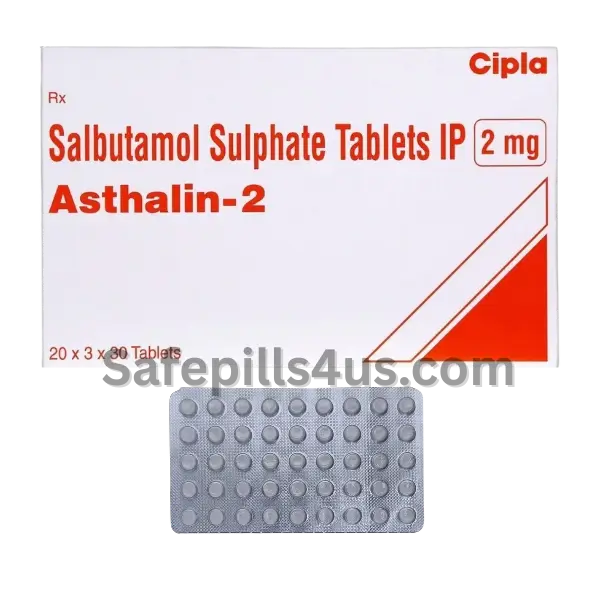
Asthalin 2 mg — Quick Relief Tablets for Wheeze and Tight Chest
Asthalin 2 mg is a salbutamol (also called albuterol) tablet used to ease bronchospasm—think wheezing, chest tightness, and shortness of breath from asthma, bronchitis, or COPD. It’s a short‑acting bronchodilator (SABA) that relaxes airway muscles so you can breathe easier. Use only as prescribed by your clinician. Brand names and approvals vary by country.
Fast Facts (easy table)
| What |
Details |
| Product name |
Asthalin 2 mg |
| Active ingredient |
Salbutamol (Albuterol) 2 mg |
| Class |
Short‑acting beta2 agonist (SABA) bronchodilator |
| What it does |
Relieves bronchospasm; opens airways |
| Who it’s for |
Adults (and some children if prescribed) with asthma/COPD bronchospasm |
| Onset/Duration |
Tablets: often begin working in ~30 minutes; relief may last 4–6 hours |
| Dosing (general) |
Common adult start: 2 mg 3–4 times daily (max per prescriber; typically ≤32 mg/day) |
| Not a substitute for |
A fast‑acting rescue inhaler in acute attacks |
| Avoid if |
Allergy to salbutamol/albuterol or advised not to use sympathomimetics |
What Is Asthalin 2 mg?
It’s the tablet form of salbutamol. While inhalers deliver medicine straight to your lungs fast, tablets provide systemic relief when your doctor wants an oral option. They’re helpful for ongoing bronchospasm control between inhaled doses—but not the go‑to for a sudden severe attack.
How It Works (simple version)
- Asthma tightens the muscles around your airways.
- Salbutamol is a beta2 agonist that relaxes those muscles.
- Result: airways open up, wheeze eases, breathing gets easier.
- Tablets are slower than inhalers, so don’t replace your rescue inhaler with them.
Who Might Use It
- Adults with asthma or COPD who need oral salbutamol support
- People who struggle with inhaler technique or need an add‑on per doctor’s plan
Who should skip or be cautious:
- Anyone with an allergy to salbutamol/albuterol
- People with serious heart rhythm problems, uncontrolled hyperthyroidism, severe hypertension
- Those with a history of low potassium (hypokalemia) or seizures—use only under close medical advice
- Pregnant or breastfeeding? Talk to your clinician first
How to Take Asthalin 2 mg
- Follow your prescription strictly.
- Typical adult start: 2 mg, three to four times daily.
- Your provider may raise to 4 mg per dose if needed.
- Do not exceed your prescribed daily maximum (commonly capped at 32 mg/day).
- Swallow with water; can be taken with or without food (food may help if you get stomach upset).
Helpful notes:
- Tablets may take about 30 minutes to kick in.
- For sudden flare‑ups, your quick‑relief inhaler is usually faster—use your Asthma Action Plan.
- If you’re needing more frequent doses than usual, call your clinician; your control plan might need an update.
Possible Side Effects
Most are mild and pass as the dose wears off. If anything feels severe or strange, seek medical help.
Common:
- Tremor or shakiness
- Fast heartbeat, palpitations
- Nervousness, headache, trouble sleeping
- Nausea, muscle cramps
Less common but important:
- Chest pain, severe dizziness, fainting
- Worsening wheeze right after a dose (paradoxical bronchospasm—rare)
- Low potassium (cramps, weakness, irregular heartbeat)
Interactions to Mention to Your Doctor
Tell your clinician about all meds and supplements. Key interactions include:
- Beta‑blockers (like propranolol, atenolol): can blunt effect and trigger bronchospasm
- MAO inhibitors or tricyclic antidepressants (current or recent use): may raise heart‑related side effects
- Diuretics or steroids: can increase risk of low potassium
- Other stimulants/sympathomimetics (decongestants, caffeine excess): may increase jitteriness and heart rate
- Digoxin: levels may change—monitoring may be needed
Smart Use Tips
- Don’t skip your controller meds (like inhaled steroids) if they’re prescribed—tablets don’t replace them.
- Track symptoms and how often you need relief; more frequent use can be a red flag.
- Learn and follow your Asthma Action Plan (green/yellow/red zones).
- Stay hydrated; it can help with mucus.
- If tablets upset your stomach, try with food.
Storage & Handling
- Store at room temperature (68–77°F/20–25°C), away from moisture and heat.
- Keep in the original blister/bottle with the cap tight.
- Keep out of reach of children and pets.
FAQs: Asthalin 2 mg (Salbutamol Tablets)
- Is Asthalin 2 mg the same as an albuterol inhaler?
Same active ingredient (salbutamol/albuterol), different form. Inhalers act faster and are preferred for quick relief. Tablets are slower and used as part of a broader plan.
- How quickly will I feel relief?
Tablets often start helping around 30 minutes in, with effects lasting roughly 4–6 hours. If you need rapid relief, use your prescribed rescue inhaler.
- Can I use it before exercise?
For exercise‑induced symptoms, inhaled albuterol before activity works better and faster. Ask your clinician about the best strategy for you.
- What if I miss a dose?
Take it when you remember unless it’s close to your next dose. Don’t double up. Stick to your schedule or your provider’s directions.
- Is it safe during pregnancy or breastfeeding?
Only if your clinician believes the benefits outweigh the risks. Always check first.
- I feel shaky and my heart races—is that normal?
Mild tremor and faster heartbeat are common. If it’s intense, persistent, or you have chest pain, call your clinician right away.
When should I call the doctor?
- You need relief more often than usual
- Your inhaler isn’t helping like it used to
- You have chest pain, severe shortness of breath, or fainting
- You notice muscle weakness or irregular heartbeat (possible low potassium)
Related Products You Might Discuss With Your Clinician



Reviews
There are no reviews yet.