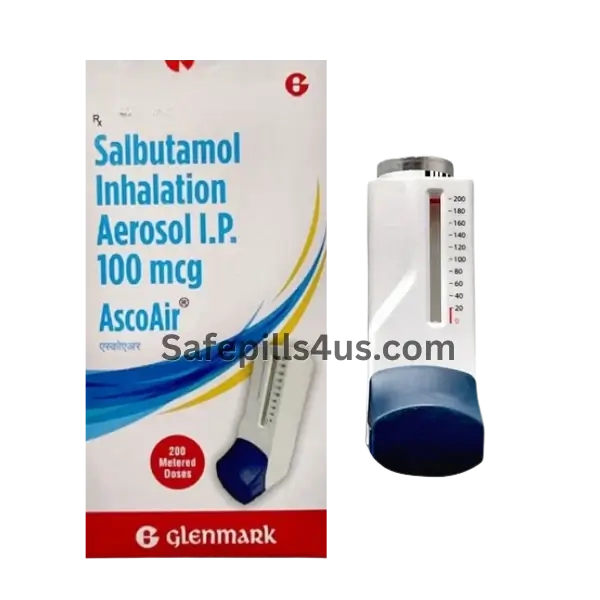
Asco Air Inhaler is a bronchodilator medication containing salbutamol that provides quick relief from breathing difficulties caused by
asthma and COPD. This inhaler works rapidly to open up narrowed airways, making it easier to breathe when you're experiencing wheezing, chest tightness, or shortness of breath. Asco Air Inhaler is designed for on-demand use, meaning you take it when symptoms appear rather than on a fixed daily schedule.
Many people rely on Asco Air Inhaler as their emergency rescue medication during sudden asthma attacks or when they need to prevent exercise-induced breathing problems. The inhaler delivers salbutamol directly to your lungs where it's needed most, providing faster relief than oral medications with fewer side effects throughout the rest of your body.
The Mechanism Behind Relief
Asco Air Inhaler contains salbutamol, a short-acting beta-2 agonist that targets specific receptors in the muscles surrounding your airways. When you're having an asthma attack or breathing difficulty, these muscles tighten and narrow your airways, making it hard to get air in and out. Salbutamol relaxes these muscles almost immediately, allowing your airways to open back up.
The medication starts working within three to five minutes after inhalation. You'll typically feel maximum relief around 15 to 20 minutes after using Asco Air Inhaler, and the effects last approximately four to six hours. Because the medicine goes straight to your lungs through inhalation, you get faster results with a lower dose compared to tablets or syrup forms.
Why Doctors Prescribe It
Asco Air Inhaler treats acute asthma symptoms that come on suddenly—the unexpected wheeze, the tightening chest, the struggle to catch your breath. It's also prescribed for COPD patients who need quick relief from bronchospasm. Many athletes and active people use Asco Air Inhaler before exercising to prevent exercise-induced asthma symptoms from developing.
The inhaler is particularly valuable for people whose asthma gets triggered by specific exposures like cold air, allergens, smoke, or strong odors. Having Asco Air Inhaler on hand means you can address breathing problems immediately before they escalate into serious attacks. However, if you're reaching for it frequently, that signals your underlying condition isn't well controlled and needs better management.
Who Benefits from Asco Air Inhaler
Anyone diagnosed with asthma should have a rescue inhaler like Asco Air Inhaler available at all times. It's essential for managing unexpected symptoms and can be life-saving during severe attacks. COPD patients often keep Asco Air Inhaler handy for sudden breathing difficulties, though they usually have other medications for daily management.
Children from age four and older can use Asco Air Inhaler, often with better results when combined with a spacer device. Active individuals prone to exercise-induced asthma benefit from using it preventively before workouts. People with allergic asthma who experience symptoms after exposure to triggers find Asco Air Inhaler invaluable for quick symptom control.
Proper Usage Instructions
Shake Asco Air Inhaler vigorously for about five seconds before each use. Remove the cap and breathe out completely to empty your lungs. Place the mouthpiece between your lips, creating a tight seal. As you begin a slow, deep breath in, press down firmly on the top of the canister to release one puff. Continue breathing in slowly and deeply.
Hold your breath for ten seconds if possible to allow the medication to settle in your airways, then breathe out slowly away from the inhaler. If you need a second puff, wait at least one minute before repeating the process. For exercise-induced asthma prevention, use Asco Air Inhaler about 15 to 30 minutes before starting physical activity. Never exceed eight puffs in a 24-hour period without medical guidance.
What You Might Experience
Hand tremors and shakiness are very common after using Asco Air Inhaler, especially if you're taking multiple puffs. Your heart rate might increase noticeably, and you could feel it pounding in your chest. Headaches affect some users, as does a jittery, nervous feeling similar to drinking too much coffee. Muscle cramps occasionally occur, particularly in your legs.
These side effects from Asco Air Inhaler usually subside within 30 to 60 minutes and aren't medically concerning for most people. However, chest pain, severe or irregular heartbeat, extreme dizziness, or allergic reactions like facial swelling and difficulty swallowing require immediate emergency attention. If Asco Air Inhaler doesn't improve your breathing within 20 minutes or your symptoms worsen despite using it, seek medical help immediately.
Critical Safety Warnings
Tell your doctor about all health conditions before using Asco Air Inhaler, especially heart disease, irregular heartbeat, high blood pressure, seizures, diabetes, or
hyperthyroidism. Salbutamol affects these conditions and may require special monitoring. Pregnant women can generally use Asco Air Inhaler when needed since uncontrolled asthma poses greater risks than the medication, but medical supervision is important.
Correct inhaler technique is crucial studies show most people use inhalers incorrectly, which means less medication reaches their lungs. Ask your doctor or pharmacist to watch your technique and correct any mistakes. Consider using a spacer with Asco Air Inhaler, which improves medication delivery to your lungs and reduces side effects from medication depositing in your mouth and throat.
Medication Interactions
Beta-blocker medications prescribed for heart conditions or blood pressure can block the bronchodilating effects of Asco Air Inhaler, potentially worsening breathing problems. Always inform doctors prescribing new medications that you use salbutamol. MAO inhibitors and tricyclic antidepressants can dangerously amplify the effects of Asco Air Inhaler on your cardiovascular system.
Diuretics may lower potassium levels when combined with Asco Air Inhaler, especially with frequent use. Other asthma medications typically work safely alongside Asco Air Inhaler since doctors expect you'll use multiple treatments. However, combining it with excessive caffeine or other stimulants intensifies side effects like tremors and rapid heartbeat. Avoid energy drinks and limit coffee when using Asco Air Inhaler frequently.
Caring for Your Inhaler
Store Asco Air Inhaler at room temperature in a dry location away from direct sunlight, heat sources, and open flames. The pressurized canister can explode if exposed to temperatures above 120°F (49°C), so never leave it in a hot car or near radiators. Keep the protective cap on when not in use to prevent dust and debris from entering the mouthpiece.
Clean the mouthpiece of Asco Air Inhaler at least once a week by removing the metal canister and rinsing only the plastic actuator under warm running water. Let it air dry completely overnight before reassembling. Never submerge the metal canister in water. Track your doses—if your device has a counter, check it regularly; if not, mark your calendar when you start using it and calculate approximately when it will be empty based on your usage pattern.
Questions Patients Ask
How quickly does Asco Air Inhaler work?+
You should notice easier breathing within 3 to 5 minutes. Maximum relief usually occurs around 15 to 20 minutes. If there’s no improvement after that, seek medical help.
Can I use Asco Air Inhaler every day?+
It can be used as needed, but needing it daily (outside of pre-exercise use) often means your condition is not well controlled. Speak with your doctor about adjusting your treatment plan.
What’s the difference between Asco Air Inhaler and preventive inhalers?+
Asco Air Inhaler provides quick relief during symptoms. Preventive inhalers (like steroid inhalers) are taken daily to reduce inflammation and prevent flare-ups. Both play important roles in management.
How many puffs are safe?+
Typically, 1 to 2 puffs as needed. If you regularly need more than 4 uses per day or exceed 8 puffs in 24 hours, consult your doctor.
Why do I feel shaky after using it?+
Shakiness is a common side effect caused by the medicine stimulating receptors beyond the lungs. It is usually mild and temporary. If it feels severe or lasts longer, talk to your doctor.