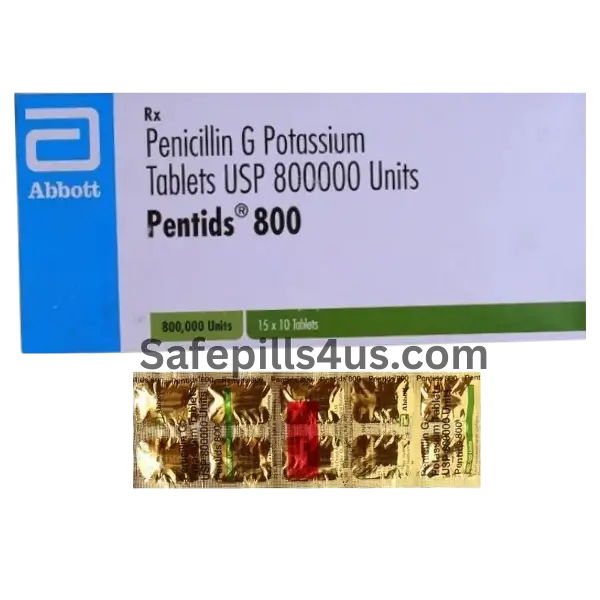
Pentids 800 is a stronger dose penicillin antibiotic containing penicillin G potassium. Doctors prescribe this higher strength for moderate to severe bacterial infections that need more aggressive treatment. It's effective against strep infections, certain types of pneumonia, serious skin infections, and other conditions caused by penicillin-sensitive bacteria.
This is prescription-only medication, and you'll only get it when your doctor determines that standard doses aren't enough or when you're dealing with a tougher infection. Like all penicillins, it only fights bacteria it won't do anything for colds, flu, or viral infections.
What Happens Inside Your Body
Penicillin G destroys bacteria by attacking their cell walls. Bacteria can't survive without intact walls, so they break apart and die when penicillin damages these protective barriers. Your immune system then clears out the debris and you start healing.
After you take a tablet, it dissolves and enters your bloodstream quickly. From there, it circulates throughout your body, targeting the bacteria causing your infection. The higher 800mg dose means more medicine reaches the infection site, which is why doctors use it for more serious cases.
Why You Might Need This Medication
This higher strength is typically reserved for infections that need stronger treatment right from the start. Severe strep throat, especially with complications, often calls for this dose. Doctors also prescribe it for serious respiratory infections like pneumococcal pneumonia that could turn dangerous if undertreated.
Deep skin and soft tissue infections respond well to Pentids 800. It's also used to prevent recurrent rheumatic fever in patients who've had it before. Some heart patients take it before dental surgery or other procedures to ward off bacterial endocarditis, though the dosing schedule differs from regular infection treatment.
Is This Right for You?
Adults with moderate to severe
bacterial infections are the usual candidates for Pentids 800. Your doctor might start you on this strength if you've got a particularly nasty infection or if you've had treatment failures with lower doses in the past. Sometimes body weight factors into the decision too.
You absolutely cannot take this if you're allergic to penicillin antibiotics. That includes any previous reactions to drugs like amoxicillin, ampicillin, or similar medications. People allergic to cephalosporin antibiotics should be cautious too since there's some cross-reactivity. Always tell your doctor about any past antibiotic reactions before starting treatment.
The Right Way to Take It
Your doctor will tell you exactly how often to take Pentids 800, but it's usually two to four times daily depending on what you're being treated for. The empty stomach rule is critical here take it at least one hour before eating or two hours after meals. Food really interferes with absorption, and with a serious infection, you need every bit of that medicine working for you.
Swallow each tablet whole with a full glass of water. Don't crush or chew them. Set alarms if you need to so you don't miss doses. The timing matters because you want steady levels of antibiotic in your blood around the clock. And I can't stress this enough: finish every single tablet even if you feel completely normal again. Stopping early is how you end up with resistant bacteria.
Reactions and Side Effects
The higher dose means you might notice stomach problems more than with lower strengths. Nausea, diarrhea, and general stomach upset are common complaints. Some people get a bad taste in their mouth. These issues usually aren't serious but they can be annoying. Taking it with a small piece of bread or a few crackers might help, though it may reduce how well the medicine works.
Watch out for serious reactions. Allergic responses to
penicillin can be life-threatening. If you develop a rash, hives, swelling anywhere on your face or neck, trouble breathing, or your throat feels like it's closing, call 911 immediately. Severe diarrhea that's watery, bloody, or won't stop could mean a dangerous intestinal infection. Dark urine, yellow skin or eyes, unusual bruising, or severe abdominal pain all warrant an urgent call to your doctor.
Safety Warnings You Should Know
Kidney problems are a big deal with any penicillin, but especially higher doses like Pentids 800. Your kidneys flush the medicine out of your body, and if they're not working well, the drug can build up to dangerous levels. Your doctor might order blood tests to check kidney function before and during treatment.
Birth control pills become less reliable when you're on penicillin. You could get pregnant even if you're taking the pill faithfully. Use condoms or another backup method the whole time you're on the antibiotic plus one complete menstrual cycle afterward. If you have any history of stomach problems, especially colitis, mention it to your doctor since antibiotics can trigger flare-ups.
Mixing Medications: What to Avoid
Probenecid, which people take for gout, makes penicillin levels shoot up in your blood. Sometimes doctors deliberately combine them for really stubborn infections, but you shouldn't take both without specific instructions. Blood thinners like warfarin can get unpredictable when mixed with penicillin you might bruise more easily or have bleeding issues.
Methotrexate, used for arthritis and some cancers, doesn't mix well with penicillin either. Some other antibiotics actually work against penicillin and make it less effective. Birth control pills, as mentioned, lose effectiveness. Show your doctor and pharmacist a complete list of everything you take, including vitamins, supplements, and over-the-counter stuff.
Keeping Your Medicine Safe
Keep Pentids 800 at room temperature, somewhere between 68 and 77 degrees. Heat and moisture are the enemies here, so no bathroom medicine cabinets or spots near the stove. The bedroom dresser or kitchen cabinet away from the sink works better.
Leave the tablets in their original bottle and keep that lid tight. Light and humidity can break down the medicine. Put it somewhere kids absolutely cannot reach this higher dose could be dangerous for a child who got into it. Check expiration dates periodically. Old antibiotics lose potency and shouldn't be used. Ask your pharmacist about proper disposal rather than flushing them.
Questions Patients Ask Most
Is 800 mg a lot stronger than 400 mg?+
Yes, it is double the dose. Doctors use higher strengths when a stronger effect is needed for tougher infections or when lower doses have not been effective.
How fast will I feel better?+
Most people notice improvement within 48 to 72 hours, although the medicine starts working within hours. Continue taking it as prescribed for best results.
What if I vomit after taking it?+
If you vomit within one hour of taking the dose, contact your doctor as you may need another dose. If it happens later, the medicine has likely already been absorbed.
Can I cut the tablet in half?+
Only do so if your doctor advises it. Splitting tablets can affect how the medicine is absorbed and may reduce effectiveness.
Why does it upset my stomach?+
Higher doses can sometimes irritate the stomach. Taking it with a small amount of light food may help, but food can slightly reduce absorption. Speak to your doctor if discomfort is severe.